
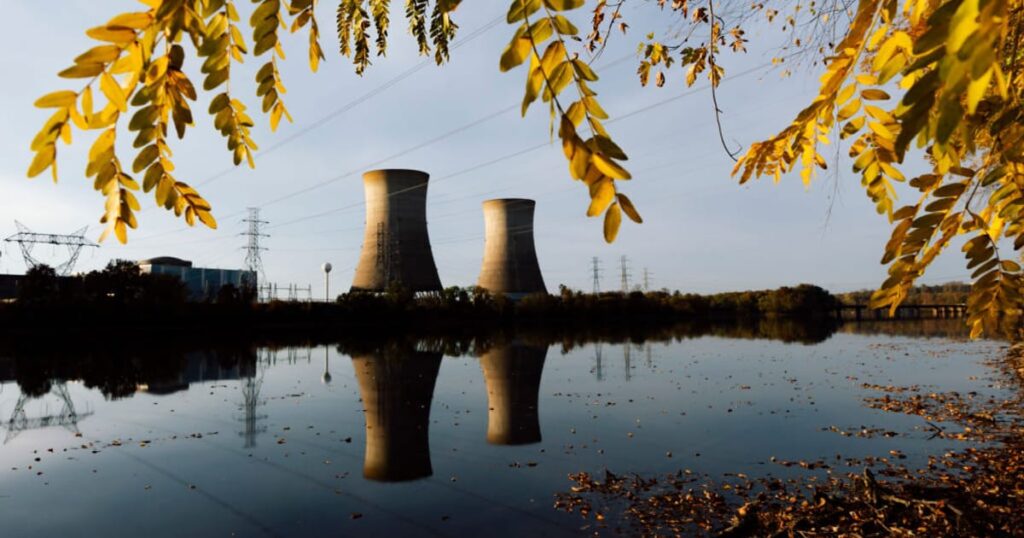
The Trump administration is bankrolling the restart of two shuttered nuclear plants in hopes of reviving the industry. Those endeavors are moving along — but without federal funding, plans to build new large nuclear reactors haven’t made much progress yet.
While Three Mile Island may make you think of nuclear disaster due to the partial meltdown of the plant’s Unit 2 back in 1979, that part of the facility has been dormant ever since. Unit 1, meanwhile, operated for decades without any major incident before it was shut down in 2019 for economic reasons. Constellation said in July 2024 that the unit remained in “pretty good shape” and was “technically feasible” to restart.
Just a few months later, Constellation got its chance to do so. Microsoft announced an agreement with Constellation to buy power from Unit 1, with hopes of getting the newly renamed Crane Clean Energy Center operating again by 2028. At the time, Constellation said it would likely spend $1.6 billion on the restart. This new federal loan will put a big dent in that cost.
The Loan Programs Office is also supporting the restart of Michigan’s Palisades Nuclear Plant, which shuttered in 2022. The $1.5 billion loan was initiated under the Biden administration, and President Donald Trump’s DOE has continued paying it out this year. The plant received its first delivery of fuel in October and aims to start generating power before the year ends.
While large nuclear restarts are rolling along, new construction doesn’t have much progress to show. Construction of the last major nuclear project in the U.S. — Georgia Power’s Plant Vogtle — went billions of dollars over budget and took years longer than expected. It’s become a cautionary tale for risk-averse utilities, who have yet to answer Trump’s call for a nuclear buildout, E&E News reports.
Still, the Trump administration is trying to will that nuclear renaissance into existence: This week it reaffirmed its commitment to an $80 billion plan to finance the construction of up to 10 new large nuclear reactors, first announced in late October.
It’s an ambitious goal that could create the nuclear expansion the Trump administration says it wants. But it still faces a big barrier: the administration itself. Trump officials have spent the last year undermining trust in federal financing by reneging on billions of dollars in grants, loans, and even permits for clean-energy projects. Those moves could make it difficult to convince companies to commit to expensive, years-long construction projects that will surely span administrations.
Ohio county takes on renewables ban
Ohio is a hot spot for local renewable-energy bans, but one county may pave the way for change.
A state law allows Ohio counties to bar significant solar and wind development in all or some of their townships. More than three dozen counties have done so, and Richland County is among them, with commissioners moving this summer to ban projects in 11 of its 18 townships.
Richland County residents started pushing back almost immediately, Canary Media’s Kathiann M. Kowalski reports. Gathering more than 3,300 valid signatures, they’ve ensured a referendum on the ban will be on the ballot this May, allowing every voter to weigh in on the future of clean energy in their backyard.