
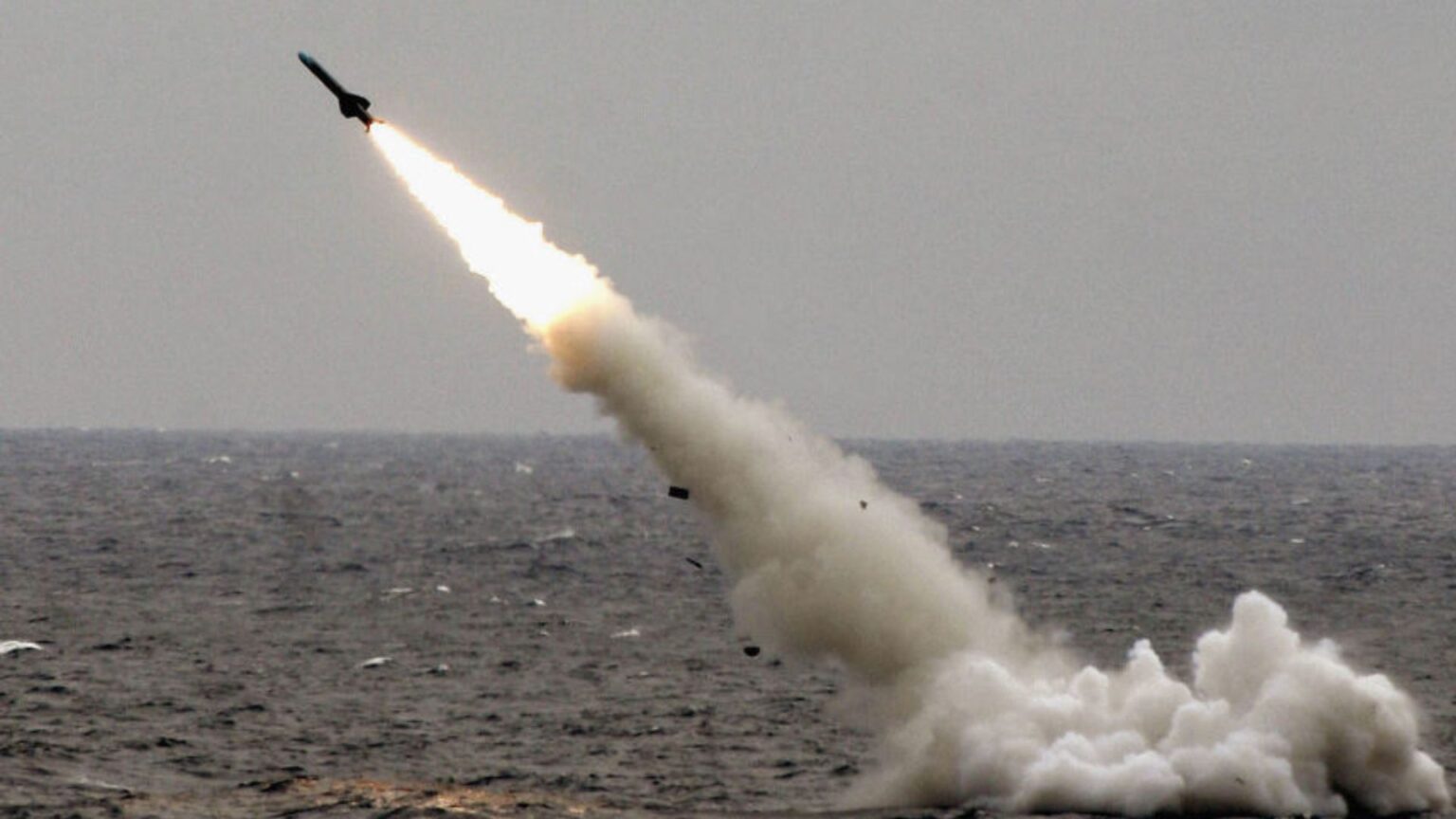
China’s new Jinglei-1 (JL-1) missile could pose a potential nuclear threat to Alaska and even the wider United States, according to a Chinese military publication.
The JL-1 is a nuclear-capable, air-launched ballistic missile carried by H-6N strategic bombers and seen as the final element of the PLA’s nuclear triad.
A recent analysis claims it is the world’s only long-range hypersonic missile able to carry nuclear warheads, giving China an edge over the US and Russia. With a reported range of 8,000km and extended bomber reach, the system significantly expands China’s strike capacity, reports a Chinese online news portal.
In September, China introduced the JL-1 missile during September’s Victory Day parade, along with advanced weaponry like assault rifles and stealth fighters.
Hypersonic deterrence gap
A new assessment says a Chinese bomber taking off from Russia’s far east could potentially place much of the continental US within range of the JL-1, underscoring how geography and joint exercises may expand the missile’s reach.
The report by the Ordnance Industry Science Technology magazine compares the system with rival air-launched nuclear capabilities worldwide. The United States currently relies on the AGM-86B, a decades-old subsonic cruise missile with a 2,400km range and outdated guidance. Its planned successor, the AGM-181A, is expected around 2030 with improved stealth and navigation, but will remain subsonic. Washington’s attempt to field a hypersonic air-launched nuclear option, the AGM-183A, was halted after repeated programme setbacks, reports the South China Morning Post (SCMP).
Russia fields the Kh-102 and the newer Kh-BD, both long-range nuclear-capable cruise missiles with significant reach and accuracy but limited by subsonic speed. It’s the only air-launched hypersonic weapon, the Kinzhal, that can carry a nuclear payload but has a significantly shorter range than the JL-1. According to the analysis, none of these systems match the Chinese missile’s combination of speed and projected reach.
However, the JL-1 is constrained by its dependence on the H-6N bomber, as its 15-metre length prevents internal carriage on any aircraft, including China’s future stealth bomber. The H-6N’s extended range comes at the cost of limited payload, subsonic performance, and lack of stealth, leaving it behind modern platforms such as the B-2 and B-21, reports the SCMP.
China’s next-generation H-20 bomber remains under development, with no confirmed public milestones, and delays could prolong a period of strategic vulnerability. The JL-1’s deployment offers temporary coverage while the H-20 matures into what is expected to be an advanced family of long-range stealth aircraft.
Strategic reach expanded
The JL-1 is China’s first publicly acknowledged nuclear-capable air-launched ballistic missile, placing Beijing among a small group of nations to field such weapons since the United States and Soviet Union pioneered them during the Cold War.
Its debut formally brings the People’s Liberation Army Air Force into China’s nuclear deterrent structure, elevating it from a conventional strike arm to a key pillar of the nation’s growing nuclear triad. Unlike silo-based ICBMs or submarine-launched missiles, the JL-1 uses the flexibility of aerial launch, allowing H-6N bombers to release it at high altitude along unpredictable flight paths that complicate tracking and interception, reports Defence Security Asia.
Analysts believe the missile is derived from the DF-21 medium-range system, adapted for airborne deployment to extend reach and bypass regional missile defenses such as Aegis Ashore, THAAD, and Guam’s shield. Western intelligence monitored its development for years under the NATO codename CH-AS-X-13, observing early tests at Neixiang Air Base and integration work on modified H-6N bombers.
By 2020, leaked images suggested the weapon was approaching readiness. Its public unveiling in 2025 followed China’s pattern of showcasing major strategic systems during landmark national anniversaries, underscoring the missile’s significance in Beijing’s nuclear modernization.