
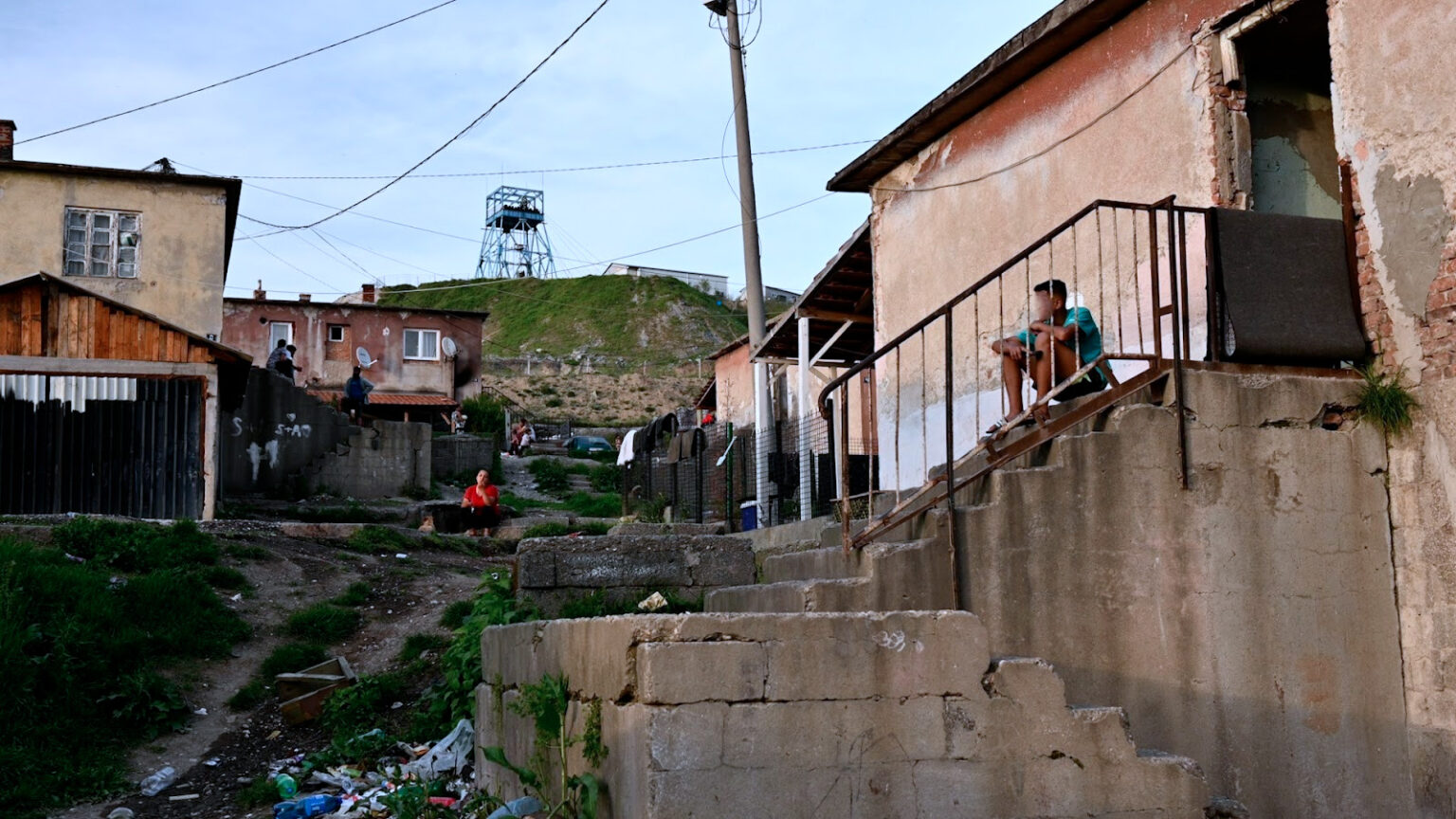
A couple of hundred kilometers southeast of the Serbian capital of Belgrade lies the city of Bor, home to one of the largest reserves of copper in the world and one of the most egregious examples of environmental racism towards a Romani community anywhere in Europe.
In Bor, a community of more than 300 Romani people find themselves unwillingly at the centre of a story of corruption, unscrupulous government contracts, and environmental degradation in a country with a regime on the brink of potential collapse. As the forces of government, a multinational mining company, and the local municipality converge on Bor, it is the Romani people living on the edge of the mine who are left to suffer the indignations of segregation and pollution. Their story exposes the sharp edge of environmental racism in Europe.
Made in China
Copper and other valuable metals have been mined from the earth around Bor for over 100 years, with the small town expanding to the size of a small city largely on account of the mining industry. Following the breakup of Yugoslavia, the mine continued to be state-owned, yet for more than two decades the public company RTB Bor was suspiciously among the most unprofitable companies in the whole country (the increasingly high price of copper notwithstanding) and racked up an accumulated debt of more than €1 billion. Despite this, the Serbian government continued to invest hundreds of millions of euros in new production facilities on-site and even wrote off the company’s billion-euro debt to other government-owned companies such as Elektroprivreda Srbije.
On 31 August 2018, everything changed. The Chinese multinational Zijin Mining Group Co., Limited took a 63% controlling interest in the company as part of a $1.26 billion deal with the Serbian government. The name of the mine changed to ‘Serbia Zijin Bor Copper Mine’ and that year the mining operation produced a net income of around €760 million, with most of the profit coming from the conversion of debt into new shares. The exact details of the public tender and what was in the contract that was drawn up between the Government of Serbia and Zijin Mining are not publicly known. What is known is the record of Zijin around the world for grievous human rights abuses, exploitation, and environmental harm. The company faces accusations of forced labour of Uyghur, Kazakh, and Kyrgyz workers in China; forced labour of workers in Tibet; forced evictions of villages in the Democratic Republic of Congo to make way for cobalt mines; poisoning the Tingjiang River in China with toxic waste and threatening water supplies and fishing industries; and allegations of pouring toxic sludge into tunnels in Colombia where informal miners were working.
Their activities in Serbia have not been without controversy either. ‘Serbia Zijin Bor Copper Mine’ has been accused of human trafficking, exploitation, and forced labor of Chinese workers after a 2021 investigation by the Balkan Investigative Reporting Network. Protests have also been held around Bor over excessive air pollution that has intensified since Zijin took over the mine in late 2018. The largest was a months-long-blockade of access roads to one of the mines by villagers from nearby Krivelj over pollution and environmental degradation.
Since January 2019, Bor has experienced excessive air pollution, with sulfur dioxide (SO2) levels reaching more than 2,000 micrograms per cubic meter, well above the maximum limit of 350µg (mean average per cubic meter per hour more than 24 times in a year). Sulfur dioxide pollution irritates the skin and mucous membranes of the eyes, nose, throat, and lungs. It can cause respiratory problems such as bronchitis and cause cardiovascular disease in vulnerable people. Other heavy metals, such as arsenic, lead, and cadmium, are also released into the environment in Bor, as well as good old-fashioned PM10 (fine pollution particulates in the air). To add to the dystopian, late-capitalism vibes, there is even an electronic board in the centre of the city that details the air pollution levels of each part of the city with a corresponding smiley-face or sad-face emoticon displayed alongside.
Local protesters in Bor have demanded a plan from the city administration to ensure that the state inspectorate can effectively tackle the runaway pollution in their environment. As far back as 2019, Zijin had been ordered by the state environmental inspector to take measures to reduce the air pollution around the city after high SO2 levels were repeatedly recorded. Zijin Mining told the Serbian Environment Ministry that the pollution had been caused by a power outage at the plant, but a later inspection revealed that Zijin Mining did not have a system for wet dust removal during the transportation of tailings (waste materials). The company was ordered to solve the problem, and Zijin Mining later told the ministry that a dust suppression system had been installed. An investigation by the Center for Investigative Journalism of Serbia found that two months later the pollution levels still remained the same. In 2020, the Environmental Protection Ministry initiated legal proceedings against Zijin Mining for the release of hazardous substances into the air. The Commercial Court in Zajecar imposed a fine of 1.5 million – 3 million Serbian Dinars (approximately €12,000 – €25,000). Nataša Djereg from the Center for Environment and Sustainable Development described the fine as “ridiculous” in the case of large multinational polluters and said, “a fine is not a measure, the penalty would be to stop production.”
Living at the edge of a mine
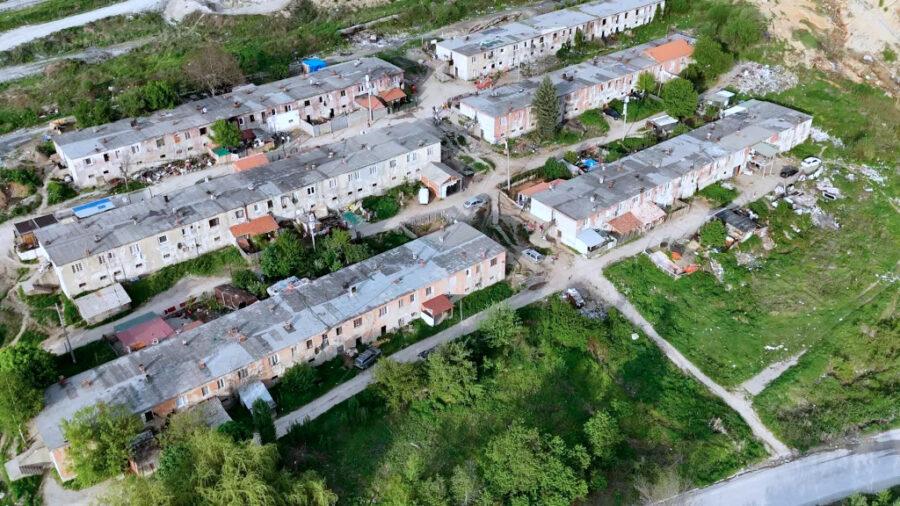
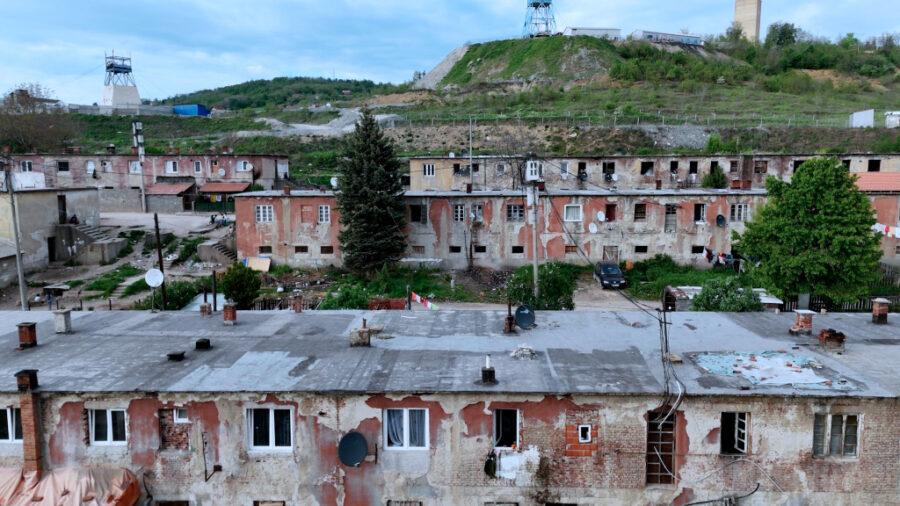
Just meters away from the mine workings on Herderova Street is a Romani community living in the former workers’ settlement named Zmajevo. The workers’ housing was built during the 1960s and consists of six long buildings on Herderova Street, each with around 20 apartments (though most are now uninhabitable or bricked off). Approximately 85 families, totalling more than 300 residents, including at least 100 children, live in this community. Some residents have lived there for more than 50 years, while others moved into the houses over time as the non-Romani workers were relocated to other parts of the city.
As some of the closest local inhabitants to the mine, the community faces serious environmental and health issues arising from the mine’s operations. The housing units are located immediately next to the mining zone of the Jama copper mining complex, separated only by a fence positioned meters from the residential buildings. The air quality is severely compromised due to continuous backfilling activities at the old, open pit mine nearby. Large amounts of tailings (the waste dust from mining) are released into the air and settle inside homes, making breathing difficult and maintaining hygiene challenging. These environmental conditions pose a significant health risk to the community, particularly to children and the elderly.
In addition to air pollution, waste water runoff from the mining process is directed into a small basin uphill from the Romani community. Frequently, waters flood down the hill and between the buildings, creating rivers of muddy slurry as the drainage and sewer networks in the community are no longer functional.
At the same time, the very ground beneath their homes is being eroded by continuous explosive detonations which feel like an earthquake on the surface, three times a day, every day.
“Not a day goes by without blasting,” says 53-year-old Beniša Ismailović, who has lived in the community on Herderova Street his entire life. “We have three blasts a day: at six in the morning when shifts end, at two in the afternoon, and at ten at night. You can hear it; the children wake up; young children don’t know that there’s a mine down there and that we’re in this mining zone.”
The metallic groan of the pit wheel turning in the tower that looms over the community signals the lowering of explosives into the mine below, and predicates the booming tremors to come. As the rattle of the wheel starts, the sound insinuates itself into the community below; conversations pause, children instinctively cover their ears in preparation. The wheel stops turning. A pregnant pause, followed by a crescendo of violent rumbling like thunder and earth-shaking that rattles the walls and vibrates your spine. Just as often, there follows nothing at all. A silence waiting to be broken, as if the timing is off.
This pattern of blasting has gone on for several years, causing structural damage to the homes over time, with visible cracks on the walls of the buildings. The cumulative psychological effect on the children who have grown up there is less visible, but likely goes much deeper.
The community that doesn’t exist
When Zijin Mining bought Bor Copper Mine, they also bought the land around it. This resulted in the land on which the Romani community live in Herderova Street being transferred to the private ownership of the company. The buildings on Herderova Street had already been removed from the housing registry and erased from urban planning documents in the 1990s, after they were deemed structurally unsafe. However, the sale of the land to Zijin meant the buildings and land were no longer publicly owned. The land was literally sold from under the feet of the Romani community.
The result is that since 2018, the residents have been unable to register their residence at Herderova Street, and therefore cannot obtain personal identification documents without issue. While some individuals have managed to register with the local social welfare center’s address, many are unable to do so for unclear, untransparent reasons. The absence of a systemic solution prevents all individuals who are living there (or even born there) from obtaining personal identification documents through their actual address, which is a prerequisite for accessing basic infrastructure, public services, and exercising their rights.
After 2018, public lighting was also removed from the corridors of the buildings and street lights were cut down on the section of road in front of their homes. The lack of public lighting endangers the safety of everyone, but especially children returning from school in the evening. The municipality has kept functional street lighting in place before and after this section of the road, removing it just in the part passing by the Romani community.
Because the community is not part of the urban plan, waste management services are inadequate, with just one container serving all 300+ residents. The local government has refused to arrange regular waste collection unless families pay a fixed monthly fee, which is unfeasible for most residents relying on social assistance. Currently, waste is collected sporadically, only when a representative of the community notifies the local administration and when relevant services manage to organize waste collection. In contrast, 98% of households in other residential areas of Bor receive waste collection services.
The community also faces unresolved issues regarding electricity supply. Many residents cannot access electricity in their units due to debts incurred by the previous tenants, and their lack of formal housing rights further complicates their situation. This leaves many families in unsafe conditions without access to basic energy for daily needs.
The lack of paved roads further hinders residents’ mobility. During rainy periods, the deteriorated gravel road leading to their homes and the dirt roads within the neighbourhood become impassable, making it difficult for children to attend school and for adults to reach work and essential services..
From his family apartment in the community on Herderova Street, Beniša is incredulous: “I don’t know how it’s possible. We, the people and buildings, exist here. People live, meaning, again, they pay for internet, they pay for electricity, phones, landlines – all their payments come to their address. I grew up in this settlement, I grew old here. My family lives here in the settlement, my grandchildren live here, so we are the third, fourth generation living here in the settlement, and yet we don’t exist anywhere. They say we’ve been erased from the city plan. I have five daughters; they are all married here in this settlement, they all live separately, they have their own children, their own families.”
Many Roma, like Beniša, have lived in the neighborhood for years, believing it to be a temporary solution until they were to be relocated. The problems of inadequate housing conditions in the community and the need for the relocation of Romani residents was recognized over 10 years ago in the Draft Housing Strategy of the Municipality of Bor (2015–2025), as well as in the Local Action Plan for the Social Inclusion of Roma. However, to this day, local authorities have not taken steps to provide sustainable housing solutions for the residents. With the transfer of the ownership of the collective housing buildings on Herderova Street to the private ownership of Zijin Mining, housing insecurity has become even more pronounced for the Romani residents living there. While the mining company has stated that it has no objection to the residents staying there, it has not taken any responsibility for improving their living conditions.
Mining for profit, dodging the blame
If the community on Herderova Street is the neighborhood that doesn’t exist, then Zijin Mining is the company whose management seems to be completely invisible. Even contacting Zijin is an exercise in diplomacy, as the company has a public relations department that seems to selectively phase into existence just to issue a press release now and then. Journalists requesting interviews or statements from Zijin have in the past been directed to the Chinese Embassy, since the company is state-owned. Meanwhile, legal responsibility for resolving the situation in Herderova Street is a tangled mess brought about by the merging of state and corporate interests in Bor. This is further complicated by various government ministries appearing to have washed their hands of the issue and passing the buck onto a seemingly infinite number of ‘competent departments’.
The European Roma Rights Centre (ERRC) holds the Serbian authorities responsible for failing to protect the rights of the Romani people living at Herderova Street and has filed a legal complaint with the Commissioner for the Protection of Equality. Additional complaints have been sent to the Division for Mining Inspection within the Energy and Mining Ministry, as well as to the Environmental Protection Inspection in the Environmental Protection Ministry. The Mayor of Bor, Aleksandar Milikić, who is from the ruling Serbian Progressive Party (SNS), has so far declined to respond to requests for a meeting with the ERRC.
While these actions can serve as a prelude to litigation, the question of how to legally challenge a regime in a country mired in anti-corruption protests, and a multinational company whose edges blur into the People’s Republic of China, is a tough one to answer. The case for justice is building, though, and it is getting stronger.
On 8 August 2025, the UN Special Rapporteurs on Minority Issues and on Toxics and Human Rights wrote jointly to the Serbian Government and Zijin Mining regarding the serious allegations of environmental contamination and human rights violations in the village of Krivelj. They note specifically the presence of the Vlax linguistic minority in the region as a minority rights issue. No mention was made of the Romani community living virtually on top of the mine at Herderova Street.
For Beniša, dialogue is key. After years of trying to meet with the local municipality, Zijin Mining, and even President Vučić, he says that those with the power need to see for themselves the conditions of the community and work with the residents in cooperation to find alternatives for relocation:
“I don’t know who we should complain to, or send letters to. We’ve tried to fix something, to do something, many times. We sent letters, the National Council and the municipality, everyone is aware of this problem. But it is what it is. I would really ask the competent institutions, both the City of Bor and of course, the Mayor of Bor. It would be desirable for them to come once and see the living situation of Romani people in this settlement.”
For most people in the city of Bor, the revitalization of the mining industry has contributed to the city’s overall economic development. While Bor is booming, though, the Roma living at Herderova Street have not felt the benefits. Instead, they bear the worst consequences of industrial expansion while being systematically excluded from infrastructure improvements and social services. The residents have clearly expressed their desire to relocate to safer, more suitable housing. Until such measures are implemented, urgent improvements to their current living conditions are a necessity. Without intervention, these Romani families in Bor remain at risk of forced eviction and homelessness at worst, or at “best”, remain stuck living on the edge of the mine.