200+ Million Galaxies in the observable Universe. Each with 200-500 BILLION stars.
Not so rare.
faceintheblue on
We are only at the very start of being able to detect exoplanets. If you had asked astronomers a few centuries ago how many moons there were in the solar system, they would have said seven to ten, because telescopes at the time were still primitive. Who knows how many more planets we will find once we’re not relying just on wobbling and flickering of distant stars, both of which favour finding big gas giants?
I would also say if there really is one Earth for ever billion planets (or whatever astronomical number is being floated around), that’s still a lot more than people were prepared to estimate when I was a kid. The Milky Way has somewhere between 100 and 400 billion stars. Now I understand not every star has planets, but I think the odds are good that most stars that do have planets probably have more than one planet. Are there more than a hundred Earths out there, even with pessimistic back-of-the-cocktail napkin math? That’s a great number, especially compared to what we were guessing even a few decades ago!
> Our analysis reveals that only 0.6% (3 planets including Earth) meet all habitability criteria under relaxed thresholds,
…
> We identify Kepler-22 b as a compelling Earth analog with remarkable parameter similarity,
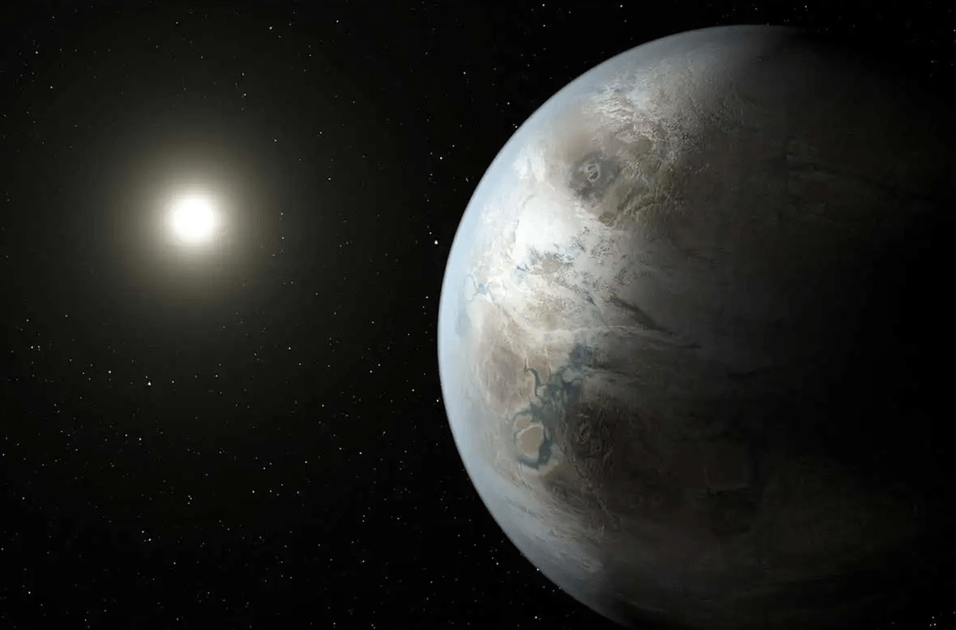
Their habitability criteria is extremely relaxed. [Kepler-22 b](https://en.wikipedia.org/wiki/Kepler-22b) has a radius over twice that of the Earth. That is not a terrestrial planet. It’s a planet much bigger than the Earth, that likely consists mostly of water.
Another “habitable planet” they study is [LHS 1140 b.](https://en.wikipedia.org/wiki/LHS_1140_b) It’s orbiting a red dwarf, so it’s tidally locked. It only has a radius 1.7 times that of Earth, and a mass about 5.6 times that of the Earth. That planet has a density about the same as the Earth. But it’s much bigger. Venus is more Earth-like in many way.
The third planet they find is similar to the Earth is [TOI-1452 b.](https://en.wikipedia.org/wiki/TOI-1452_b) It’s orbiting a red dwarf, so it’s tidally locked. TOI-1452 b has an estimated mass of 4.8 times that of the Earth. Again, it’s much bigger than the Earth.
The truth is we have not found a single Earth-sized planet in the habitable zone of a yellow dwarf. If a planet has five or six times the mass of the Earth, that is not similar to the Earth. Out of thousands of exoplanets they have found zero planets that could truly be called a twin of the Earth.
StingerAE on
I have a machine that detects the footsteps of people walking around the school. It can detect people weighing over 80kg easily but really only notices people under that weight if they fall over or jump off a chair
Anyway we’ve been running the machine for a week and it turns out that children are much much rarer than adults…
BigCraig10 on
There are approximately 100 billion to 400 billion exoplanets in the galaxy, I’d say the issue is so far we have confirmed about 6000 of them. All of which will be the lowest possible hanging fruit.
Disalga on
ok but like this actually stresses me out sometimes?? imagine being literally the only planet in the universe with life like that’s lowkey terrifying to think about.
fretsore on
“The study found that Earth is more unusual than **69%** of known exoplanets in the key characteristics that support life, so planets with conditions similar to ours are relatively rare. But rare does not mean impossible.”
Being in the top 31% doesn’t strike me as being remotely “rare” or “one in a billion” …
Key-Monk6159 on
The vastness of the universe makes such claims interesting but meaningless.
DoktorSigma on
I like how people in the comments are systematically confusing the concept of large absolute numbers, if we consider the whole universe, with the concept of rarity, which is how low is the frequency of occurrence of something in a random set. But maybe it’s a deliberate confusion, being used as a coping mechanism.
Anyway, 25 years after its formulation, the Rare Earth Hypothesis has been proved more and more correct with each new discovery about exoplanets that we have done. Maybe that will be changed once we have the technology to efficiently detect and analyze planets around sun-like stars, but so far the prospects of finding another Earth in a relatively “reachable” radius of a few dozen light years look completely dismal.
srandrews on
In this case I’d like to say, “did you read the article” but here the paper really needs to be read given the article…
elmo_touches_me on
The key is “known” exoplanets – not all exoplanets.
There are extreme observational biases behind the characteristics of exoplanets we have discovered so far.
Most planet discoveries rely on transit observations, or radial velocity observations, both of which are much less likely to detect earth-sized planets than jupiter-sized ones.
There could be many more Earths than Jupiters out there, but it’s easier to find Jupiters so we end up finding more of them.
StealthedWorgen on
Of course Earth is statistically unique. It was terraformed by life…
waiting4singularity on
considering the amount of stars and their planets, even one in a trillion is a damn lot of real estate.
Sitheral on
Eh, we don’t *really* have the data. We see what we see and we definitely don’t see everything.
wwarnout on
I really hope that life is one in a billion. With roughly 100-400 billion stars in the Milky Way (and roughly 1 planet per star), this would suggest life on 100 to 400 planets in our galaxy.
Neither_Ingenuity966 on
What a joke. First of all, republicans are doing more for space than I’ve ever seen from dems in my lifetime. Second, China? You mean the China whose main space innovations include chicken wings and finding cool new ways to copy America’s homework?
ASuarezMascareno on
As someone working on exoplanet detection I’m very unimpressed by the analysis. It already starts with a flawed selection of candidates. The first thing that jumped me is that they only analyse transiting planets from the NASA archive with measured density, and then they decide on Kepler-22 b that does not have a measured density. That’s a typical bachelor thesis mistake. I’m sure they took the published upper limit as actual value. I don’t believe they have the target selection under control, let’s not mention having the sample and detection biases under control.
It all feels amateurish. Like it was made by people that don’t know astrophysics or exoplanets and has never dealt with astrophysics results or the NASA archive before… or by AI.
People, when you move out of your lane, you better bring an expert for the ride.
TvTreeHanger on
I’ve slowly started to move over a bit to the rare earth hypothesis. It’s not so much that I think that the building blocks are rare, but getting everything together seems hard..
Planet needs to be the right size, with the right type of star, and at the right distance. That I dont think would be that rare. Now you have to add water and an active core. So, gets a bit rarer. Now you need a moon to stabilize the planet. So, getting a bit rarer. Now you need the large gas giants in the outer solar system.. those are important to keep the inner solar system from being pounded by comets and asteroids, so more rare.
None of those things absolutely are 100% required to make a planet ‘habitable’, but it sure as shit helps a LOT. IE, you could have a tidal locked planet close to a red dwarf, and maybe you can get some life on it.. but honestly, like Earth, not likely.
espinaustin on
Say you rolled a billion sided die and got a nat billion
NotSoSalty on
We can’t see Earth like planets so speculation like in this article is pretty pointless.
monchota on
Yes…because we can’t detect them.
FigureFourWoo on
We know so little about how life develops that we can only compare it to what is known from how it developed on Earth. If these building blocks can come together to create an entire ecosystem of consumption where the more you eat, the more you develop/evolve, then how do they develop/evolve under different conditions? Maybe rocks turn into rock men if the building blocks are infused with elements that don’t exist here. Plus, things like gravity and oxygen come into play. Dinosaurs evolved long before we did and the conditions allowed prehistoric insects to grow to massive sizes at that time. On another planet, dinosaurs could be the size of dogs and people could be the size of ants. Their planet could appear to be enormous to them, to the point space travel isn’t even feasible. They could be using tiny telescopes to study lands across their oceans.

25 Comments
Right, so on a universal scale, these are great odds. Even on a galactic scale, honestly.
Known exoplanets are known because our detection methods bias large planets around big stars, or small (or large) planets around small stars.
Earthlike worlds around g-class stars are extremely hard to detect.
The[ Rare Earth hypothesis](https://en.wikipedia.org/wiki/Rare_Earth_hypothesis) is not new.
300 Billion stars in OUR Milky way alone.
200+ Million Galaxies in the observable Universe. Each with 200-500 BILLION stars.
Not so rare.
We are only at the very start of being able to detect exoplanets. If you had asked astronomers a few centuries ago how many moons there were in the solar system, they would have said seven to ten, because telescopes at the time were still primitive. Who knows how many more planets we will find once we’re not relying just on wobbling and flickering of distant stars, both of which favour finding big gas giants?
I would also say if there really is one Earth for ever billion planets (or whatever astronomical number is being floated around), that’s still a lot more than people were prepared to estimate when I was a kid. The Milky Way has somewhere between 100 and 400 billion stars. Now I understand not every star has planets, but I think the odds are good that most stars that do have planets probably have more than one planet. Are there more than a hundred Earths out there, even with pessimistic back-of-the-cocktail napkin math? That’s a great number, especially compared to what we were guessing even a few decades ago!
[Here is the study.](https://arxiv.org/abs/2506.18200)
> Our analysis reveals that only 0.6% (3 planets including Earth) meet all habitability criteria under relaxed thresholds,
…
> We identify Kepler-22 b as a compelling Earth analog with remarkable parameter similarity,
Their habitability criteria is extremely relaxed. [Kepler-22 b](https://en.wikipedia.org/wiki/Kepler-22b) has a radius over twice that of the Earth. That is not a terrestrial planet. It’s a planet much bigger than the Earth, that likely consists mostly of water.
Another “habitable planet” they study is [LHS 1140 b.](https://en.wikipedia.org/wiki/LHS_1140_b) It’s orbiting a red dwarf, so it’s tidally locked. It only has a radius 1.7 times that of Earth, and a mass about 5.6 times that of the Earth. That planet has a density about the same as the Earth. But it’s much bigger. Venus is more Earth-like in many way.
The third planet they find is similar to the Earth is [TOI-1452 b.](https://en.wikipedia.org/wiki/TOI-1452_b) It’s orbiting a red dwarf, so it’s tidally locked. TOI-1452 b has an estimated mass of 4.8 times that of the Earth. Again, it’s much bigger than the Earth.
The truth is we have not found a single Earth-sized planet in the habitable zone of a yellow dwarf. If a planet has five or six times the mass of the Earth, that is not similar to the Earth. Out of thousands of exoplanets they have found zero planets that could truly be called a twin of the Earth.
I have a machine that detects the footsteps of people walking around the school. It can detect people weighing over 80kg easily but really only notices people under that weight if they fall over or jump off a chair
Anyway we’ve been running the machine for a week and it turns out that children are much much rarer than adults…
There are approximately 100 billion to 400 billion exoplanets in the galaxy, I’d say the issue is so far we have confirmed about 6000 of them. All of which will be the lowest possible hanging fruit.
ok but like this actually stresses me out sometimes?? imagine being literally the only planet in the universe with life like that’s lowkey terrifying to think about.
“The study found that Earth is more unusual than **69%** of known exoplanets in the key characteristics that support life, so planets with conditions similar to ours are relatively rare. But rare does not mean impossible.”
Being in the top 31% doesn’t strike me as being remotely “rare” or “one in a billion” …
The vastness of the universe makes such claims interesting but meaningless.
I like how people in the comments are systematically confusing the concept of large absolute numbers, if we consider the whole universe, with the concept of rarity, which is how low is the frequency of occurrence of something in a random set. But maybe it’s a deliberate confusion, being used as a coping mechanism.
Anyway, 25 years after its formulation, the Rare Earth Hypothesis has been proved more and more correct with each new discovery about exoplanets that we have done. Maybe that will be changed once we have the technology to efficiently detect and analyze planets around sun-like stars, but so far the prospects of finding another Earth in a relatively “reachable” radius of a few dozen light years look completely dismal.
In this case I’d like to say, “did you read the article” but here the paper really needs to be read given the article…
The key is “known” exoplanets – not all exoplanets.
There are extreme observational biases behind the characteristics of exoplanets we have discovered so far.
Most planet discoveries rely on transit observations, or radial velocity observations, both of which are much less likely to detect earth-sized planets than jupiter-sized ones.
There could be many more Earths than Jupiters out there, but it’s easier to find Jupiters so we end up finding more of them.
Of course Earth is statistically unique. It was terraformed by life…
considering the amount of stars and their planets, even one in a trillion is a damn lot of real estate.
Eh, we don’t *really* have the data. We see what we see and we definitely don’t see everything.
I really hope that life is one in a billion. With roughly 100-400 billion stars in the Milky Way (and roughly 1 planet per star), this would suggest life on 100 to 400 planets in our galaxy.
What a joke. First of all, republicans are doing more for space than I’ve ever seen from dems in my lifetime. Second, China? You mean the China whose main space innovations include chicken wings and finding cool new ways to copy America’s homework?
As someone working on exoplanet detection I’m very unimpressed by the analysis. It already starts with a flawed selection of candidates. The first thing that jumped me is that they only analyse transiting planets from the NASA archive with measured density, and then they decide on Kepler-22 b that does not have a measured density. That’s a typical bachelor thesis mistake. I’m sure they took the published upper limit as actual value. I don’t believe they have the target selection under control, let’s not mention having the sample and detection biases under control.
It all feels amateurish. Like it was made by people that don’t know astrophysics or exoplanets and has never dealt with astrophysics results or the NASA archive before… or by AI.
People, when you move out of your lane, you better bring an expert for the ride.
I’ve slowly started to move over a bit to the rare earth hypothesis. It’s not so much that I think that the building blocks are rare, but getting everything together seems hard..
Planet needs to be the right size, with the right type of star, and at the right distance. That I dont think would be that rare. Now you have to add water and an active core. So, gets a bit rarer. Now you need a moon to stabilize the planet. So, getting a bit rarer. Now you need the large gas giants in the outer solar system.. those are important to keep the inner solar system from being pounded by comets and asteroids, so more rare.
None of those things absolutely are 100% required to make a planet ‘habitable’, but it sure as shit helps a LOT. IE, you could have a tidal locked planet close to a red dwarf, and maybe you can get some life on it.. but honestly, like Earth, not likely.
Say you rolled a billion sided die and got a nat billion
We can’t see Earth like planets so speculation like in this article is pretty pointless.
Yes…because we can’t detect them.
We know so little about how life develops that we can only compare it to what is known from how it developed on Earth. If these building blocks can come together to create an entire ecosystem of consumption where the more you eat, the more you develop/evolve, then how do they develop/evolve under different conditions? Maybe rocks turn into rock men if the building blocks are infused with elements that don’t exist here. Plus, things like gravity and oxygen come into play. Dinosaurs evolved long before we did and the conditions allowed prehistoric insects to grow to massive sizes at that time. On another planet, dinosaurs could be the size of dogs and people could be the size of ants. Their planet could appear to be enormous to them, to the point space travel isn’t even feasible. They could be using tiny telescopes to study lands across their oceans.