
Belém, Brazil —(Map)
The COP30* climate talks in Belém, Brazil ended last Saturday with a deal that left many people disappointed. The meeting, organized by the United Nations (UN), was marked by strong disagreements between countries. The talks resulted in a deal, but without any new agreements on fossil fuels.
Climate Crisis
Since people first began burning coal to run factories, the world’s temperature has gone up by about 1.2 degrees Celsius (C)**. This increase has led to serious long-term changes in weather patterns that affect all life on Earth.
The world is getting hotter, mainly because humans are burning “fossil fuels” like coal, oil, and natural gas to make energy. These fuels give off pollution called “greenhouse gases” or “carbon emissions”, which make the climate emergency worse.
The effects of climate change can already be seen: melting ice in Antarctica and the Arctic, higher temperatures, heat waves, droughts, wildfires, record rains, and more strong hurricanes.
Scientists say the world must take strong action before 2030, and limit global warming to 1.5ºC to avoid the worst effects of the climate crisis.
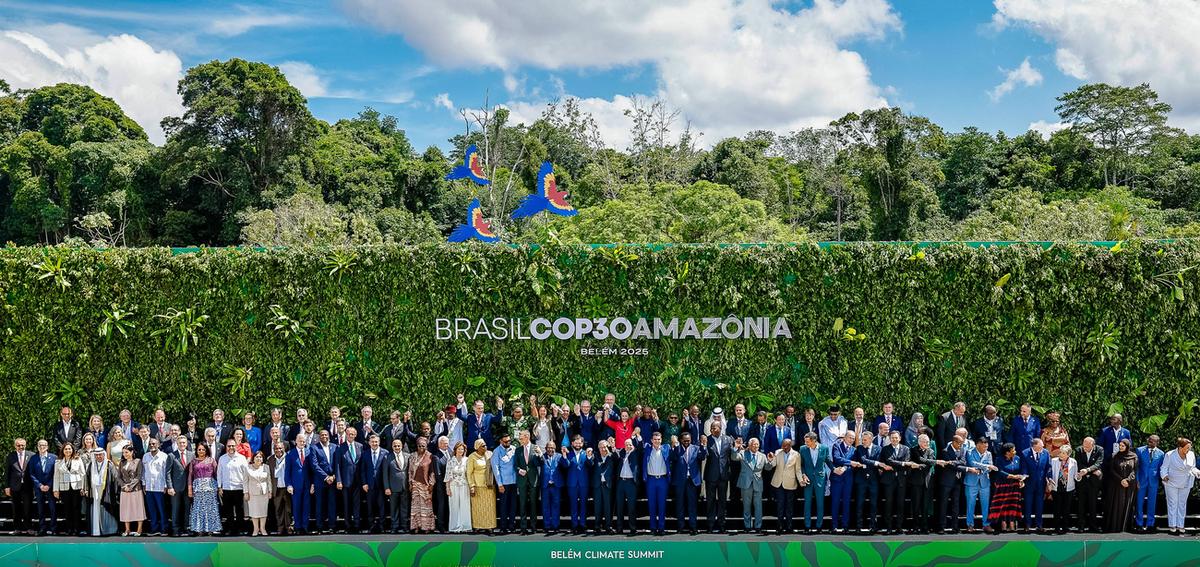 The COP30 climate talks in Belém, Brazil ended last Saturday with a deal that left many people disappointed. The talks resulted in a deal, but without any new agreements on fossil fuels. Above, representatives from around the world gather for a picture at COP30.
(Source: Ricardo Stuckert / PR [CC BY-SA 4.0], via Wikimedia Commons.)
The COP30 meeting was meant to help the world work together to fight the climate crisis. Brazil’s President, Luiz Inácio Lula da Silva, hoped the discussions would produce a plan to get rid of fossil fuels.
But the talks were difficult from the start. The US, under President Donald Trump, didn’t even take part.
The US is the second largest fossil-fuel polluter in the world. Despite this, in past COP meetings, it has increased pressure on polluting countries to increase cuts. Without pressure from the US, it was much easier for countries that produce oil and gas to block efforts to reduce fossil fuel use.
😕
This image has not been loaded because of your cookie choices. To view the content, you can accept ‘Non-necessary’ cookies.
Around 80 countries worked to develop a plan for moving away from fossil fuels. But countries like Saudi Arabia and Russia, which make a lot of money from fossil fuels, refused to discuss any limits. Above, Sergei Kononuchenko, who represents Russia, speaking at COP30 on November 18.
Around 80 countries, including many European countries, worked to develop and pass a plan for moving away from fossil fuels. But countries like Saudi Arabia and Russia, which make a lot of money from fossil fuels, refused to discuss any limits.
In the end, the final agreement didn’t mention fossil fuels, which left many people unhappy. Instead, it called on countries to follow the agreement made two years ago at COP28 in Dubai. That was a general agreement to move away from fossil fuels by 2050 – without any real details.
The meeting did bring a win for poorer countries. These countries have been saying that richer countries should help pay for the costs of the climate crisis, since they caused the most pollution in the past. For example, the US is responsible for around 25% of the pollution that led to global warming.
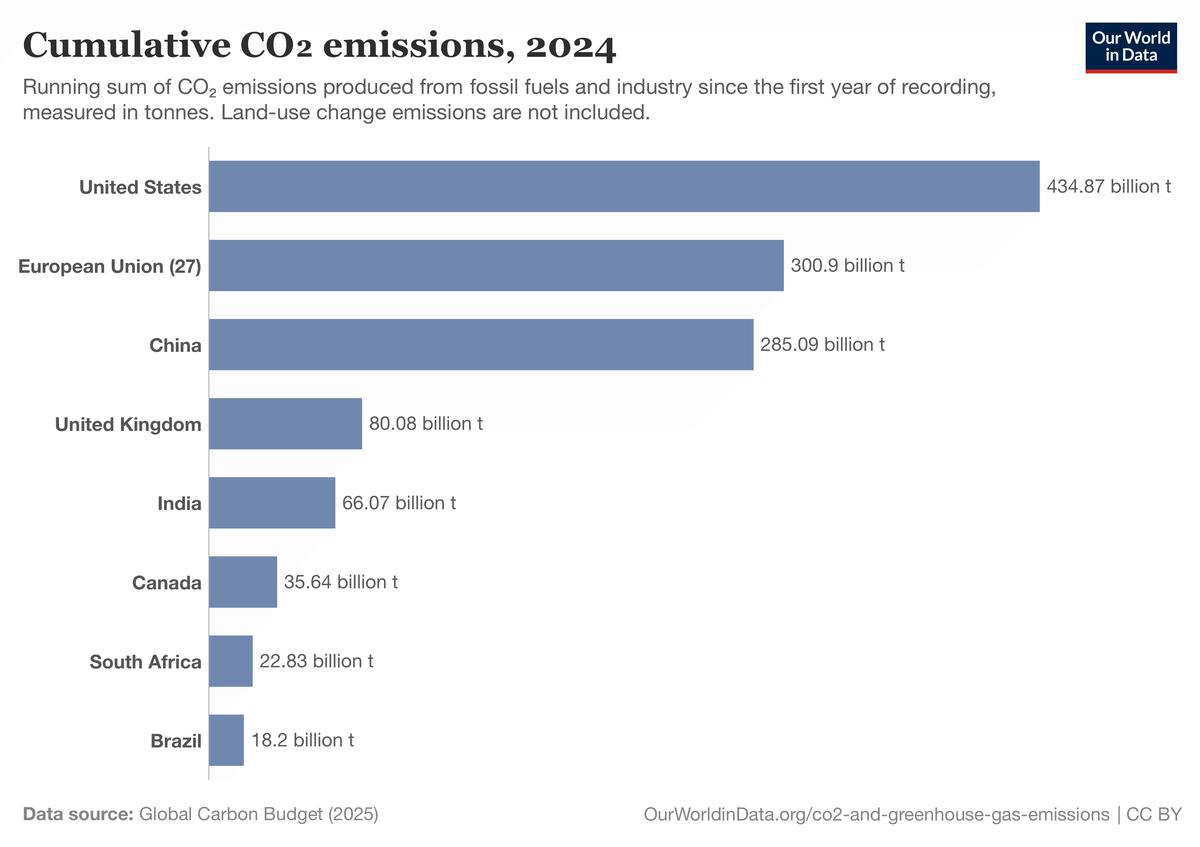 Poorer countries have been asking richer countries to help pay for the costs of the climate crisis, since they have created the most pollution. The US is responsible for around 25% of the pollution that led to global warming. The bar chart above shows major polluting countries and regions.
(Source: [CC BY 4.0], OurWorldInData.org.)
The new COP30 agreement will greatly increase the amount of money provided to help poorer countries prepare for and recover from climate-related damage. Saturday’s deal agrees to triple the amount of money, which will reach $1.3 trillion a year by 2035.
The meeting was held in the Amazon, and another important goal was working to protect rainforests. Mr. da Silva launched a project which he hoped would raise $25 billion to help protect tropical forests. But by the end of the meeting, only $5 billion had been promised.
😕
This image has not been loaded because of your cookie choices. To view the content, you can accept ‘Non-necessary’ cookies.
COP30 President Andre Correa do Lago (above, center) says Brazil will keep working after the talks to try to reach two big goals missing from this meeting: a plan to limit fossil fuels and a plan to protect forests. Some people believe that getting over 190 countries to agree at all is a success.
Brazil says it will continue working with other countries after the talks to try to reach two big goals missing from this meeting: a plan to limit fossil fuels and a plan to protect forests. But even if it makes progress, Brazil’s work outside of the COP meeting won’t have the same legal power that an agreement would have had.
Many people remain disappointed, and say the final deal doesn’t do enough to tackle the climate crisis. “The truth cannot support an outcome [result] that ignores the science,” said Colombia’s Daniela Durán González.
Still, some people believe that getting over 190 countries with extremely different views to agree at all is a success – especially at a time when Mr. Trump and others are acting like the climate crisis doesn’t even exist.
* COP stands for “Conference of the Parties”, which basically means “Meeting of the countries that signed the agreement”. In this case, the agreement is the 1992 United Nations Framework Convention on Climate Change. This is the 30th meeting since the agreement was first signed.
** Climate change temperatures are measured against the time when humans started burning coal for power. This article talks about climate change using Celsius (C). Talking about climate change in Celsius is more common and it makes the changes easier to see and remember.
If you want to think about the temperature changes in Fahrenheit( F), you can use these figures: 1.2ºC = 2.16ºF, 1.5°C = 2.7°F
😕
This map has not been loaded because of your cookie choices. To view the content, you can accept ‘Non-necessary’ cookies.