
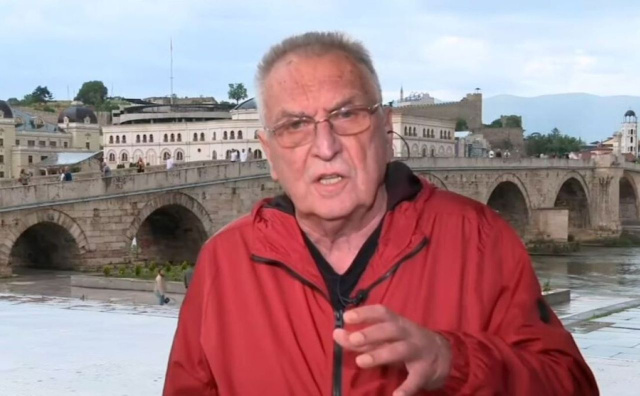
An elderly journalist long associated with the Bulgarian community in North Macedonia has reported a new case of hate-motivated aggression in Skopje. Vladimir Perev, 80, says he was verbally assaulted and struck in the face while waiting in line at a shop in the Macedonian capital. In his account published on the “Tribuna” website, he describes how a man around 40 years old shouted ethnic insults at him, broke his glasses and threatened him with further violence if he continued to identify as Macedonian or speak about Macedonian identity from what the attacker called a “Bulgarian mouth.”
The incident immediately drew a strong reaction from Bulgaria’s Ministry of Foreign Affairs. The ministry condemned what it described as another act of hate-driven violence against a Bulgarian citizen in North Macedonia, linking the atmosphere around such attacks to the political climate and the persistence of anti-Bulgarian rhetoric. Sofia stressed that it expects a prompt and effective investigation by the authorities in Skopje and reminded that the country’s EU prospects depend on fully implementing the 2022 European compromise, which includes protections for Macedonian Bulgarians and adherence to fundamental values. According to diplomatic sources, Bulgaria will brief the embassies of EU member states in Skopje about the case.
Perev later spoke on Bulgarian National Television, saying he was physically fine but viewed the incident as part of a wider pattern. In his words, hostility toward those who express Bulgarian identity in North Macedonia has been growing for years and now often reaches extremes. He argued that the current political environment has encouraged intolerance, particularly toward people who openly identify as Bulgarian or defend Bulgarian cultural and historical positions. Asked whether he expected meaningful progress from the authorities, he expressed little optimism, pointing to past cases, including attacks linked to Bulgarian cultural centers and the assault on Hristian Pendikov, where the judicial follow-up was limited.
He stressed that the issue goes beyond individual incidents and falls within the responsibility of state institutions on both sides of the border. According to him, maintaining dialogue between the foreign ministries, national assemblies and governments of both countries is essential, as individual activists cannot resolve entrenched political tensions.
The Foreign Ministry in Sofia later expanded on its position in a statement. It confirmed that the Bulgarian embassy in Skopje has been in constant contact with Perev since the attack and that Deputy Foreign Minister Georg Georgiev personally spoke with him to offer support. The ministry underlined that the questions raised by Perev in his article deserve attention, noting that the case is both a reflection of the challenges facing Bulgarians in North Macedonia and a test of how the authorities handle hate-motivated crimes. It again urged Skopje to act promptly and to uphold its commitments related to the European compromise from 2022.
Local reporting from Skopje reiterated that the attack happened in a shop, where Perev was punched several times and his glasses were smashed. He filed a report with the police, and the incident has been officially registered. In comments to BGNES, Perev described the aggression as rooted in deeply ingrained hostility and linked it to long-standing nationalist narratives in North Macedonia. He argued that anti-Bulgarian sentiment remains a central feature of certain political currents, framing the attack as part of a broader struggle for the rights of Bulgarians in the country.