
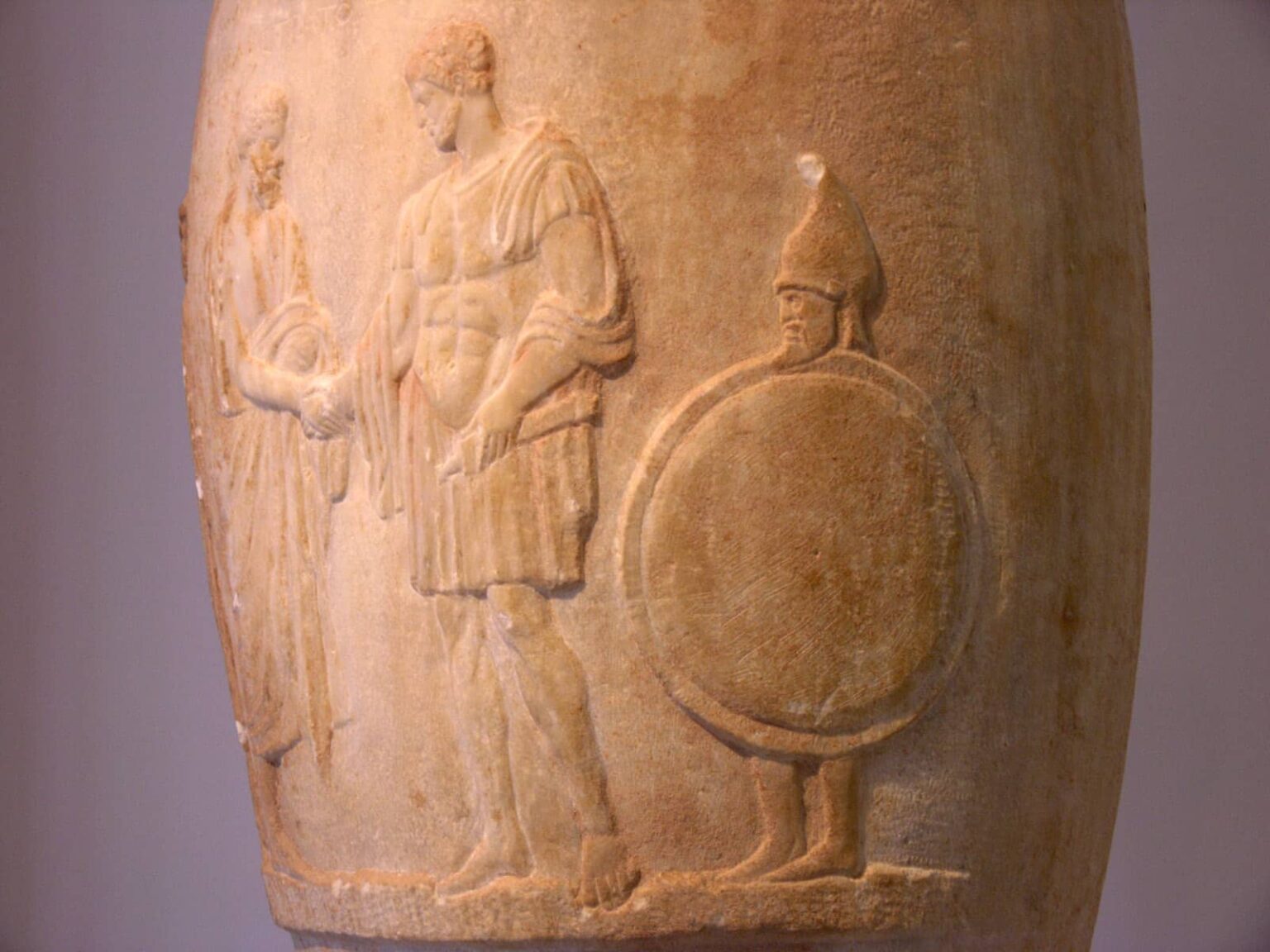
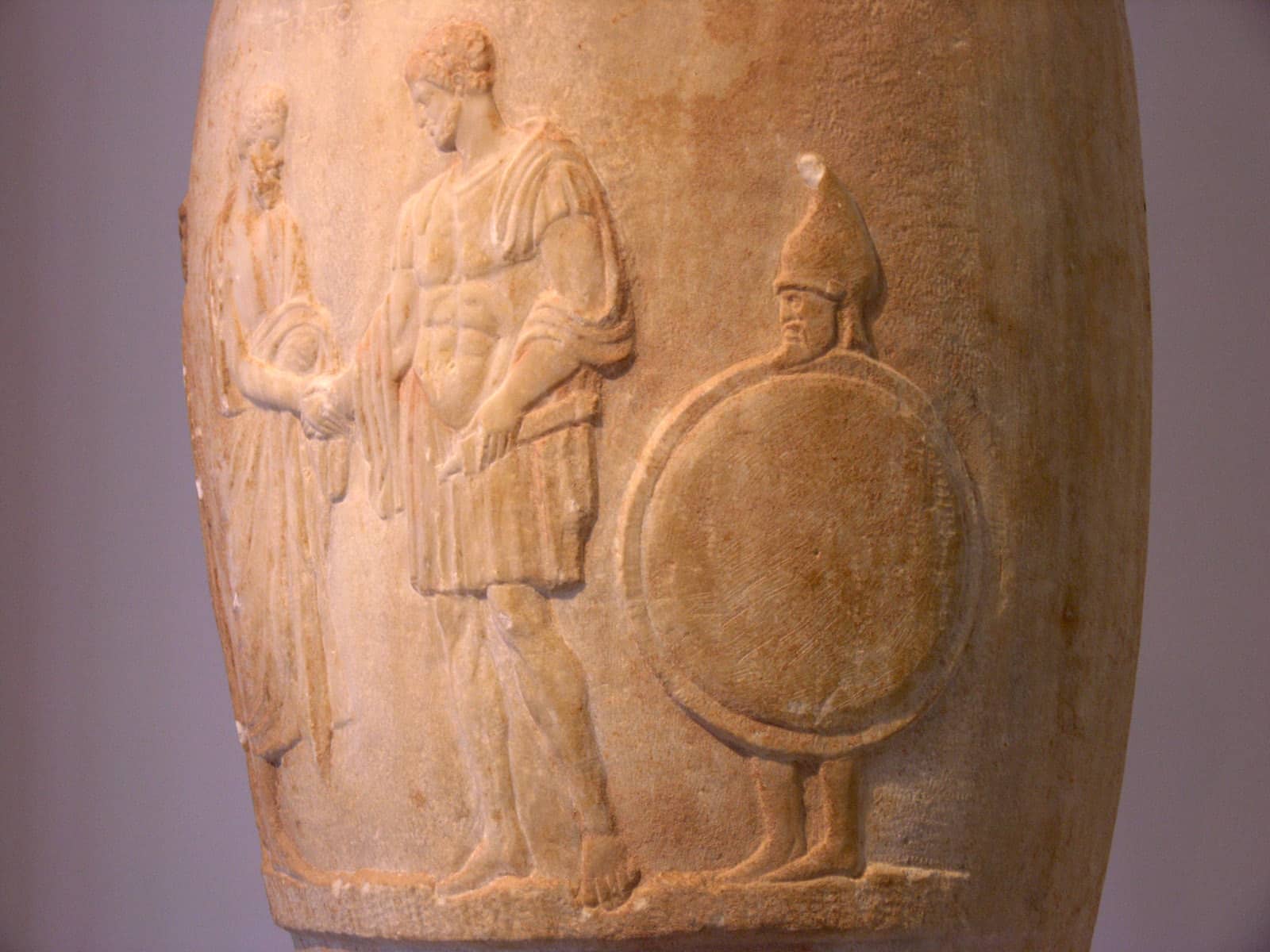
Funerary loutrophoros; on the right, a bearded slave carries his master’s shield and helm. Credit: Marsyas / Wikimedia Commons / CC BY 2.5
A new study reveals that gaining freedom for slaves in ancient Greece followed a complex system that combined economic strategy, legal obligations and selective incentives. While some slaves could earn money and eventually buy their freedom, the process was far from straightforward.
Researcher Laurent Gauthier of Paris Nanterre University analyzed inscription records and economic behavior to understand how this system worked.
His study, published in Explorations in Economic History, shows that many slaves who earned their freedom were still bound by agreements to remain with their former owners for years, sometimes until the owner’s death.
A costly and conditional path to freedom
The practice of allowing some slaves to save money, often referred to as a peculium in Latin, gave them a chance to work toward manumission. However, Gauthier found that the price for freedom was usually much higher than the typical market price for slaves.
Despite the cost, many still pursued this path, with freedom often delayed by a condition known as paramone (παραμονή). This requirement kept the freed individual in service for a period of time after formal manumission, maintaining a level of control for the former owner.
Gauthier developed a model to explain the reasoning behind these patterns. He argued that letting a slave keep a portion of income served as a performance incentive.
The high manumission price acted as a screening tool, helping owners identify slaves with strong abilities or discipline. Meanwhile, the paramone agreement ensured that the owner had no motive to take the slave’s savings early, since continued service still provided value.
How slave freedom in ancient Greece was structured
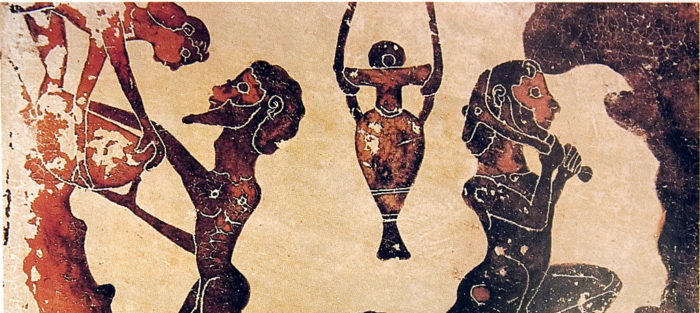
Slaves working in the Laurion mine. Credit: Wikimedia Commons, Public Domain
The study applied this framework to real cases by simulating how such agreements would work under different conditions. Results matched historical records, showing a high number of manumissions that included paramone and consistently elevated freedom prices.
Earlier research had noted the existence of these conditions but treated them separately. Gauthier’s work ties them together in a single economic explanation. He shows how uncertainty about a slave’s ability and risks of early seizure of savings helped shape this multi-layered system.
Although ancient Greece lacks full records over time, the inscriptions that survive help piece together how slave freedom was managed. Gauthier’s analysis suggests the process was not purely legal or moral. It was shaped by incentives, risks and bargaining between individuals with unequal power.
The study offers new understanding of how the path to freedom operated in ancient Greece, combining economics and history to explain a system that was more structured than it first appears.