
As the dust settles on Moldova’s 28 September 2025 parliamentary elections, the architecture of a foreign influence and malign interference operation comes to light. International election observers, local civil society, and state institutions are dissecting not only how the interference unfolded, but how future attempts can be anticipated and countered. The question is not whether malign actors will intervene, but when, and how.
For decades, Moldova rarely made international headlines. Today, this small post-Soviet republic with a population of three million inhabitants, positioned between Ukraine and Romania, has become a frontline in the contest between pro-European and pro-Russian political forces. Its geopolitical vulnerability is compounded by unresolved legacies of the Soviet era: mass deportations of Romanian-speaking families, the influx of Russian-speaking populations tied to the military apparatus and industrialisation projects, and the enduring challenge of Gagauzia, a breakaway region supported politically and economically by Moscow.
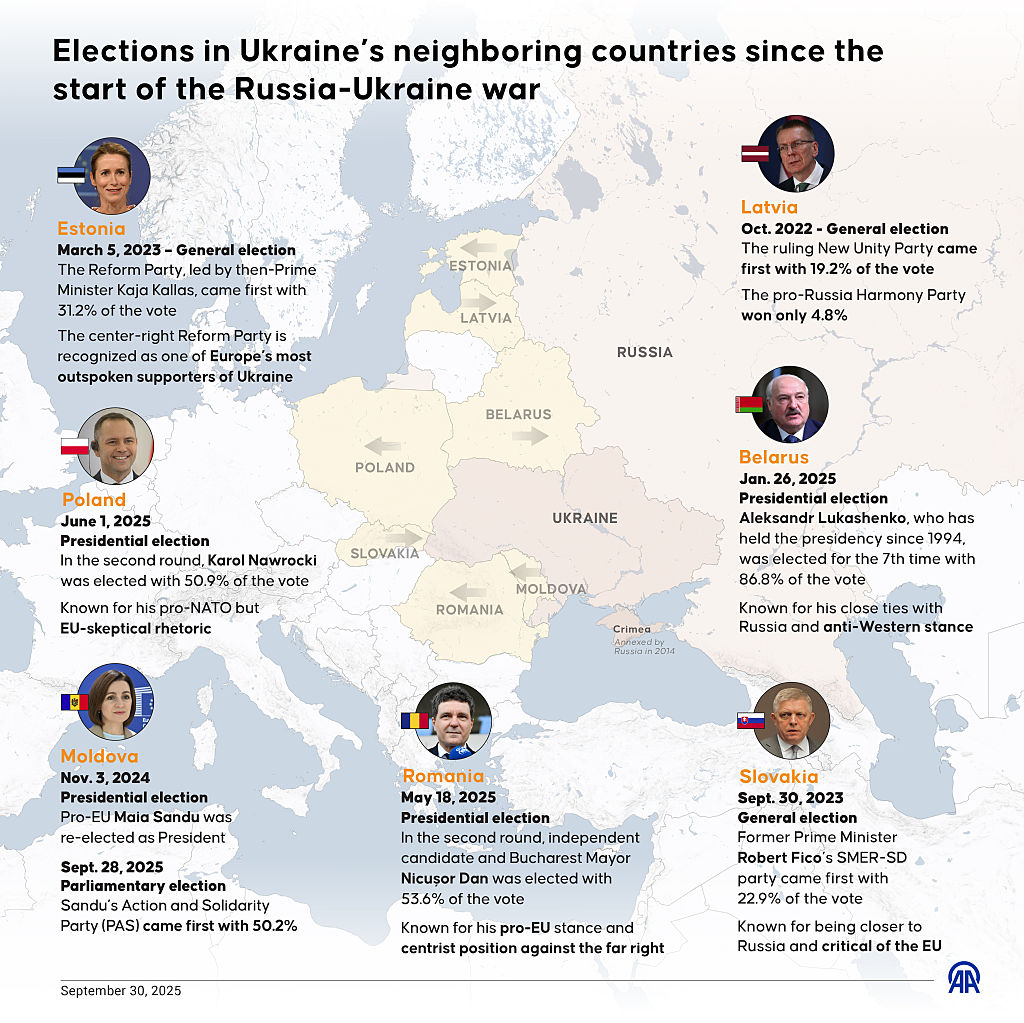
Moldova’s election took place in a wider regional atmosphere of anxiety driven by a Europe-wide trend of electoral destabilisation. Most recently in Romania the 2024 presidential election was annulled amid allegations of Russian interference – an episode that culminated in a failed coup led by a previously unknown candidate boosted by foreign financing and targeted populist messaging.
Kremlin-controlled outlets were the foundation of a global media and proxy propaganda.
Foreign interventions in elections are not a modern phenomenon. Despite limited comprehensive data, scholars such as Dov H. Levin have documented dozens of electoral interventions by major powers, primarily the United States and the USSR/Russia, since the Second World War. While their actions are the most thoroughly recorded, other powers have employed similar tactics. Iran may have interfered in Iraq’s 2010 elections, and Hugo Chávez of Venezuela supported ideological allies in Peru and Nicaragua during the 2000s. Campaign financing, “dirty tricks”, conditional threats or promises, aid manipulation, and symbolic gestures such as sanctions or troop withdrawals have all been employed. Routine diplomacy, generic endorsements, and unbiased technical election assistance fall outside this definition.
A newer phenomenon complicates the landscape: low-quality or partisan election monitors, often described as “fake” or “zombie” observers. While Levin categorises their interventions as post-election influence attempts, their pre-election or election-day media exposure – often amplified by partisan ecosystems and social media – can shape turnout, perceptions of legitimacy and public expectations.
Elif Acar/Anadolu via Getty Images
A recent report by Moldova’s Centre for Strategic Communication and Countering Disinformation deconstructs Russia’s 2025 operation in Moldova, revealing how it relied on a multi-layered influence architecture, leveraged behavioural insights, and used market segmentation to design cross-platform manipulation, AI-enabled deception, and coordinated proxy networks. In parallel, Moldovan authorities led massive ground operations to stop an influx of Russian funds from reaching groups and individuals suspected of being paid to provoke disorder, and spread fear in the aftermath of the election.
The report reveals that Kremlin-controlled outlets were the foundation of a global media and proxy propaganda infrastructure. The Russian outlet Pravda, for instance, sent synchronised messaging across 129 affiliated websites in over 50 languages, further amplified by local networks. Additionally, myriad websites designed to mimic legitimate news media were hosted in permissive jurisdictions such as Saint Kitts and Nevis to evade scrutiny, while so-called foreign “experts” laundered narratives from Kremlin-aligned sources into seemingly reputable outlets, creating an illusion of international consensus.
One tactic involved impersonating international organisations’ websites, such as the Council of Europe, used to plant a fabricated story portraying Moldova as condemned by European institutions. In a country where citizens often distrust domestic media, these external validations carried disproportionate weight.
Hackers also targeted Moldova’s government institutions, including the Ministry of Justice. Email and messaging apps served as vectors for phishing and session hijacking to gain access to sensitive information and destabilise the government from within. Through coordinated inauthentic behaviour, bot farms such as CopyCop and Evrazia ran automated operations across TikTok, Instagram, and Facebook, tailored to Moldova’s linguistic and ethnic divides to overwhelm the information environment, amplify polarisation, and marginalise dissent. On TikTok alone, 1,347 fake accounts generated 42 million interactions, while 155 fake Twitter/X accounts resulted in six million impressions and 150 fake Facebook pages produced 1.3 million interactions on election day. A fabricated video alleging illicit campaign financing was amplified across Russian-aligned platforms and reposted on X via influencer accounts, demonstrating the scalability and coordination of contemporary disinformation systems. By bypassing traditional broadcast regulations, mobile apps were turned into propaganda pipelines and pushed pro-Kremlin content directly to smartphones to facilitate recruitment into manipulated groups.
Faced with an unprecedented influence operation, Moldova adopted a whole-of-society approach. The newly created Centre for Strategic Communication and Countering Disinformation monitors the information environment and coordinates messaging across state institutions, supports civil society, and partners with the private sector and international allies.
The Moldovan case shows that small states are not destined to remain passive targets and offers insights applicable far beyond its borders, particularly as geopolitical rivalry intensifies and generative AI accelerates information degradation. Resilience is not a single institution but an ecosystem – one that combines strategic communication, societal awareness, cyber preparedness, and democratic trust. Countries that invest early in these pillars will not only defend their own sovereignty, but they can become laboratories of democratic resilience that champion strategic foresight, coherent institutions, and proactive public engagement.