
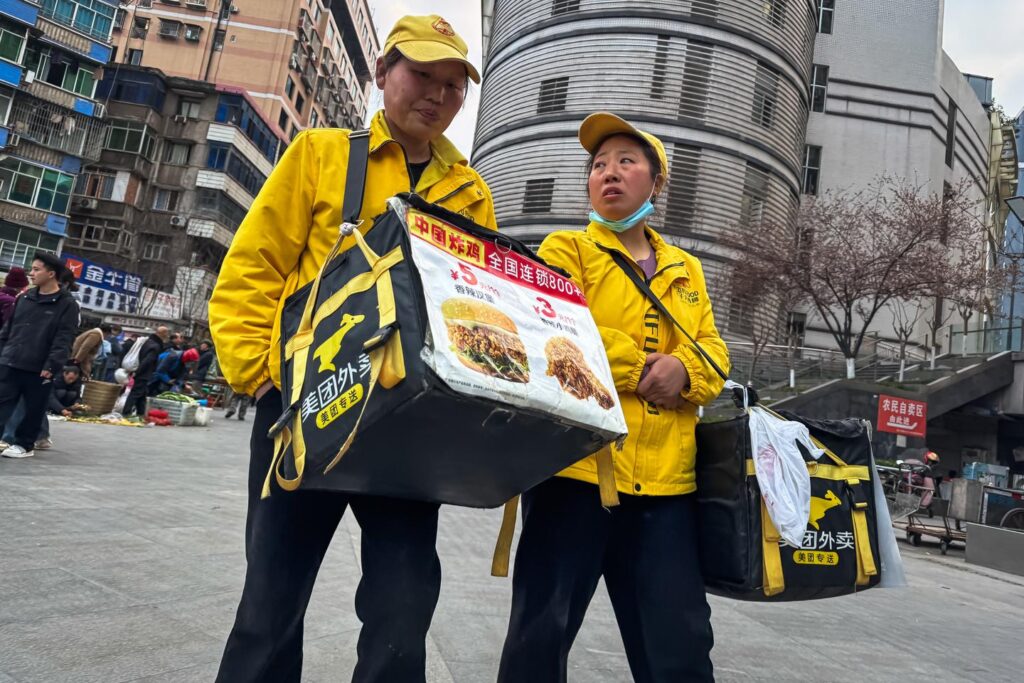
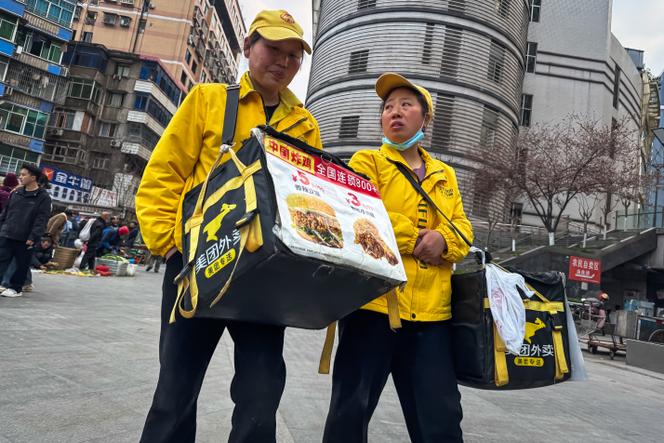
 Two food delivery workers crossed a square while promoting discounts on menus offered by the Meituan platform, in Chongqing, Sichuan province, on March 10, 2025. CHENG XIN/GETTY IMAGES
With a red bag on her back and a retractable broom sticking out, Bao Bei (a pseudonym), 30, cleans private homes in Beijing. She works for JD.com, the app run by the e-commerce and services giant, earning €10.50 for each two-hour job. “I have regulars, including the head of a medical equipment factory. He combined two large apartments and books me for 12 hours a week. For him, it’s easier than hiring someone.” Until recently, Bao Bei was teaching in a small town in Shanxi for €550 a month. But her parents were drowning in debt.
“My father ran a successful construction equipment rental agency. But one of the machines caused an accident, five people died and the families had to be compensated. My parents sold everything, moved to the countryside and started a farm. After seven years, their cows caught the flu and the herd had to be slaughtered to prevent an outbreak.”
This second stroke of bad luck eventually upended the paths of all three of their children, despite their degrees. Bao Bei’s older sister left for Qinghai, in the west, to work at a shale gas field. Her younger sister opened a cosmetics studio in Guangdong, in the south. And Bao Bei began working for JD.com, seven days a week, from 8 am to 10 pm. She sleeps in a rundown dormitory on Beijing’s outskirts, for €110 a month.
You have 81.07% of this article left to read. The rest is for subscribers only.