
Special: We have an Ombudsman, the visits of the Ombudsman of Kosovo are not considered official

Express newspaper
28/11/2025 8:22
The Kosovo Specialist Chambers have said that they have their own Ombudsperson and that visits by the Kosovo Ombudsperson cannot be considered official.
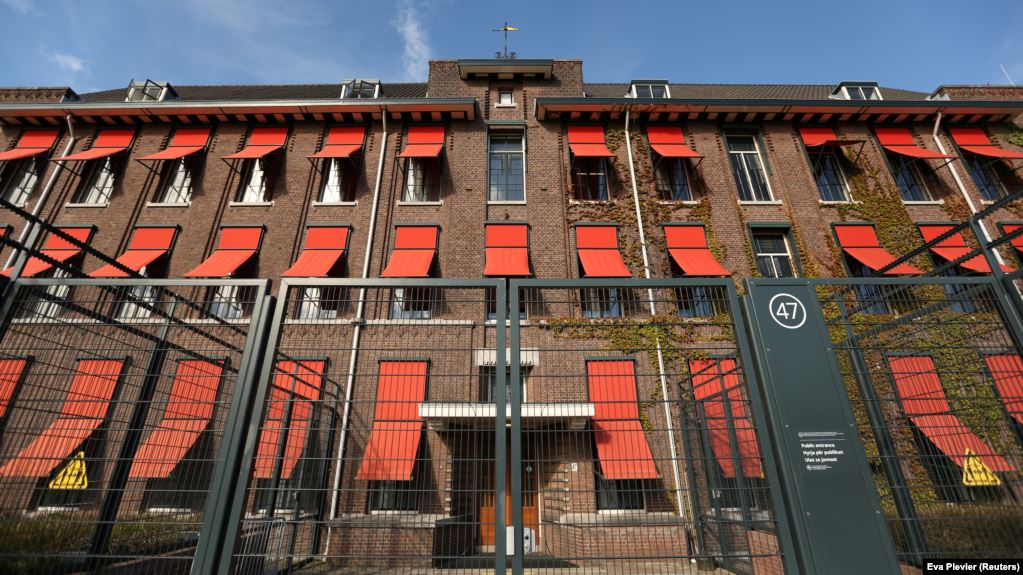
Michael Doyle, spokesperson for the DSK, said that under the Kosovo Constitution, amended by a 2/3 majority of the Kosovo Assembly, it is the Ombudsperson of the Specialist Chambers, Judge Pietro Spera, not the Kosovo Ombudsperson, who has the authority to guarantee that conditions in the DSK detention facility are in accordance with international human rights standards, reports “Oath for Justice”.
According to him, Pietro Spera has continuously conducted independent inspections of the detention facility, three of which he has conducted this year alone.
“In relation to general oversight, the Ombudsperson of the Specialist Chambers acts independently to monitor, protect and safeguard the fundamental rights and freedoms of all persons interacting with the DSK and the Specialist Prosecutor’s Office. He may receive complaints alleging human rights violations and conduct investigations into all complaints he receives,” the DSK spokesperson said.
Therefore, he said that the visit conducted by the Ombudsman of Kosovo, Naim Qelaj, to some detainees cannot be official.
“Given the exclusive competence of the Kosovo Ombudsman with regard to the Kosovo Detention Facility, the recent visit of the Kosovo Ombudsman to some of the detainees cannot be official, because the official monitoring function is carried out by the Kosovo Ombudsman, appointed in accordance with the Constitution,” Doyle said.
In addition, it was stated that in addition to the Ombudsman of the Kosovo Correctional Service, the detention facility is in the process of regular monitoring by the International Committee of the Red Cross, a practice that has been implemented since the establishment of the Specialized Chambers.
“Finally, regarding the conditions of visits at the DSK detention facility, it is important to note that all detainees continue to have regular family visits with their spouses and children, who are kept out of sight and hearing of detention officers. All detainees have 10 days of personal visits in any 30-day period, in addition to regular phone calls and correspondence throughout the month,” the spokesperson said at this conference.
Otherwise, through a press release on November 20, 2025, the People’s Advocate of Kosovo, Naim Qelaj, announced that he had conducted a monitoring visit to the Detention Center, where it was stated that the visit was carried out under numerous restrictions and with full monitoring of the interviews in the detention center.
“Such monitoring violates the standards of the European Committee for the Prevention of Torture (CPT), which stipulates that visits should be private, without the presence of security staff and without restrictions on the collection of information,” the statement said.
The Ombudsman expressed his position that the lack of accountability of the Kosovo Specialist Chambers towards the Republic of Kosovo creates a unique and unprecedented case.
“The Kosovo Specialized Chambers continue to operate without an effective reporting and oversight mechanism from the institutions of the Republic of Kosovo, although it was established by a decision of the Assembly of the Republic of Kosovo. The lack of accountability hinders the realization of the standard of democratic control, guaranteed by the principles of good governance and public accountability,” the statement said.
According to the Ombudsman, the low level of transparency in judicial processes and the way the Specialized Chambers operate, as well as limited information, prevent the public and institutions from having access to the data necessary to ensure that standards for a fair trial and accountability are being respected.
“The Ombudsman reiterates that, despite the legal limitations of the mandate of the Specialist Chambers, the institution will continue to monitor developments in The Hague, making efforts to engage independent international mechanisms for the protection of human rights to monitor this process and enable effective democratic control,” the statement said, among other things.
Otherwise, regarding the court case against Hashim Thaçi, Kadri Veseli, Rexhep Selim and Jakup Krasniqi, at Thursday’s press conference by the Kosovo Constitutional Court, it was stated that a total of 134 witnesses (125 from the Prosecution, 2 from the victims’ defense and 7 from Thaçi’s defense) have testified in this court process. Of this total number, it was stated that only 63 testified in a public session.
The final files in this case are expected to be submitted by January 19, 2026.
“The trial panel also set January 19, 2026 as a deadline for the Prosecution and Defense to submit their final court cases, and for the Victims’ Defense to submit a statement on the consequences of the alleged crimes for the 155 victims participating in this court case,” Doyle said.
Meanwhile, defense teams will officially close the presentation of evidence by December 2, 2025.
On the other hand, in the court case of Hashim Thaçi, Isni Kilaj, Bashkim Smakaj, Fadil Fazliu and Hajredin Kuçi, regarding charges of unlawful influence over witnesses, the preparatory conference for the trial is scheduled to be held tomorrow, November 28, at 09:30.
“As usual, prior to scheduling the hearing, there were consultations with both parties regarding their availability on this date. Given that both parties confirmed availability and raised no objections, the hearing was scheduled for this date,” Doyle said.
Otherwise, the Specialized Chambers of Kosovo in The Hague, every Thursday, at 14:30, through the “Zoom” online platform, hold a weekly briefing where they provide updated information on the latest developments related to judicial procedures and activities in this court.