
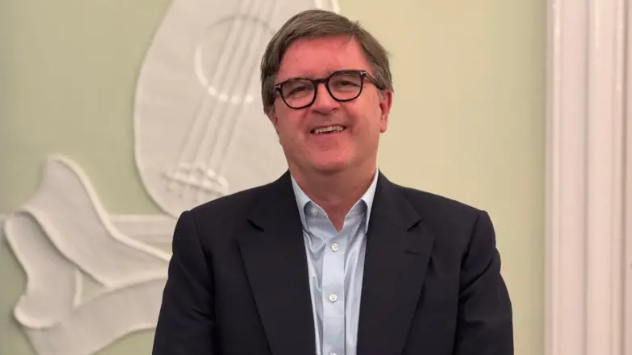
O’Brien on Kosovo and Serbia: Space was created in the north for new people, Europeans to maintain a firm and united stance

Express newspaper
28/11/2025 17:00
James O’Brien was one of the leading American diplomats who traveled through the Balkans in an attempt to end the bilateral and then trilateral conflicts in Bosnia and Herzegovina, and then the war in Kosovo.
This lawyer by profession emerged on the diplomatic scene as part of the team of former US Secretary of State Madeleine Albright, who decisively shaped US policy towards the Balkans.
Early in his career, he played a key role in ending hostilities between Bosniaks and Croats in Herzegovina in 1994, which was a prelude to the Dayton Agreement a year later.
He played a similar, but much less successful, role at Rambouillet, where the international community made its last attempt in 1999 to peacefully end the war between Kosovo Serbs and Albanians.
Ten days before the last diplomatic mandate of former US Assistant Secretary of State for Europe James O’Brien officially began, in September 2023, a Kosovo police officer was killed in an attack by a group of Kosovo Serbs, and the armed confrontation at the Banjska monastery that followed radically changed the situation in northern Kosovo, BBC Serbian wrote, Gazeta Express reports.
Two years later, O’Brien has spoken about the events in the north using it as an example of positive change in which space for action has been created by, as he puts it, “young people.”
However, he is aware that changes in the Balkans are sometimes slower and because there is no unified approach to solving problems in the West.
“The problem in the Balkans is that each side always has its own protector – often one or two in Europe, the United States sometimes switching sides.”
“But in this case, it’s up to the Europeans to take a firm and united stance,” says O’Brien, who since Trump came to power has not only not been part of official American policy, but has also openly criticized Washington’s positions.
He is pinning his hopes on the European integration process, which, along with economic reforms that he says he “particularly likes,” could resolve some of the Balkans’ outstanding issues.
“It is very good that Albania and Montenegro are moving towards EU membership and that they are being rewarded for their efforts, and for others, including Bosnia, it is a motivation to have something to achieve.”
“I hope this can also encourage Serbia to build an internal coalition for the reforms that are needed to move forward,” says O’Brien.