
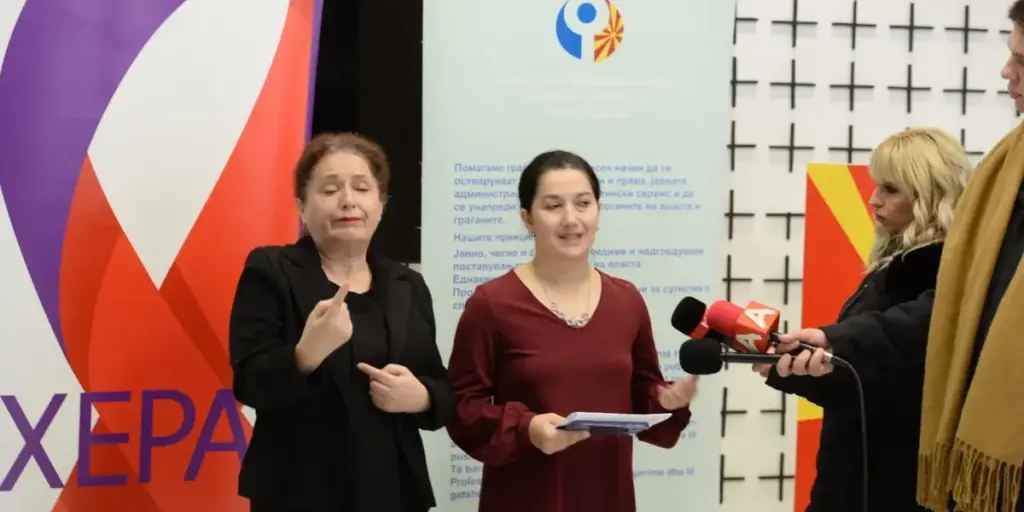
On the eve of December 3, the International Day of Persons with Disabilities, the Ombudsman and HERA, as part of the National Mechanism for Monitoring the Implementation of the Convention on the Rights of Persons with Disabilities, organized an event today at the Social Enterprise Center in Skopje, dedicated to the implementation of the Convention in our country.
Vaska Bajramovska Mustafa, state advisor from the Convention Monitoring Team at the People’s Advocate, emphasized that with the ratification of the Convention on the Rights of Persons with Disabilities in December 2011, the state was obliged to respect the rights of persons with disabilities and to contribute to a dignified life for these citizens, through the advancement, protection and full enjoyment of all human rights and freedoms.
According to the Convention, the state must create opportunities for these persons to be included in all spheres of society, on an equal basis with others.
“However, persons with special needs, not only in our country, but also around the world, still face a wide range of human rights violations, including discrimination, stigmatization and isolation. Many of them do not have access or have difficult access to public services and goods, to healthcare, education, community-based social services and employment opportunities. A sustainable and full practical implementation of the Convention is lacking, therefore many efforts are needed from all of us so that our society can be called truly just and inclusive. We are aware of the challenges, which are systemic and long-term, as well as the need to empower persons with disabilities and increase their information and awareness of the rights they are entitled to and the protection mechanisms available to them. I also emphasize the importance of the participation of persons with disabilities, who, in cooperation with the Ombudsman, carry out activities to promote, protect and monitor the realization of their rights, according to domestic and international legislation,” said Bajramovska Mustafa.
Vesna Matevska, program manager at HERA, emphasized that change begins when we listen to people’s needs and challenges and when we stop ignoring them.
“We should not allow human rights to depend on goodwill, personal acquaintances or administrative ‘luck’. Every person has rights, but to enjoy them they must have access to institutions and services, education, transport, health, culture… During the 16 days of activism against domestic violence and gender-based violence, I particularly appeal for safe and guaranteed access to specialized victim support services, as well as to Social Work Centers and the police,” said Matevska.
During the discussion, participants shared real experiences and challenges from their lives, such as: difficult access to the functional assessment process according to the MKF, especially in the professional bodies of the Service for Functional Assessment of Children and Youth in Skopje; • irregular payments to social service providers, which affects the continuity and quality of support for users; • lack of educational assistants for many students with disabilities, especially in primary schools; • a young man who cannot enter his primary care doctor’s clinic because there is no accessible ramp; These personal stories, as stated in the HERA announcement, clearly revealed the reality: although rights exist, access to realizing them is difficult.
“Persons with disabilities experience the lack of full implementation of legal solutions every day. It is the responsibility of institutions to overcome these gaps without delay. The Convention on the Rights of Persons with Disabilities must be implemented in a sustainable manner and at all levels. It is not only an international obligation, but an essential basis for the creation of comprehensive policies and programs, as well as accessible services at the national and local levels,” HERA concludes.