
By: Zoran Preradović and Milan Ćulibrk
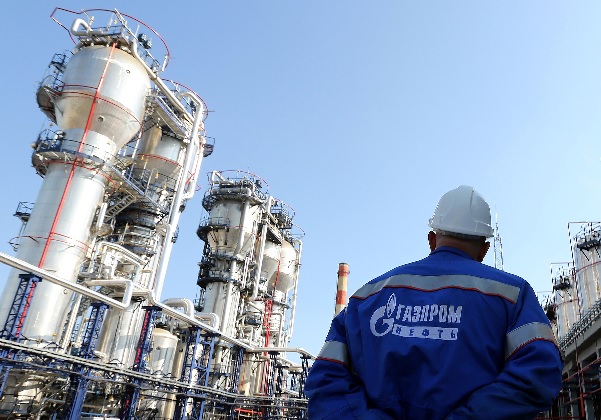
“Neither did you know what you were selling, nor did we know what we were buying,” former Russian ambassador Aleksandar Konuzin once said at the Kopaonik Business Forum, referring to the Serbian government’s 2008 decision to sell a majority stake of 51 per cent in the Petroleum Industry of Serbia (NIS) for 400 million euros, through a direct agreement, to Russia’s Gazprom.
Seventeen years later, the authorities here still do not know what is being sold, nor who might become the new majority owner of what is strategically one of Serbia’s most important companies, which generates around four per cent of Serbia’s GDP and pays every tenth dinar into the state budget each year.
More than Belgrade, Washington will have a say in the outcome of this deal, as it insists that the Russian share in NIS be reduced to zero. Otherwise, within just a few days, the refinery in Pančevo could come to a halt, because US sanctions officially came into force on 9 October and there are no longer reserves of crude oil for processing, which almost certainly implies imminent shortages and, consequently, higher fuel prices.
Although these prices are controlled by the government, a litre of Eurodiesel has risen from 192 to 204 dinars in the last month alone, since 17 October, and petrol from 176 to 183 dinars. Unfortunately, this is not the only, nor even the biggest price citizens will pay due to the wrong political decisions of the authorities here.
The cost of wrong decisions
“Wrong political decisions have so far cost every citizen of Serbia on average between 660,000 and one million dollars. That is how much higher our GDP per capita would be if, over the past three decades, we had had the same rates of economic growth as Poland, Slovakia and the Czech Republic, and similar data would be obtained if comparisons were made with Romania, Hungary and Bulgaria. Our politicians failed to recognise that the world was changing, they did not respond adequately, but boarded the wrong train, and then every station was the wrong one. Every government is responsible for its own decisions, and results are the measure of success,” Ivan Ostojić, an expert in economics, innovation and new technologies and a long-time McKinsey partner, told Radar.
Serbia now stands at a similar crossroads, this time because of NIS and energy dependence on Russia. The previous government is responsible for that, having amateurishly sold NIS, but it was supported in this by MPs from opposition parties who took power as far back as 2012, Ostojić recalls.
This is also shown by the voting results in the National Assembly in September 2008, when 214 MPs from both ruling and opposition parties, including the SRS, DSS, New Serbia and the parliamentary group Forward Serbia led by Tomislav Nikolić, the forerunner of SNS, voted in favour of the energy agreement with Russia. At the same session, 140 MPs voted for the Stabilisation and Association Agreement with the EU, as many as 74 fewer than voted for the agreement with Russia.
In one of his speeches, the first president of SNS, Tomislav Nikolić, called on representatives of the government to show that they understood “how much energy is the future of the whole world and how much all of this is tied to the Russian Federation,” that “the whole of Serbia wants the ratification of this agreement.” He also said that he was “ready, under the same conditions, always to conclude a less favourable agreement with the Russian Federation than with the EU,” because “this Russian Federation will not be a villain towards the Serbian people, and the EU has been.”
“If only Serbia would finally choose for itself a president who would care for Serbia as much as Russian presidents care for the Russian Federation, roses would be blooming in Serbia. That is why I welcome this agreement. We will vote for it more proudly than ever,” Nikolić stated, while Jorgovanka Tabaković criticised MPs from the LDP for being against it, as she “expected that a deal of such strategic importance would proceed in a ceremonial and serious atmosphere, as this agreement deserves.”
Political bargaining
Today, the informal leader of the Progressives and President of Serbia, Aleksandar Vučić, is trying to shift all the blame onto the former government. Responding to criticism that he did not even attempt to use the contract clause granting Serbia the right of first refusal to buy shares from Gazprom, he said that “those who carried out the right of first sale are now lecturing us about the right of first refusal.”
From the beginning, however, it was clear that the sale of NIS at a bargain price was political bargaining, in which it was expected that Russia would block Kosovo’s entry into the UN by preventing the annulment of Resolution 1244, and one in which the then Radicals wholeheartedly took part. It is true that Moscow did do this, but it is not as if the Kremlin “lost sleep” afterwards over what was happening with Kosovo. Guided by the logic “if Kosovo can, then Donetsk and Luhansk can secede unilaterally too,” Russian President Vladimir Putin stated at the St Petersburg International Economic Forum in 2022, only a few months after the beginning of the Russian invasion of Ukraine.
What has happened with Kosovo in the meantime is no secret. On the orders of foreign actors, Vučić dismantled every seed of Serbian statehood in the north, abolishing the police and the judiciary. And to complete the absurdity, the Serb List, despite numerous threats that it would leave the institutions, never did so, taking oaths under Kosovo’s insignia. We also know what has happened to Russia, which, because of the conflict in Ukraine, has become an international pariah – at least as far as the Western world is concerned.
Journalist and political commentator Boško Jakšić says that the sale of NIS leaves no doubt that the transaction was political in nature and motivated by “purchasing” Russian support regarding Kosovo. “It was the first concrete step related to Kosovo, which from then on would become the alpha and omega of Serbia’s domestic and foreign policy and have negative effects on relations with the region and the West, and it would bring Belgrade into an almost vassal dependency on Moscow. To call that naïveté would mean absolving all those who took part in this business. The sale of NIS is Serbia’s Magnum crimen.”
But the pathological attachment to Moscow, motivated primarily by manipulation of the pro-Russian sentiment among voters and the fresh memory of NATO’s bombing of Serbia, is not the government’s only mistake. Regardless of whether implicit or explicit, it led Serbia into a situation where all possible models of political and economic action have been irrevocably exhausted or burdened by intolerable conditions. It is enough to recall that then Prime Minister Vučić, on the eve of the 2016 US elections, supported Hillary Clinton, explaining that he did so “because he is smart.” Just how smart was shown by the results of the American election, won by Donald Trump.
After such a move, the remnants of Radicals forcibly transformed into European progressive men of integrity muttered into their beards that no Serbian leader had made such a symbolic gesture, one fit only for a defeated colony. Signing the Washington Agreement in September 2020 was an attempt to at least partially contain the damage, so Trump’s small successes became the measure of Vučić’s great humiliation, embodied in agreeing even to what had not been asked of him. And certainly no one had asked, for example, for Gazivode to be renamed “Lake Trump,” something to which, according to US presidential special envoy Richard Grenell, both Serbia and Kosovo had agreed.
Ghosts of the past
Political analyst Dragomir Anđelković believes that Vučić tried to excuse these “slippages” by making painful concessions at Serbia’s expense. “The same thing is now being repeated with the General Staff affair. The Serbian spin dictator, remembering what happened in 2016, wanted to ensure himself in the event of Trump’s victory in 2024, so through Trump’s son-in-law Jared Kushner he promised the construction of a huge complex in the centre of Belgrade, on a virtually gifted site of symbolic significance. But until he was convinced that Trump had won the election, he delayed fulfilling the promise. Then the student–citizen uprising broke out, and he could not overnight deliver what was expected of him in the White House. Trump is furious because of this, and Vučić is now desperately trying to deliver the tribute he promised,” said Anđelković.
The donation to the Clinton Foundation still serves as evidence of Vučić’s miscalculations, says Jakšić, adding that Trump forgave him, but did not forget. “The President of Serbia could have gained favour with the head of the White House as an autocrat, but he squandered everything. If Slobodan Milošević failed to recognise the significance of the fall of the Berlin Wall, Aleksandar Vučić was unable to foresee the global geostrategic consequences of Russia’s aggression against Ukraine. Serbia lost America at the very moment when relations seemed to be improving. Trump does not forgive Vučić for attempting to infiltrate the Republican convention in Florida in May. He does not forgive him for refusing to buy American liquefied gas and insisting on continuing business with the Russians. He does not forgive him for the major investments made by his greatest rival – China,” Jakšić stresses.
And once Russia began its aggression against Ukraine, the pro-Russian narrative became problematic for the regime, even more so the introduction of sanctions demanded by the West, especially since the authorities had been persuading their supporters that the West was to blame for the war in Ukraine, says Dušan Spasojević, a professor at the Faculty of Political Sciences.
“On the other hand, it seems to me that even the nationalisation of NIS would be feasible without too many negative points, because it is clear that this is a conflict between the US and Russia, and that Russia is avoiding a solution that would ease Serbia’s position. Even if it sometimes looks that way, not even SNS voters love Putin more than their own need to have fuel and to heat their homes with gas,” Spasojević believes.
Anđelković holds a different view, saying that introducing sanctions against Russia would be a risky move and could not pass even with the hypnotised viewers of Pink. “Vučić is devious, but he is not mad. He is aware that not even his exceptional black-propaganda abilities could convince Serbs that it is normal for Serbia to impose sanctions on Russia on behalf of NATO, because Moscow is doing to Ukraine what Euro-Atlantic actors previously did to Serbia.”
The anger of Moscow reached the Serbian president when information leaked to the public that Serbian weapons were ending up in the hands of Ukrainian soldiers. It was an attempt by Belgrade to offset, in a completely wrong way, its persistent refusal to align Serbia’s foreign and security policy with that of the EU.
Moscow definitively saw through Vučić’s games in June 2022, when Bulgaria, North Macedonia, and Montenegro banned the overflight of the aircraft carrying Russian Foreign Minister Sergei Lavrov, who intended to visit Belgrade, Jakšić points out. “Vučić thundered against the neighbours, but it turned out that he personally asked the American ambassador for NATO to prohibit the overflight. The Russians know this, just as they know that Serbian ammunition ends up with the Ukrainians, but they are prepared to overlook it, because it is more important for them to maintain a strategic foothold in Serbia through which they destabilise the Western Balkans and Europe.”
Meanwhile, the citizens’ and students’ uprising following the deaths of 16 people fully exposed the scale of corruption and repression which the EU had remained silent about for more than a decade, as Vučić converted his transactional relationship and concessions to the Union into tacit support from Brussels – no matter how much he violated the fundamental principles of European values. Now, faced with the persistence of the demonstrators and the brutality of the regime, the EU is making it clear to Vučić that his time is running out.
“The current phase shows that many things have suddenly come due for Vučić, and that the decline of democracy in Serbia is becoming increasingly obvious, which then creates a synergistic effect of different pressures from the West. I must point out that the biggest problem at the moment is the issue of NIS, which does not come from Brussels but strengthens Brussels’ pressure. If the rebellious part of Serbian society were more clearly oriented towards Europe, Vučić would find himself in even greater trouble,” Spasojević is convinced.
Position of a colony
The NIS case, in which there is hardly a good solution for Serbia, arguably best sums up Vučić’s policy, in which he stoked the expectations of far too serious players to the very limit. Today, under the pressure of events and a single raw material, the time has come to settle accounts. Vučić’s fall to his knees – exactly as tyrants fall – is a moment to measure what remains of the myth of the man who always managed to trick others a little better. In any case, he did not rule because he fed the citizens, nor because he brought the wheel and fire, but because for more than a decade he served as the fulcrum for virtually every external lever in Serbia. Russian or Western, it makes no difference to him.
That is why, Jakšić concludes, everything ends as a double defeat for Vučić. “Trump is imposing the highest tariffs in the region on Serbia and sanctioning NIS. Vučić’s name was not on the list of 145 world leaders whom Trump invited for a brief photo-op during the UN General Assembly. The Europeans are, for the first time, directly warning him over his crackdown on political opponents and demanding that he ensure media freedom. Moscow is criticising him more openly than ever before, and he does not know how to explain to his Russophiles why his brothers are not extending a helping hand. Serbia is without allies abroad. The time for reckoning has arrived,” our interlocutor says.
To see the harmful consequences of certain political decisions, sometimes years or even decades need to pass, but they will always catch up with you around the corner, emphasises Ivan Ostojić, adding that Serbia has, in the meantime, lost both energy and food sovereignty, because the state controls neither of these strategically important sectors.
“Serbia is now in the position of a colony, because the fate of its most important company is being decided by the Russians, who choose to whom they will sell it, and the Americans must agree to it. All of this can paralyse the state, and it is certain that this delay will have negative effects on GDP. If your largest company is not operating, the consequences will inevitably spill over into the entire economy,” says Ostojić.
Although he is against nationalisation, he notes that, as a long-standing consultant, the government’s claim that it cannot invoke the right of first refusal because the Russians are not voluntarily selling their share in NIS does not seem reasonable.
“It is obvious that Serbia has no clear strategy and is still trying to sit on four chairs at once. The government was not proactive, did not realise in time where all this was heading, and kept gambling in the hope that the problem would solve itself. In doing so, it terribly narrowed its room for manoeuvre, and now it has very few options. And it is not aware of the enormous danger that even if it succeeds in leaping from Russia’s embrace into that of the United Arab Emirates, energy resources are very often used as currency in geopolitical battles. That is why all countries strive to diversify their energy sources, while we simply jump from the lap of one master to the lap of another,” notes Ostojić.
He believes that Serbia should look to Switzerland, which produces between 95 and 99 per cent of the energy it needs, and has protected its food producers through all its agreements with the EU, allowing them to withstand crises more easily.
A new opportunity for corruption
Unlike Ostojić, Goran Radosavljević, professor of public finance and director of the FEFA Institute, believes it would not be good for Serbia to be the majority owner of NIS. Hungary may own MOL, but it is managed by a professional management team.
“The whole of Europe depended on Russian energy sources for decades. And the Germans made the same mistake as we did, but they were smart enough in 2022 to tell the Russians that things could not go on like this and took over Gazprom’s storage and infrastructure. So our problem is not only that we made bad decisions, but that we stubbornly refuse to admit it. Even a year ago it was clear that a solution had to be found for NIS, but the government always waits until the last moment, and confronting reality costs us more than the bad decisions themselves,” Radosavljević says categorically.
He recalls that the first sanctions against Russia were introduced back in 2014, and the then NIS management immediately stopped buying oil from the Russians, and he does not remember anyone beating their chest or complaining about it at the time.
“When Europe began in 2022 to detach itself from Russian gas and oil, neither our regime nor the Hungarian one – both deeply tied to Russia through corruption – wanted to, or dared to, follow suit. Yet we could have done it. If Europe managed to substitute 155 billion cubic metres, we could certainly have replaced three billion cubic metres of Russian gas. So we can, but we will not, unless we are forced to, and then we will see what we do. It is understandable that the Russians did not want to leave NIS, and our people, who benefit financially from it, did not want to do what other countries did in the interest of their own national priorities,” says Radosavljević, who points out that everything now depends on whether “the Russians want to help us or whether they simply do not care about us.”
He explains one of the possible reasons for the delay with the example of EPS. When EPS collapsed under SNS-appointed management, those who profited the most were people close to the government, because they still import coal and earn well from it, the Radar interlocutor notes.
“And what is happening now? Instead of diversifying supply sources, the government has allocated money in the 2026 budget for an oil pipeline to Hungary. Why on earth do we need to connect to the Druzhba pipeline, which delivers Russian oil? Is that normal? And why is it being done? Except for someone to extract 150 million euros through that project together with their friends in Hungary,” Radosavljević warns.
For him, the gas pipeline to North Macedonia is also problematic, because there is not enough Azerbaijani gas. Otherwise, it would have already flooded the whole of Europe, and Serbia can obtain it via Bulgaria, with which it is already connected. So why is this gas pipeline being built at all, except for some partners to take a bit more money, concludes the energy expert, who believes that only the pipeline towards Romania is a good idea, and that an oil pipeline to Constanța would also make sense – one planned long ago by Josip Broz Tito, although that project was never realised. He also recalls that former NIS director Kiril Kravčenko once planned a product pipeline to Romania, supported by Ivica Dačić during his premiership, but as soon as Vučić replaced him, the project was halted. Had it been built, the product pipeline could now be used to import derivatives if the refinery in Pančevo shuts down.
“Because the government has been controlling prices for three years now, we are paying the most expensive fuel in Europe, since the state keeps almost 60 per cent of the price of derivatives through excise, VAT and other levies – and this should certainly be counted as a cost of wrong policy. As should the profit made by people close to the authorities, who will, in the event of disruption, import fuel and sell it at even higher prices than now. If that happens, no one will ask who is importing and at what prices, just as no one is currently asking who is importing coal for EPS,” emphasises the FEFA Institute director.
He also recalls that since 2015, around three dinars per litre of fuel have been paid into the strategic reserves fund, and over 11 years, nearly 850 million euros have been collected on that basis. With that money, the state could have bought 850 million litres of petrol and diesel – enough for four months – but there is a strong likelihood that part of that money, through various fictitious contracts, ended up in private pockets, Radosavljević stresses.
One man and the loss of a compass
For Pavle Medić, chief economist at the Centre for Advanced Economic Studies (CEVES), the key problem is that since 2012 all decisions have been made exclusively by one man. That is not good even if he is benevolent and extremely intelligent, he says, recalling the experiment by statistician Francis Galton, which showed that none of the surveyed participants guessed the weight of a bull exhibited at a fair, while the closest to the correct weight was the average of their answers.
“A single person’s decisions can sometimes be good, but also extremely bad. Especially when the private interest of the decision-maker, due to the high concentration of power, prevails over the public interest. Then every compass is lost, leading to the situation we are in today. Many bad developments are the result of excessive concentration of power in one person’s hands, weak institutions and lack of competition, which is why the domestic market is highly cartelised. Only the participation of a large number of relevant people guarantees that decisions will be correct in the long run,” Medić is convinced.
According to him, the entire SNS policy boils down to achieving some quick results, with no interest in what will happen in the long term. As a possible reason why the government still tries to sit on four chairs, he cites the belief that “other regimes also function according to the same principles as mafia families, where everyone sits down and agrees who will do what.” Everything this government does comes down to some form of bargaining, he says.
“Did we really need the Rafale jets, or did the government want to buy France’s favour with that contract? And they want to give away the General Staff building to curry favour with Trump after the incident involving Vučić’s attempted entry into the Republican convention. There is no public or economic interest in these arrangements; it is pure bargaining, on the principle of ‘if it works, it works’. Our foreign policy comes down to that, and sooner or later it will come back to bite us, because we are too small to sit on two, let alone four, chairs,” the CEVES chief economist stresses, concluding that Serbia cannot behave abroad today as Yugoslavia did half a century ago.
Most of Radar’s interlocutors believe that many of the Serbian authorities’ economic decisions were politically motivated. And the fact that the price of 400 million euros for the majority package of NIS was inadequate is illustrated by the fact that in October 2007 Belgrade’s Department Stores, then in bankruptcy, were sold for 360 million euros. All the more so because, by all accounts, claims that no one else wanted to buy NIS at the time were untrue. Well-informed sources tell Radar that there was another option – consideration was being given to hiring a major American investment bank to prepare a tender, because Hungarian MOL was reportedly interested in NIS, and potentially also Austrian OMV.
However, that tender was suspended overnight and NIS was sold to the Russians. And today many would be overjoyed if Gazprom handed over its share in NIS to MOL. Likely Vučić as well, as he boasts of good personal relations with both the Hungarian Prime Minister Viktor Orbán and the President of the UAE, Sheikh Mohamed bin Zayed Al Nahyan, head of ADNOC, the Abu Dhabi National Oil Company, with whom the Russians are also reportedly negotiating. Only Serbia no longer has any say. And we shall see how big the bill will be for citizens and the economy in the event of shortages and fuel price hikes.
(Radar, 27.11.2025)
https://radar.nova.rs/politika/sankcije-nis-u-danak-u-nafti/