
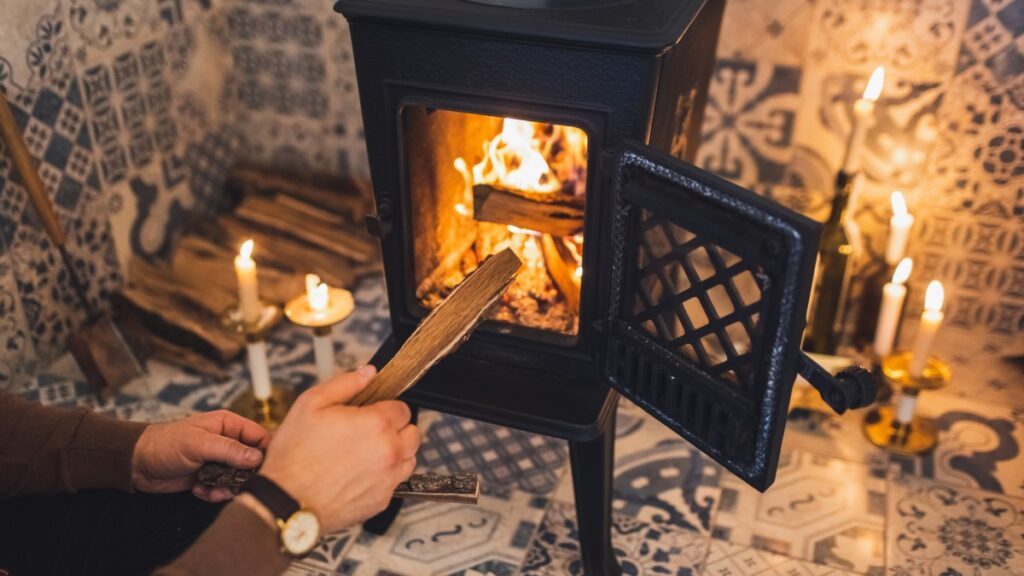
The dirtiest wood-burning stoves could no longer be sold under government plans to meet a tougher air pollution target.
However, the push for cleaner air will stop short of a blanket ban on new stove sales, as some campaigners have called for. Neither will it impact burning by homeowners who already have a stove, The Times understands.
There were more than 15,000 complaints about smoke control area rules in England from August last year to September this year over open fires and stoves used at home.
As part of a wide-ranging environmental improvement plan (EIP), on Monday the government set a goal for the most harmful type of particulate matter, PM2.5, to not exceed 10 micrograms per cubic metre in 2030. The deadline is ten years earlier than was previously required, which former Conservative ministers had claimed was unachievable.
The change brings the UK in line with the European Union, though it is still twice as high as the World Health Organisation recommends.
Particulate matter includes byproducts of burning wood such as soot.
“It’s a step in the right direction. It’s not quite Ella’s law but we’re getting there,” said the campaigner Rosamund Kissi-Debrah. An inquest found that the death of her nine-year-old daughter Ella was linked to exposure to dirty air.
Kissi-Debrah said that she would like more to be done on indoor air pollution and nitrogen dioxide, a toxic gas produced by diesel vehicles. The Times’s Clean Air for All campaign has urged stronger action to reduce air pollution.
Officials said that the new PM2.5 target for 2030 was possible because concentrations had fallen faster than expected since 2020. That was due to a reduction in UK pollution and dirty air blown in from continental Europe.
Most of the UK has already met the 2030 target. Average levels sat at 7.2 micrograms per cubic metre in 2024, with the highest concentration last year being 11 micrograms per cubic metre.
However, scientists have linked even low levels of PM2.5 exposure to heart and lung problems. Cars account for 26 per cent of the pollutant in the UK, and household burning of wood and other fuels for another 20 per cent. Heavy industry and other sources make up the rest.
The government will launch a consultation on domestic burning next year. The main impact on householders will be tighter standards for how much pollution new stoves can emit.
Officials have not spelt those out yet, but figures in the heat industry are expecting a limit of 3g of smoke per hour in smoke control areas, a level proposed by the last Tory government but never put into place. At present the limit is 5g for new appliances.
Calvin May, head of technical services at the installer body Hetas, said that a growing number of stoves, marketed under a “cleaner choices” labelling scheme, already met the new limit. He said consumers were buying cleaner stoves because of councils extending smoke control areas that enforce the limits. Oxford and Reading have expanded theirs, while Brighton and Hove is considering expanding them.
Some campaigners said that the clean air push could be marred by Labour’s backing for major infrastructure projects. Will McCallum, Greenpeace UK’s co-executive director, said: “Stricter air pollution targets are a good thing, but how do you square them with a new Heathrow runway and the Silvertown Tunnel?”
The EIP also promised a green paper to improve nature access, £500 million for restoring landscapes, and set a new legal goal of halving the establishment rate of invasive species, such as Japanese knotweed and American mink. Emma Reynolds, the environment secretary, said the plan amounted to “a step change in restoring nature”.