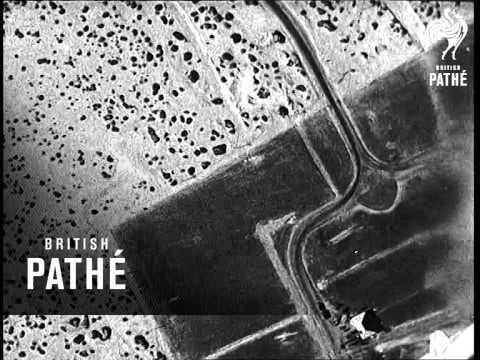
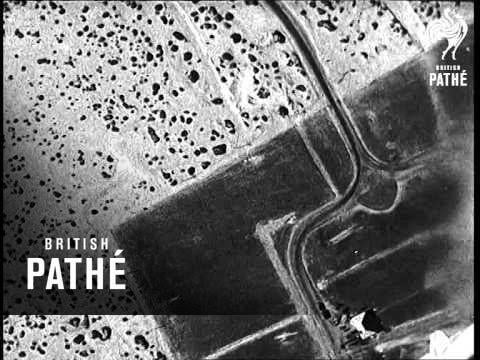
Was the first footage of space (1946 V2 No. 13 Rocket) sped up or not?
So, me & my friend are debating of this footage is sped up any or not. Wikipedia says it's a time-lapse, but the movement doesn't look sped up any. Any experts here that can chime in & set the record straight? Thanks in advance!
Certainly looks like it, or more so that it probably only took limited images per second, but are played back faster to not be jarring
entered_bubble_50 on
Yeah, it’s definitely sped up. Compare the footage taken from the ground of how slowly it rises, compared to the speed it climbs in the footage on the rocket. In any event, it’s in space in less than 10 seconds. The Karman line is at 100km altitude, Which would mean it would have to be heading upwards at about 10 km a second on average. The peak velocity of a V2 was about 1 or 2km a second I believe.
Brixjeff-5 on
You could compute its average speed by measuring how long it took in the video to reach apogee. It’s looks like at least 3-4x sped up imo, that thing reached the Karaman line faster than any icbm interceptor
haruku63 on
Often such cameras had lower frame rates to cover more time, but results were often played with normal speed projectors. The Apollo missions carried a 16mm camera, often recording at lower frame rates.
The V-2 had a total burn time of around 70 seconds, whereas in the video it lasts about 9 seconds, so the time lapse is about 7-8x normal speed.
peterabbit456 on
Given the known acceleration of a V2 is roughly close to that of an Atlas V, a Falcon 9 or an Electron, the climb to 100 km altitude should take between 4 and 8 minutes. This video was just over 1 minute. Therefore, it is sped up between 4 and 8 times.
American time-lapse cameras used post WWII for aircraft test flights were usually run at 4 frames/second. The normal speed used with 16mm film was 16 framed/second, so my best guess is that this is running at 4 times normal speed, although I would not be surprised if it proves to be 8 times real speed.
ogodilovejudyalvarez on
The movement absolutely looks sped up. Watch any modern onboard launch video to see why this is so.
elmz on
The V-2 rockets launched from white sands had ~60 seconds of burn time. No. 13 burned for 59.8 seconds. The video of this launch was taken with a 35mm camera set to taking a photo every 1.5 seconds. The burn in this video is roughly 7 seconds long, so the video is likely sped up ~8-9 times.
**Edit:** On closer inspection, I count 186 frames in total where you can see the flame/smoke from the burn. Given the burn time of 60 seconds, that makes ~3 frames per second recorded, which doesn’t add up when all stories say the camera took a picture every 1.5 seconds (0.67 fps). Were it truly filmed at that framerate, the burn should be over in 40 frames, by which point the launch area still takes up a third of the picture frame.
The rocket took 180 seconds to apogee, if we guess that the end of the video is apogee, 22 seconds after launch in the video, that also gives us a speed-up rate of 8.18 times, so likely 8. That also adds up to what we get from the observed burn time in the video, if it’s sped up 8 times, that makes the burn 7.4 seconds on video, which seems to match pretty well. And my observed(counted) framerate of 3 fps also makes sense, as 24 fps was pretty standard for video, so 3 fps played at 24 fps makes the video sped up 8 times.
Which also means the articles claiming the framerate being 0.67 are likely wrong(?).

9 Comments
Certainly looks like it, or more so that it probably only took limited images per second, but are played back faster to not be jarring
Yeah, it’s definitely sped up. Compare the footage taken from the ground of how slowly it rises, compared to the speed it climbs in the footage on the rocket. In any event, it’s in space in less than 10 seconds. The Karman line is at 100km altitude, Which would mean it would have to be heading upwards at about 10 km a second on average. The peak velocity of a V2 was about 1 or 2km a second I believe.
You could compute its average speed by measuring how long it took in the video to reach apogee. It’s looks like at least 3-4x sped up imo, that thing reached the Karaman line faster than any icbm interceptor
Often such cameras had lower frame rates to cover more time, but results were often played with normal speed projectors. The Apollo missions carried a 16mm camera, often recording at lower frame rates.
https://www.nasa.gov/history/alsj/alsj-DAC.html
The V-2 had a total burn time of around 70 seconds, whereas in the video it lasts about 9 seconds, so the time lapse is about 7-8x normal speed.
Given the known acceleration of a V2 is roughly close to that of an Atlas V, a Falcon 9 or an Electron, the climb to 100 km altitude should take between 4 and 8 minutes. This video was just over 1 minute. Therefore, it is sped up between 4 and 8 times.
American time-lapse cameras used post WWII for aircraft test flights were usually run at 4 frames/second. The normal speed used with 16mm film was 16 framed/second, so my best guess is that this is running at 4 times normal speed, although I would not be surprised if it proves to be 8 times real speed.
The movement absolutely looks sped up. Watch any modern onboard launch video to see why this is so.
The V-2 rockets launched from white sands had ~60 seconds of burn time. No. 13 burned for 59.8 seconds. The video of this launch was taken with a 35mm camera set to taking a photo every 1.5 seconds. The burn in this video is roughly 7 seconds long, so the video is likely sped up ~8-9 times.
https://www.thisdayinaviation.com/24-october-1946/
**Edit:** On closer inspection, I count 186 frames in total where you can see the flame/smoke from the burn. Given the burn time of 60 seconds, that makes ~3 frames per second recorded, which doesn’t add up when all stories say the camera took a picture every 1.5 seconds (0.67 fps). Were it truly filmed at that framerate, the burn should be over in 40 frames, by which point the launch area still takes up a third of the picture frame.
The rocket took 180 seconds to apogee, if we guess that the end of the video is apogee, 22 seconds after launch in the video, that also gives us a speed-up rate of 8.18 times, so likely 8. That also adds up to what we get from the observed burn time in the video, if it’s sped up 8 times, that makes the burn 7.4 seconds on video, which seems to match pretty well. And my observed(counted) framerate of 3 fps also makes sense, as 24 fps was pretty standard for video, so 3 fps played at 24 fps makes the video sped up 8 times.
Which also means the articles claiming the framerate being 0.67 are likely wrong(?).
be all about the frame rate honestly