
The draft Community Rights Plan in North Macedonia does not protect the rights of Macedonian Bulgarians.
The draft Community Rights Plan in North Macedonia does not protect the rights of Macedonian Bulgarians. It serves as an alibi for Skopje in front of European institutions. Its aim is, once again, to cover up the situation regarding the rights of the Bulgarian community and sweep the problems under the rug.
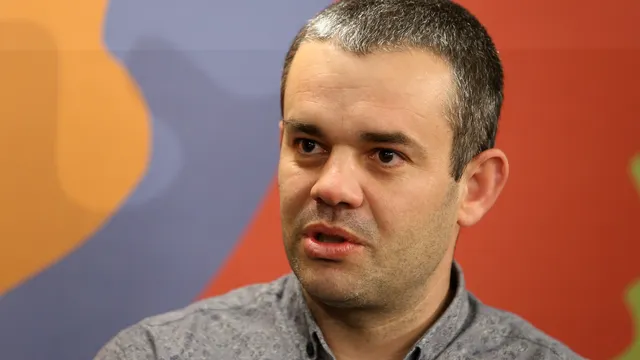
This was stated in an interview with BGNES by Georgi Tsarnomarov from the “Balkan Bridge” association.
We spoke with him about the draft so-called “Action Plan for the Protection of Community Rights,” whose presentation he attended.
The European compromise agreed upon in 2022 represents a plan of clearly defined and sequential steps. This plan guarantees North Macedonia’s EU membership if Skopje faithfully fulfills all its obligations and thus implements reforms. The inclusion of Bulgarians in the constitution is only the first of these steps. On its own, without the subsequent steps, it is not sufficient to guarantee the rights of Bulgarians in the neighboring country.
The second important step for Skopje will be the adoption of an Action Plan dedicated to protecting community rights, including those of the Bulgarian minority. Skopje is expected to identify the problems affecting our compatriots’ rights, outline measures to resolve them, provide funding for their implementation, establish a monitoring mechanism to ensure these measures are applied, and define clear indicators of success.
Skopje plans not to implement this second step, which, after recognizing Bulgarians in North Macedonia, should clearly regulate the protection of their rights. Today, in the capital of the neighboring country, a draft of the Community Rights Plan was presented. According to information from attending representatives of Bulgarian associations, the content of this plan does not meet their expectations at all. Moreover, they claim that Skopje is rushing to finalize this plan by the end of the year, in order to present Europe and Bulgaria with a fait accompli.
BGNES: Mr. Tsarnomarov, when did the authorities in North Macedonia invite Bulgarian organizations for a meeting?
Tsarnomarov: We were not invited to a special meeting for Bulgarian organizations. We were invited on a general basis, together with many other associations from across the country, most of which represent citizens without problems in North Macedonia. We received an email on Thursday evening, along with a copy of the Plan and a request to review it in order to suggest improvements.
BGNES: You had only four days to review the text?
Tsarnomarov: Yes, some of us had even less time, since we all have our professions and families. We received a 37-page complex text in English; not all of us are highly proficient in it, and even fewer have legal training. We prepared as best we could.
BGNES: And why in English?
Tsarnomarov: Apparently, the plan was not intended for us, for our country, but only for European eyes and ears. We received it in the official language of North Macedonia only late in the evening before the meeting – someone realized there was an obvious problem.
BGNES: What are your impressions of the content?
Tsarnomarov: This is not a plan to protect our rights. It is an alibi for Skopje in front of European institutions. Its goal is, once again, to cover up the situation regarding the rights of the Bulgarian community and sweep the problems under the rug, while formally fulfilling one requirement of the Negotiation Framework so that the country advances toward the EU without actually reforming.
BGNES: Why do you think so?
Tsarnomarov: The plan does not address what problems it actually targets. How can we write a plan without knowing why we are writing it? Therefore, the plan contains no concrete measures to protect against institutional repression, hidden discrimination, or hate crimes. There are only general recommendations on improving some existing mechanisms, which we have experienced firsthand and know how poorly they work. It is completely unclear who will oversee the implementation of the plan. It also does not specify what budget will be allocated for the supposedly major efforts to protect our rights. Apparently, we are again writing plans we do not intend to implement.
BGNES: What did you suggest to improve this plan? Did you even have a chance to provide input?
Tsarnomarov: Since 2022, we have expected to be consulted throughout the drafting of this plan. This is a European requirement – to develop it inclusively, which, however, did not happen. Instead, they gave us a pile of paper today and said: “Give us your suggestions by tomorrow, we need to finish.” The whole approach is not serious.
At least today we had the opportunity to express our opinion and outline our objections in general. We requested more time. We want to indicate in writing what the plan should include. We want it to clearly define what it will address. We want to participate in monitoring its implementation. I noticed that some other communities shared similar concerns – I will not mention which, to avoid causing them problems in North Macedonia.
In response, we were given a deadline – to submit our comments by December 9. How is that possible? That’s realistically only three working days in North Macedonia. They have been preparing something for almost three years, and they expect our reaction in three working days! This is another attempt at deception.
BGNES: What has been the reaction of Bulgarian institutions? What should Bulgaria do, in your opinion?
Tsarnomarov: As far as I understand, North Macedonia considers this matter an internal issue and does not want to consult Bulgaria. But Sofia must clearly state that such deception has no place in the European Union! We can also defend our rights, but we hope to receive support and expertise from the Bulgarian institutions. We trust them more than our own here, and therefore we want them to represent us, or at least help us represent ourselves. | BGNES