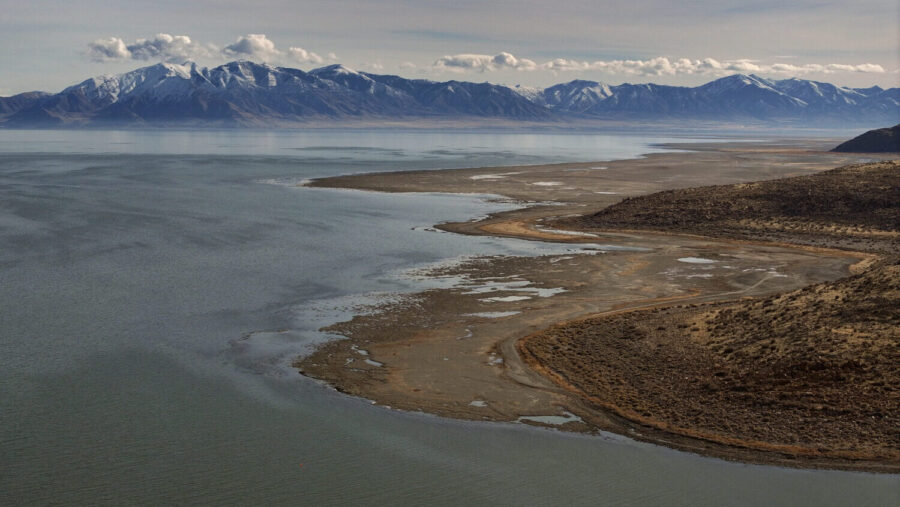
SALT LAKE CITY — Environmental managers are investigating potential illegal dumping after more than a dozen leaking oil drums were found near the Great Salt Lake.
Dave Noriega, communications manager with the Utah Department of Environmental Quality, said the drums were discovered around Thanksgiving by a hiker just off Stansbury Island Road, off of Interstate 80 in Tooele County.
“They see these barrels that are leaking this yellow-orange sludge material — it had leaked out onto the ground. More than a dozen 55-gallon drums,” Noriega said.
Read more: Deadline for Great Salt Lake water projects extended as shutdown creates new hurdle
According to the hiker, the drums had been there before, but they weren’t leaking, and there was yellow caution tape that had been torn down.
Noriega said they’re still working to determine what was actually in these drums and what part, if any, of the environment needs to be treated.
“We’re currently investigating what the material was, what the contamination was, how far it reached, how far it spread. Did it hit any water bodies? Did it just contaminate the soil?” he said. “It looks to be more of a slow contamination right now, preliminarily.”
They also haven’t found who’s responsible for the drums being there, but depending on what they find, Noriega said they could impose hundreds, if not thousands, of dollars in fines.
Read more: Flagpole installed illegally on Black Rock near Great Salt Lake, state agency mulls over removal
The Department of Environmental Quality has a duty officer who’s available 24 hours a day to take reports. If you notice an environmental hazard, you can report it at 801-536-4123.
“If you come across some sort of spill, and there’s an immediate human health concern, then make sure you call 911,” Noriega said. “But if it doesn’t look urgent … make sure you give us a call at that hotline.”
Noriega also wants to remind people what not to do if they come across a spill.
“Don’t touch the containers. Don’t touch the contaminated area. Don’t try to figure out and do the investigation yourself. If you can, take some pictures. That’s very helpful in our investigation.”
Contributing: Michelle Lee