
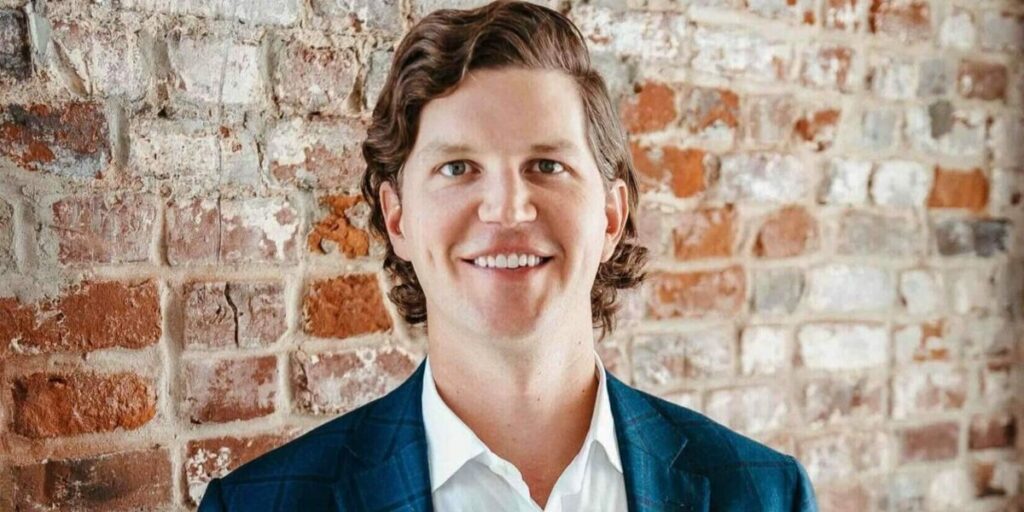
MEMPHIS, Tennessee — While
Kemmons Wilson Hospitality Partners primarily has assets in the Southeast, it
has some of its namesake’s wanderlust, according to his grandson Webb Wilson.
“I always say we got a little
bit of a curse of Kemmons. Everything was an opportunity for him,” he said. “We
probably look at it the same way. We’ve always said we’re only going to really
invest domestically and so we’ll evaluate each opportunity on its merits.”
When discussing KWHP’s latest
deal, a potential merger with Sotherly
Hotels, Wilson, talked about the commonalities of the REIT and his company.
“Ultimately, our view is we’re
in the Southeast. We appreciate these markets,” said Wilson, chief investment
officer and managing partner at Memphis-based KWHP. “We understand a lot of the nuances of the markets. We’ve been
excited to continue to benefit from that and there’s just a lot of interesting
opportunity there.”

I always say we got a little bit of a curse of Kemmons. Everything was an opportunity for him. We probably look at it the same way. We’ve always said we’re only going to really invest domestically and so we’ll evaluate each opportunity on its merits.
Webb Wilson
The merger, which still needs
approval by Sotherly stockholders and other customary closing conditions, is
expected to close in the first quarter of 2026. To acquire the REIT, KWHP
formed a joint venture with Los Angeles-based Ascendant Capital Partners LP
called KW Kingfisher LLC to acquire all the outstanding shares of Sotherly
common stock for $2.25 per share in cash and take the assets private.
Wilson said KWHP has had a
relationship with Sotherly when it made an investment with them back in 2020
(which has subsequently been paid off). “We knew the assets well and we knew
the team well,” he explained.
He noted that Sotherly’s
portfolio of 10 full-service assets in the Southeastern U.S. is a good fit for
KWHP.
“This fits with our view of
buying quality assets, particularly markets that we are bullish about or we
think have some long-term tailwinds around them,” Wilson said. “It’s a good
juxtaposition to our last few investments we’ve made.”
Wilson’s grandfather, Kemmons
Wilson, started the hospitality business in the 1950s after a frustrating
family vacation led to the development of the first Holiday Inn in 1952. The
first franchise came two years later. When he retired in 1979, the company had
1,759 locations in 50 countries. He sold Holiday Inn to the British company
Bass PLC, which later became part of IHG Hotels & Resorts.
KWHP was founded in 2017 by the
third generation of the family and, across its funds, currently has over 4,000
keys in 17 states, including 22 properties. The company has approximately $500
million in assets under management in the U.S.
Earlier this year, KWHP invested
in Casago as part of its merger with Vacasa in the short-term rental business.
“That was really an interesting
play, and it was transforming a business, really into more of a franchise
model, which obviously we have a lot of experience with,” Wilson said, noting
the investment is helping move that industry into being a more institutionalized
one. “We really felt like having a quality franchise execution there would make
a lot of sense.”
Earlier this year, KWHP acquired
a Placemakr Music Row building in Nashville that will be turned into a Sports
Illustrated timeshare resort.
Wilson said that because his
grandfather, Kemmons, was also a pioneer in the timeshare space, the investment
made sense for the company.
“It’s a space that we know
really well. We understood why it works as a timeshare, why that market is a
good timeshare market, and so we’re able to run hard at that and be able to get
that deal done,” he said, noting the plan will be to eventually sell the
property to Travel + Leisure.
Current deal
environment
Wilson noted that KWHP, which
not only acquires assets but also deploys capital (the company has about $500
million of capital deployed across two blind-tool vehicles right now), has seen
an uptick in deal activity in the back half of 2025.
“It seems that people are
starting to be a little more active,” he said. “From a bid-ask perspective, you
generally haven’t seen that bid-ask top fully collapse… for buying a
high-quality hotel, you still have sponsors or owners holding out for things.
“What we’ve seen more and more
is increased demand for preferred [equity] and ways just to buy additional time
or a cash-in refi and keep in some fixed-rate debt a little bit lower.”
What we’ve seen more and more is increased demand for preferred [equity] and ways just to buy additional time or a cash-in refi and keep in some fixed-rate debt a little bit lower.
Webb Wilson
While he said his answer would
have been different six months ago, Wilson also said he’s seeing more
lender-forced deals.
“We’ve always been hopeful that
the next six months, lender-forced [deals] were coming through and would start
to force reality,” he said. “But I will say, we’ve got a couple of deals in our
pipeline now that are more non-performing loans or some note purchase. So, that
is starting to happen… It’s starting to trickle out.”
Wilson said, looking at KWHP’s
pipeline right now, there are three “really interesting” preferred equity deals
that either need some renovation dollars or the owners have a good debt
position and want to take advantage and not refi. He also mentioned a few
fee-simple acquisition opportunities where the hotel needs some renovations or
repositioning.
Wilson also said the constraint
right now isn’t on debt availability.
“It’s really equity and the
sponsor’s ability to match that debt capacity,” he said. “Everyone still wants
a nice cushion of equity, and that’s been the hardest piece, which is getting
that risk capital in place. That’s been the slower part of the market.”
Is the deal environment getting
more competitive? Wilson said at the top end for the better-performing assets,
the answer is yes. But it’s a different story for smaller checks.
“You’re starting to see,
especially at the top end… some players come in,” he said. “For the $10 to $50
million checks, there’s not a lot of competition in that space. If you look at
lenders, in particular, you’ve seen that market really decrease and go away. So
the net is probably less competition, in general. But at the higher end, you’re
starting to see some of the bigger players start to come back in.”

Kemmons Wilson Hospitality Partners sold The Harpeth in Franklin, Tennessee in September (Credit: Hotel website)
KWHP a net buyer
Wilson expects KWHP to be a net
buyer still (it sold one asset this year, The Harpeth in Franklin, Tennessee,
and has two other potential dispositions), and the company will continue to
deploy more capital.
“Overall, we’re deploying more
capital just because we think it’s a really interesting buying time.”
For quality assets that generate
significant NOI and good yields, there’s still a solid demand right now.
“That cash flow buyer is still
present, and we’ve been able to create some good demand around it,” he said.
“In tertiary markets and in places that have available land… people are still a little risk-averse there.
Not that anyone’s really building a new hotel these days.
“In those places, cash flow is
going to have more value because it’s a limited supply over time. But you still
see a little bit of a differential in cap rate, whereas, if you’re in downtown
Franklin, like we were, you can’t really put up a hotel next door to it. So,
that’s allowed [us] to get a little bit higher price per key.”
KWHP will start with a pretty
wide funnel of potential deals, Wilson said. “It really comes down to whether
we have a skillset or knowledge around either the market or execution there
that makes sense,” he said. “We’ll always tend to have that wider funnel, and
will go anywhere, but I generally won’t see a lot of us on the West or East
Coast or core urban areas because generally that competition for capital is
pretty robust. We continue to have some concerns about NOI margin shrinking
there, either through wage inflation, tax policy or insurance risk as well.”
So, where are the opportunities
right now? Wilson mentions the short-term rental market, in which KWHP has
already made a significant investment.
“We do think short-term rental
as a platform and as an industry has some additional opportunities there as
that continues to institutionalize,” he said. “So either finding certain
markets or certain operators there to lean in and support and back would make a
lot of sense. That’s a space that we’re spending a little time on.”