

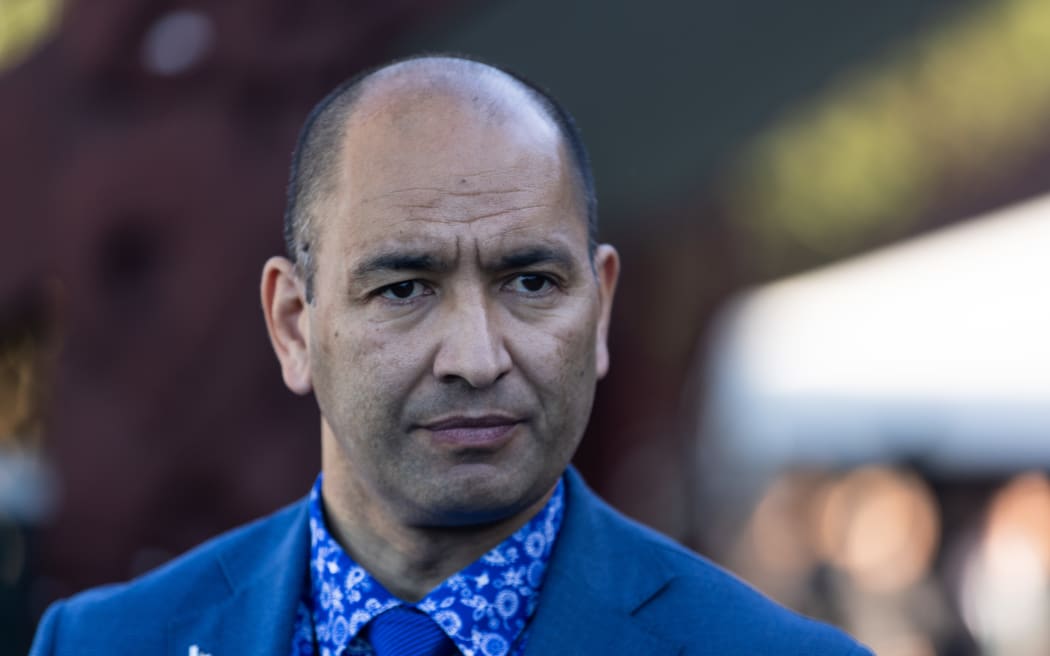
Associate Housing Minister Tama Potaka
Photo: RNZ / Samuel Rillstone
The government is making changes to the Retirement Villages Act, which it says will address concerns around fairness and provide certainty to residents and their families.
Changes to the Act have been long-signalled, and a long time coming, since a review into the law more than two years ago.
Around 100 residents [. https://www.rnz.co.nz/news/national/577765/retirement-village-residents-descend-on-parliament-to-challenge-politicians came to Parliament last month to advocate for changes].
Among their key concerns were that there needed to be a buyback timeframe, as there was currently no deadline for operators to repay residents, or their families, once they had left the village.
Associate Housing Minister Tama Potaka said the changes, which will go through a full legislative process, would strengthen protections, including requiring operators to be upfront about what they offer, and to set clear responsibilities for the chattels they own.
The changes also include:
- A process for former residents to apply for early access to funds in situations of specific need
- Interest being paid after six months if a unit remains unlicensed
- Repayment of funds no later than 12 months after a unit is vacated
- Weekly fees and deductions stopping immediately when a resident vacates

Photo: 123RF
Around 63,000 New Zealanders currently live in retirement villages, with two thirds of those villages also providing aged care facilities.
Potaka said for too long, residents had faced uncertainty, especially when moving out or waiting for money to be repaid.
“These changes put people first by setting clear expectations and making the whole system more transparent,” he said.
A review conducted by the Ministry of Housing and Urban Development [. https://www.rnz.co.nz/news/national/524351/calls-for-overhaul-of-law-governing-retirement-villages began under the previous government] and attracted more than 11,000 submissions during consultation in 2023.
Progressing the review was part of National and New Zealand First’s coalition agreement.
The legislation will be introduced to Parliament by mid-2026.
Sign up for Ngā Pitopito Kōrero, a daily newsletter curated by our editors and delivered straight to your inbox every weekday.