
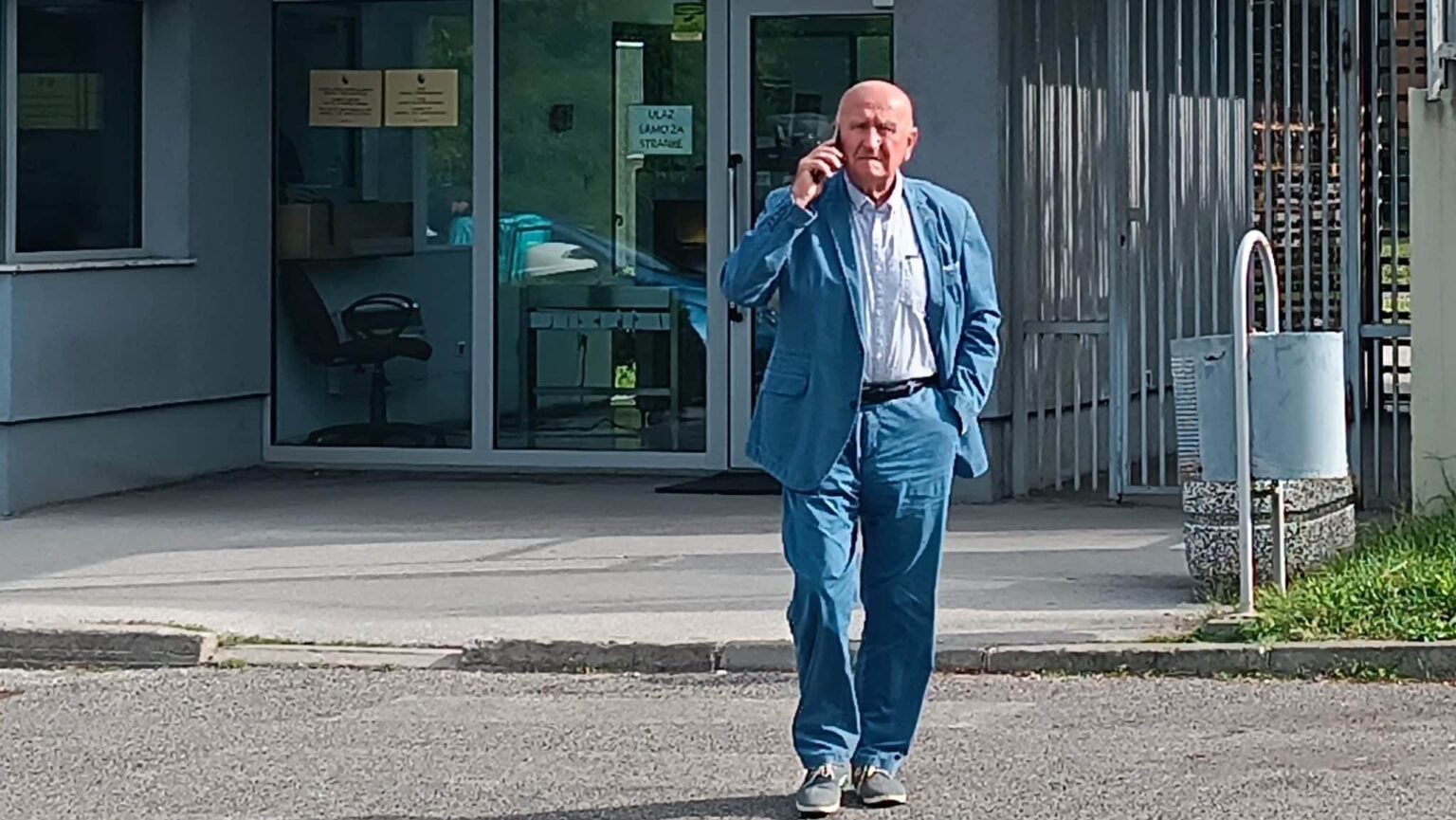
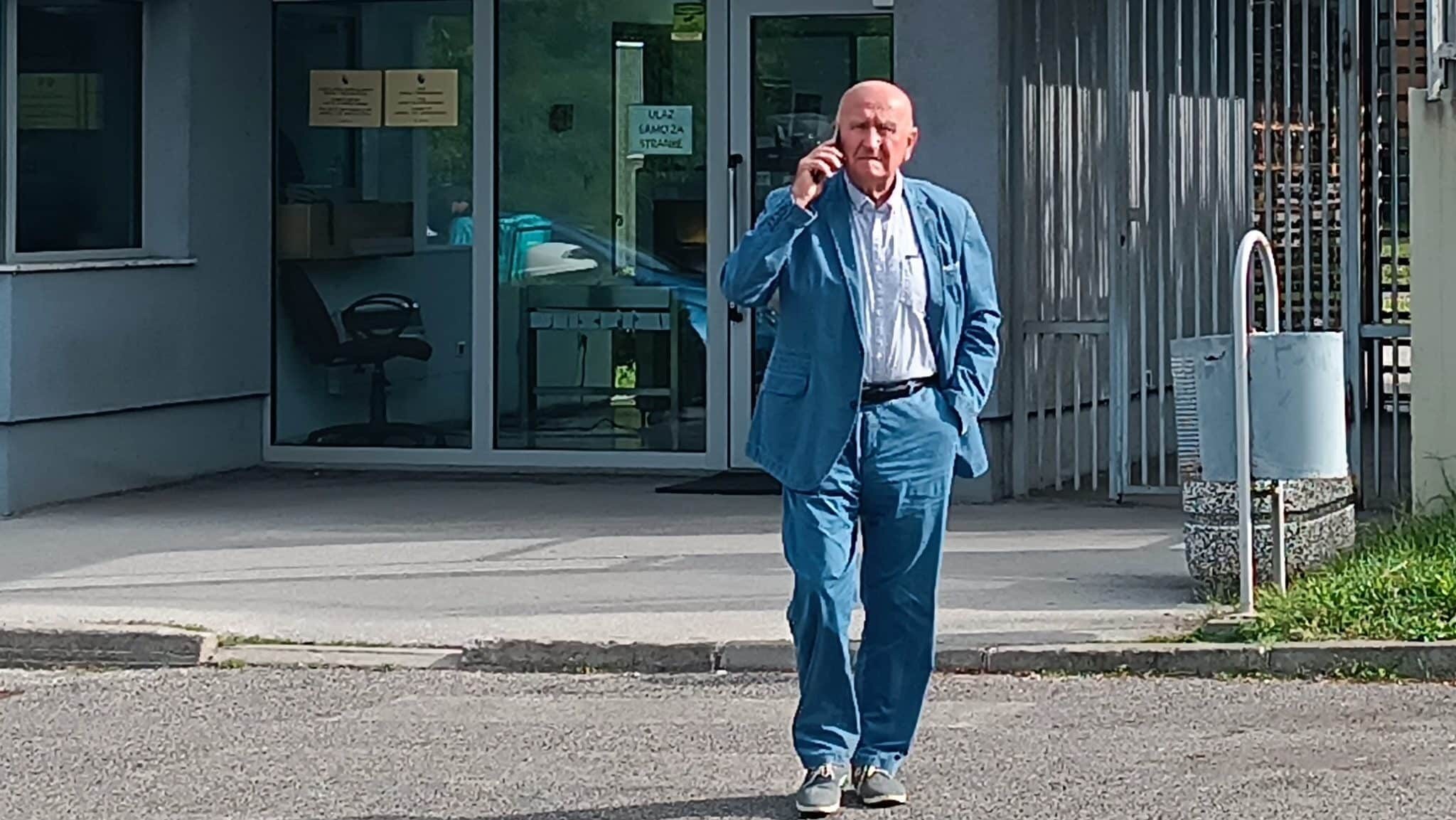
Borislav Paravac outside the court. Photo: BIRN.
The appeals chamber of the Bosnian state court has upheld the verdict acquitting Borislav Paravac and co-defendants Andrija Bjelosevic and Milan Savic of committing wartime crimes in the Doboj and Teslic areas during 1992, Bjelosevic’s defence lawyer confirmed to BIRN.
“The prosecution’s appeal was rejected and the first-instance verdict was confirmed in its entirety. They are now definitely acquitted,” defence lawyer Miodrag Stojanovic said.
Paravac was the Serb member of Bosnia and Herzegovina’s tripartite state presidency after the war, from 2003 to 2006, and a member of the Serb Democratic Party, which was in power in the Serb-dominated Republika Srpska entity from 1991 to 2006.
In the first-instance verdict in August 2024, Paravac, Bjelosevic and Savic were acquitted of charges of involvement in murders, unlawful detentions, the forcible resettlement of the Bosniak and Croat population, attacks on civilians and settlements, forcible disappearances, physical abuse, torture, pillage and the destruction of religious facilities.
But the court found that the prosecution did not prove that Paravac, as the president of the Crisis Committee in Doboj, and Bjelosevic, as chief of the Doboj police’s Public Security Centre, participated in a joint criminal enterprise together with Crisis Staff member Milan Ninkovic, Serb military chief Milovan Stankovic and others.
The court said it was not proved that they were aware that plans drawn up by the Serb authorities could only be carried out through the systematic violation of international humanitarian law and the persecution of the Bosniak and Croat population.
The court concluded that it was not disputed that a Serb military and police formation known as ‘Mice’ was sent from Doboj to Teslic and that its members committed murders and other violations there.
However, it said there was no evidence that Bjelosevic formed ‘Mice’ and entrusted the task of running the formation to Savic, who was his deputy, according to the indictment.
The case initially included another defendant, Milan Ninkovic, but the case against him was separated from the others due to his illness. Milovan Stankovic was unavailable for prosecution.
This judgment is now final and cannot be appealed.