
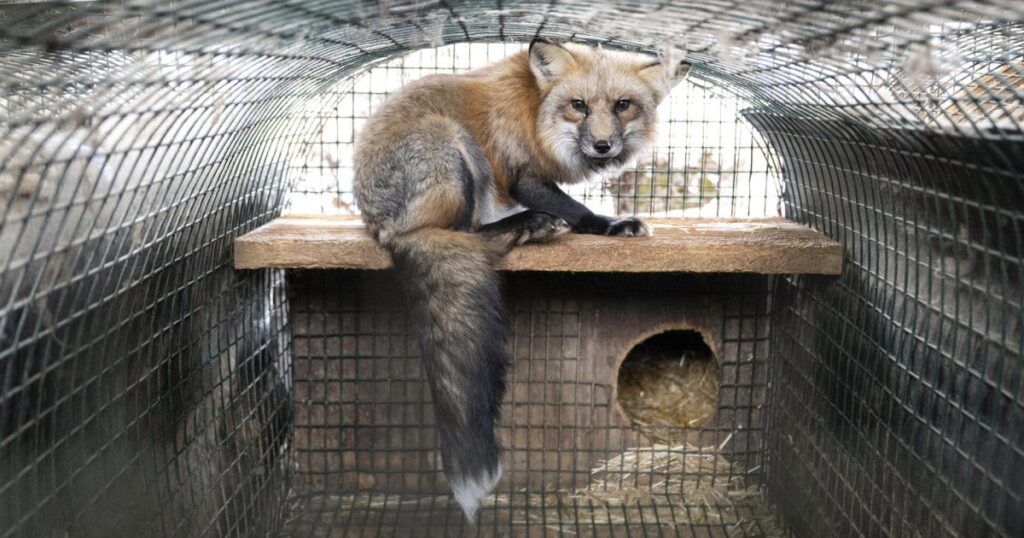
A policy decision from the EU Commission in response to that Citizens Initiative is planned for March 2026, and in preparation for that, as part of the Fur Free Alliance and together with Eurogroup for Animals and Four Paws, we released a report showing the economic impact of the fur trade in Europe. Since the fur industry has declined so rapidly in Europe, and globally, and the environmental and public health costs remain high, the fur sector comes at a cost to European citizens of 446 million euros (more than half a billion dollars) annually. On top of that, the EU added American mink to its list of Invasive Alien Species of Union Concern, which means that keeping and breeding American mink is banned starting July 2027, unless countries apply for authorizations to allow their fur farmers to continue. It’s hard to see why any country would want to continue propping up an industry that costs wildlife and its taxpayers so much.
In the U.S., we worked closely with Colorado State University’s Animal-Human Policy Center to survey residents in four Northeastern states —Connecticut, Massachusetts, New Jersey and New York—to gauge support for banning new fur sales. After learning of the cruelty and risks posed by the fur trade, 64% of respondents supported banning fur sales across the region. Banning fur sales not only creates a more humane marketplace in those states, but it impacts the overall demand for fur products globally.
It seems doubtful that the global fur industry will ever rebound, especially when so many major fashion companies and influencers have gone fur-free, including this year’s major fur-free announcements from New York Fashion Week and Condé Nast, the parent company for Vogue, Glamour, GQ, Vanity Fair and several other publications. These announcements not only mean that the fur trade will never be able to advertise or promote its products on New York Fashion Week runways or in the pages of Vogue again, but also that two of fashion’s biggest trendsetters have determined that fur is too cruel to ever be fashionable.
Also, during this year’s fashion weeks in New York, London, Milan and Paris, we again teamed up with fellow Fur Free Alliance members to put pressure on outdoor apparel brand Woolrich, one of the last companies still selling fur from foxes, coyotes and raccoon dogs. Supporters took to the streets with colorful demonstrations outside stores, sent more than 200,000 emails and calls into the company and posted countless messages on social media, asking the company to go fur-free. While Woolrich has so far declined to discuss the issue, we know they heard us and will continue to reach out to them until they remove fur from their shelves.
The fur industry is collapsing, which is good news for material innovators, ethical fashionistas, public health and environmental specialists, and above all, animals. With so many urgent issues affecting animals, we often don’t take the time to pause and appreciate all that has gone into getting us to this point. The new year is the perfect time for that reflection, if only for a moment as we look to 2026 to continue this momentum and end this cruel trade for good.
Kitty Block is president and CEO of Humane World for Animals. Follow Kitty Block.