
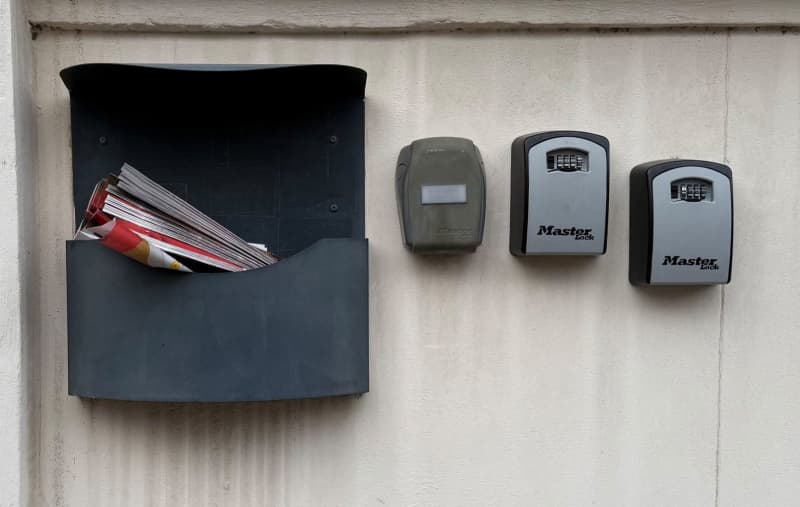
Lock boxes for storing the keys to tourist apartments have become a symbol of Italy’s problems with overtourism. Many locals find the lock boxes, hanging almost everywhere in large cities, an eyesore.
Now, key lock boxes are set to be banned in the northern Italian city of Milan after the city council passed a corresponding regulation on Thursday evening.
The ban is due to come into effect from January. After that, fines of up to €400 ($466.14) will be imposed if a key lock box is still installed near the apartment door or on the house facade.
In recent years, key lock boxes have become popular means of handling short-term rentals. They are often used by holiday flat owners to deposit keys, allowing their guests a contactless check-in. The visitor can open the box with a code and retrieve the key.
At a nationwide level, Italy has already made it mandatory that there must be a meeting between the owner and the holidaymaker even for short-term rentals. However, there is not yet a formal ban on key boxes everywhere.
Florence, in Tuscany, was the first major Italian city to ban key lock boxes at the beginning of the year.
Critics argue that the lock boxes spoil the cityscape and that check-ins without personal contact pose security risks.
“Apart from the aspect of urban design, the uncontrolled spread of key lock boxes poses security risks and can lead to inconveniences for residents,” the Milan city council argued. Short-term rentals, often offered via online platforms like Airbnb, are widespread in tourist hotspots such as Italy.
Italy has struggled to balance hospitality with the burden of overtourism. Venice made headlines with entrance fees for day visitors, which brought in over €5 million (about $5.8 million) in 2025.
Yet the core issue remains: crowded streets, exasperated residents, and fading everyday life.
Last year, Italy’s top cultural sites drew more than 60 million paying visitors, surpassing the country’s population for the first time.
Meanwhile the buried city of Pompeii, which had been attracting some 36,000 visitors on busy days, last year introduced a limit of 20,000. Tourists still flock to the attraction – one of Italy’s most popular – in hordes to see the archaeological park and learn about the victims of the Vesuvius eruption.
The Vatican is set to have had one of its busiest years in tourism, and even ahead of the recent death of pope Francis and the election of Pope Leo XIV, the city had expected some 32 million pilgrims to come to the city for the holy year of 2025.