
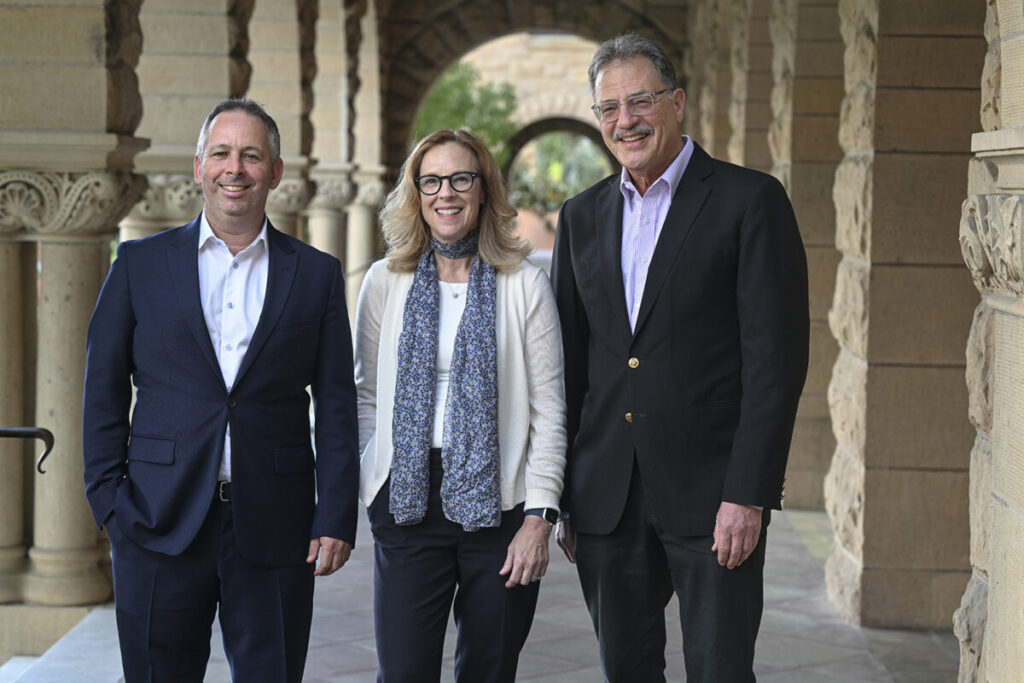
WhatsApp co-founder Jan Koum’s philanthropic foundation has endowed a permanent Israel studies program at Stanford University, doubling down on American academia at a time when many Jewish donors are increasingly eyeing the field warily over perceptions of anti-Zionist and antisemitic biases.
The Jan Koum Israel Studies Program was announced last month following a three-year pilot program at the Bay Area university, which was deemed a success, Alexandra LaForge, the Koum Family Foundation’s director of programs, told eJewishPhilanthropy recently.
The pilot program, led by Stanford professor Larry Diamond, launched before the Oct. 7 terror attacks. Even at that time, Israel was considered a controversial topic at American universities, but the issue exploded in the wake of the attacks. This is particularly true at Stanford, where an internal investigation determined last year that antisemitism was “widespread” on the campus.
In the wake of the Oct. 7 attacks and the major spike in antisemitic incidents around the world that followed them, many Jewish donors have begun questioning their support for elite universities. Some have pivoted to supporting explicitly Jewish or Israeli schools, while others have shifted to fund institutions that are considered more welcoming to Jewish students and others have invested in new universities, such as the University of Austin. LaForge said that the Koum Family Foundation, which has emerged in recent years as one of the most influential Jewish foundations in the U.S., held these deliberations as well.
“We’ve been a part of a lot of funder discussions about ‘Do you pull out [of academia]? Do you create other institutes of learning that are better for Jewish students? Do you try to fix from the inside versus the outside?’” LaForge said. “We think it’s going to take a lot. We’re gonna have to pull on a lot of different levers to improve higher education in general. But in a lot of ways, it feels like a program like this is needed now more than ever. It feels perhaps a little bit riskier now because things have been hard on campus. But that’s also shown us that it’s needed.”
The multidisciplinary program, which focuses not only on Israeli history and politics but on Israeli contributions to other fields, such as business, technology and environmental science, is based in the university’s Center on Democracy, Development, and the Rule of Law in its Freeman Spogli Institute for International Studies. It will feature visiting Israeli professors from a variety of fields. LaForge said the program took some inspiration from the Israel studies program at UC Berkeley.
Amichai Magen, who previously worked at Israel’s Reichman University and took part in the pilot program, will serve as its inaugural director. The Koum Family Foundation declined to specify the size of the endowment, but the university described it as a “major gift.”
“We’ve got a really important place in terms of U.S. higher education, and we’ve got a really strong team to partner with to get this going as an endowed program. And so it felt worth it to lean in on this particular opportunity,” LaForge said. “We’ve gotten nothing but support [from the university]. At the launch, the president of the university, John Levin, and the chair of the board of trustees, [Lily Sarafan,] was there. So really from the highest level of leadership, we feel very supported.”
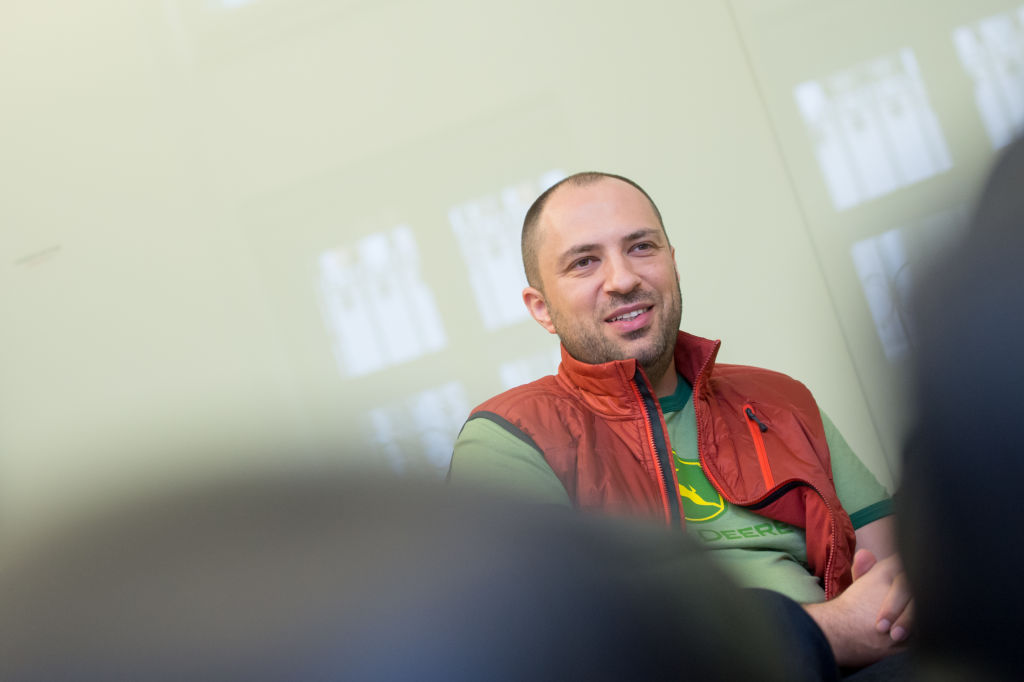 WhatsApp co-founder Jan Koum speaks during an interview at the DLD (Digital-Life-Design) conference in Munich, Germany, on Jan. 18, 2016. (Tobias Hase/picture alliance via Getty Images)
American-born Israeli environmental academic, activist and former parliamentarian Alon Tal, who also took part in the pilot program, noted the significance of a top university like Stanford hosting an Israel studies program.
“American political power and social power is still concentrated in elite universities,” Tal told eJP. “[The endowment] is as good an investment in Israel’s future standing in the American community as you can make.”
As an example, Tal, who previously served in the Knesset as a member of the centrist Blue and White Party, noted that — separate from his classes on climate and public policy — he had invited to participate in a debate against former Palestinian Authority Prime Minister Salam Fayyad about the war in Gaza. “I thought it was important that I was there, that he was not just going to speak alone,” Tal said.
In light of the urgency of the moment, LaForge said it was deeply important for the foundation to develop a clear, articulated mission for the program with Stanford.
“We aligned on a mission statement for the program that guides our grant and guides the activities of the program. It was an iterative process to get to something that the university wanted to adhere to and have as their North Star and that our leadership was comfortable with,” she said.
According to Magen, the program has four main “pillars”: offering students an opportunity to interact with Israeli scholars; providing American academics a chance to interact with their Israeli peers as a form of “humanization” to combat “demonization”; bringing American students and faculty to Israel for immersive programs; and serving as a resource for the wider Bay Area community through open conferences, lectures and other events.
The program’s role as a conduit for Israeli academics to partner with American universities is particularly significant in light of what Magen described as a coordinated and “pernicious” effort to harm Israeli academia. “There are concerted efforts on the part of Israel’s detractors to isolate Israeli academia out of the understanding that weakening Israeli academia weakens the Israeli economy and Israel’s national security,” he said.
This includes both overt calls to boycott Israeli institutions of higher education and a subtler, unofficial “shadowbanning” of Israeli academia, which has seen Israeli papers rejected from journals, presentations rejected from conferences, grants rejected for funding and partnerships rejected by universities abroad.
“It’s incredibly important to work to make sure that doesn’t happen. Isolating Israeli academia is morally wrong, it damages Israel and it damages the idea of free inquiry,” Magen said. “So at a time when there are these efforts to boycott, to break off academic ties with Israel, the fact that Stanford is doubling down on Israel and the fact that we received the support of the leadership of this university to open a new and permanent and endowed Israel studies program, is a ray of light in this darkness.”