
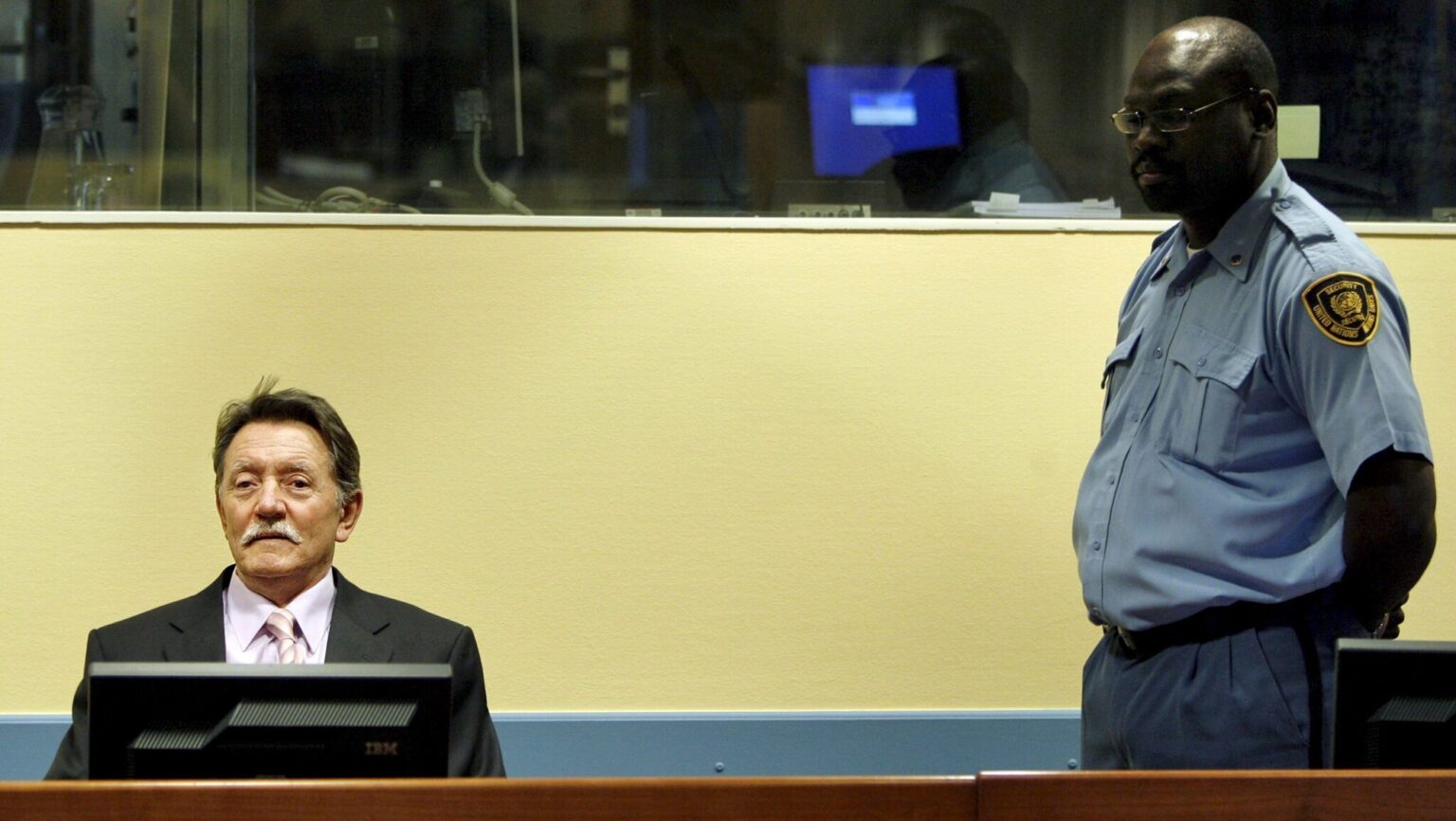
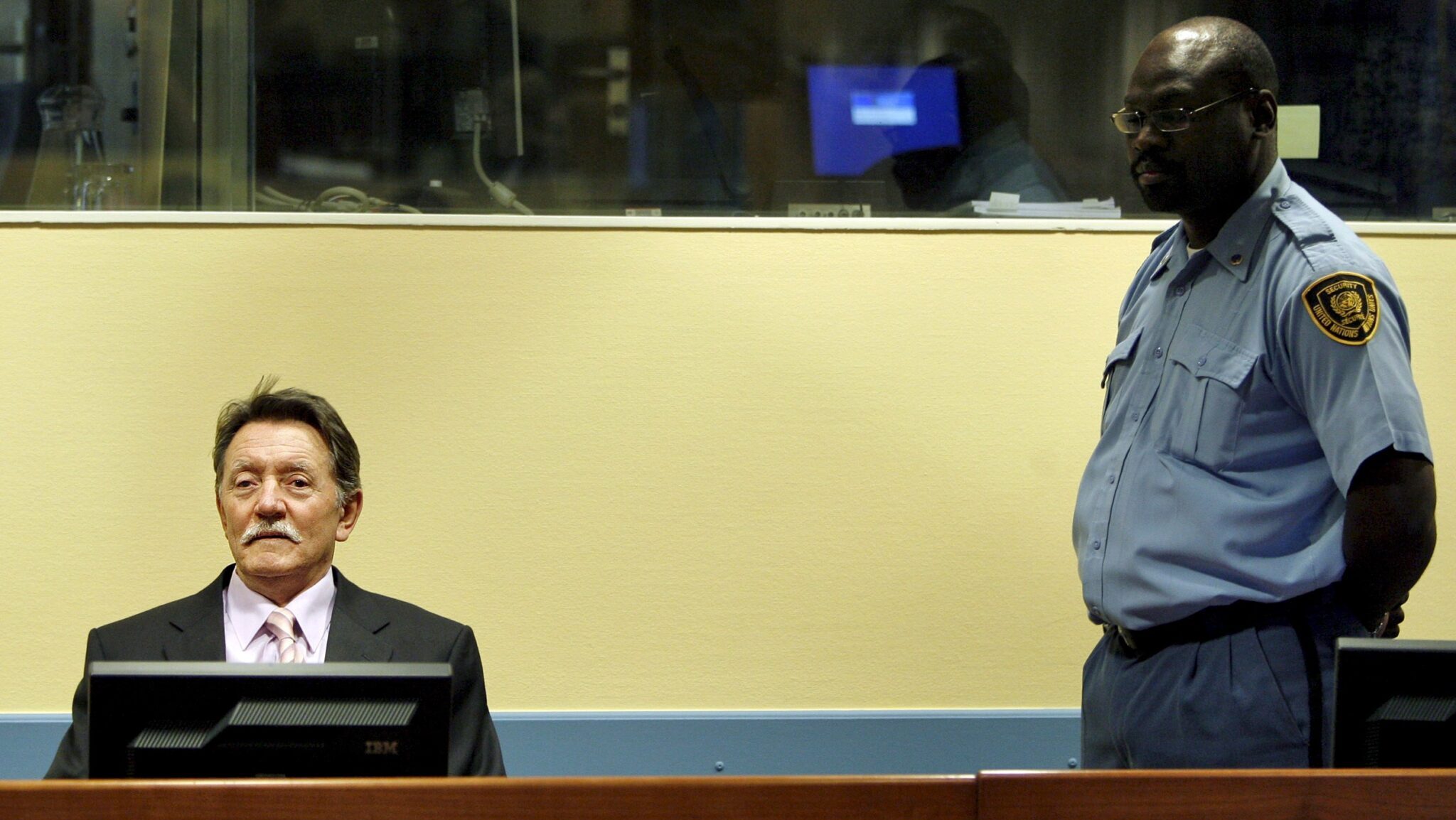
Dragomir Milosevic in court in The Hague, December 2007. Photo: EPA/KOEN VAN WEEL/POOL.
The president of the UN-backed International Residual Mechanism for Criminal Tribunal in The Hague, Graciela Gatti Santana, has rejected a plea from wartime Bosnian Serb Army commander Dragomir Milosevic for early release.
Milosevic, 83, who is serving his sentence in Estonia, had cited the fact that he is elderly and in poor health as grounds for a release on humanitarian grounds.
However, in a decision made public by the court on Friday, Gatti Santana said that Milosevic is not suffering from “an acute crisis or a life-threatening medical condition”.
She also said that his age and illness “do not yet rise to a degree of seriousness that renders his continued imprisonment inappropriate, particularly in view of the adequacy of the care provided [in prison in Estonia]”.
His defence lawyers also argued that Milosevic has been deprived of personal contact with his family for years due to the distance from his home country.
Gatti Santana acknowledged that Milosevic has served two-thirds of his sentence, which makes him eligible to request early release.
However, she said that the judging panel had concluded that he “has not demonstrated any compelling humanitarian grounds, which would warrant granting him early release”.
Milosevic was convicted of bearing responsibility for terrorising civilians in besieged Sarajevo with a campaign of sniper and artillery attacks as commander of the Bosnian Serb Army’s Sarajevo-Romanija Corps.
The Hague Tribunal also convicted the wartime Bosnian Serb political and military leaders, Radovan Karadzic and Ratko Mladic, and another former commander of the Sarajevo-Romanija Corps, Stanislav Galic, of similar offences.
During the 44-month siege of Sarajevo by Bosnian Serb forces, more than 11,000 residents of Sarajevo were killed, including around 1,600 children.