
The smuggling investigation started with a traffic stop last year.
A Texas Parks and Wildlife Department game warden pulled over a pickup and trailer in Montgomery County, and what he found sparked a months-long investigation into illicit deer breeding, deer smuggling and release, drug and licensing violations and poaching. It eventually ensnared two dozen suspects accused of hundreds of mostly misdemeanors in 11 counties.
It isn’t finished yet.
Last month, TPWD reported that two white-tailed deer at a breeding facility in Tom Green County linked to the “ghost deer” investigation tested positive for chronic wasting disease, or CWD. It was the first time the neurodegenerative illness, which is similar to “mad cow” disease, had been detected in that county. By flouting rules meant to control the spread of the infectious, always-fatal disease, the smugglers introduced it into a new locale.
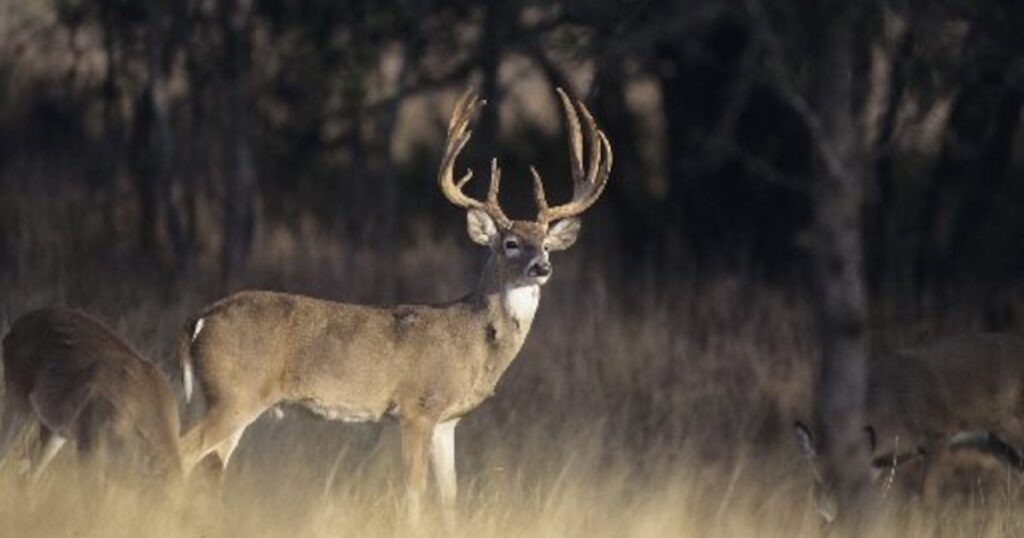
Although humans can contract a disease similar to CWD by eating meat from cattle with a related illness, there have been no documented cases of deer-to-human CWD transmission. But deer, like other wildlife, are a public resource, said Blaise Korzekwa, White-tailed Deer Program leader at TPWD. They belong to the people of Texas and need to be managed and protected just as other public resources are.
Plus, many city dwellers and suburbanites hunt. A 2022 survey by Texas A&M’s Natural Resources Institute estimated that about 753,000 people hunt white-tailed deer in Texas each year. The hunters goose rural economies, generating an economic output of $4.6 billion annually, the report calculated. Uncontrolled, CWD could shrink deer populations and undercut the rural communities that benefit from hunting.
The state’s first case of CWD was found in 2012, in a mule deer along the Texas-New Mexico border. Since then, it’s been detected in 38 counties, including four new ones this year.
Deer breeding operations can spread CWD farther and more quickly than free-range deer populations because the captive deer live closer together, and the animals may be transported to distant release sites. (At this point, it’s fair to ask: Why breed deer, which multiply successfully on their own? Answer: Mostly to produce bucks with unnaturally large antlers.)
Because of those risks, the state’s 595 registered deer breeding operations must follow strict rules. Each animal must have an ear tag, tattoo and electronic “button” with a unique ID number. Breeders must test animals for CWD before releasing them onto private property or moving them, keep records about transfers, and submit all that information to state authorities.
It costs time and money to follow the rules, so a netherworld of “ghost deer” has developed. These animals have had their ID removed, hidden or altered so they cannot be easily traced.
It takes years for deer to show symptoms of CWD, so the long-term damage from the smuggling operation remains unknown. But we’re in the middle of deer season in northern Texas, and hunters would be smart to take a better-safe-than-sorry approach. Authorities recommend hunters wear latex or rubber gloves to field dress a carcass, not eat meat from obviously sick animals, and participate in TPWD’s free, voluntary CWD testing program.
Once they return home, hunters should consider contacting their state legislators and urging them to increase penalties for deer breeding violations. According to the newsletter Public Domain, the suspects in that original traffic stop were convicted of 57 deer breeder violations and a few penal code violations. One received a suspended sentence for drug charges, and together they paid about $11,000 in fines.
We welcome your thoughts in a letter to the editor. See the guidelines and submit your letter here.
If you have problems with the form, you can submit via email at letters@dallasnews.com