
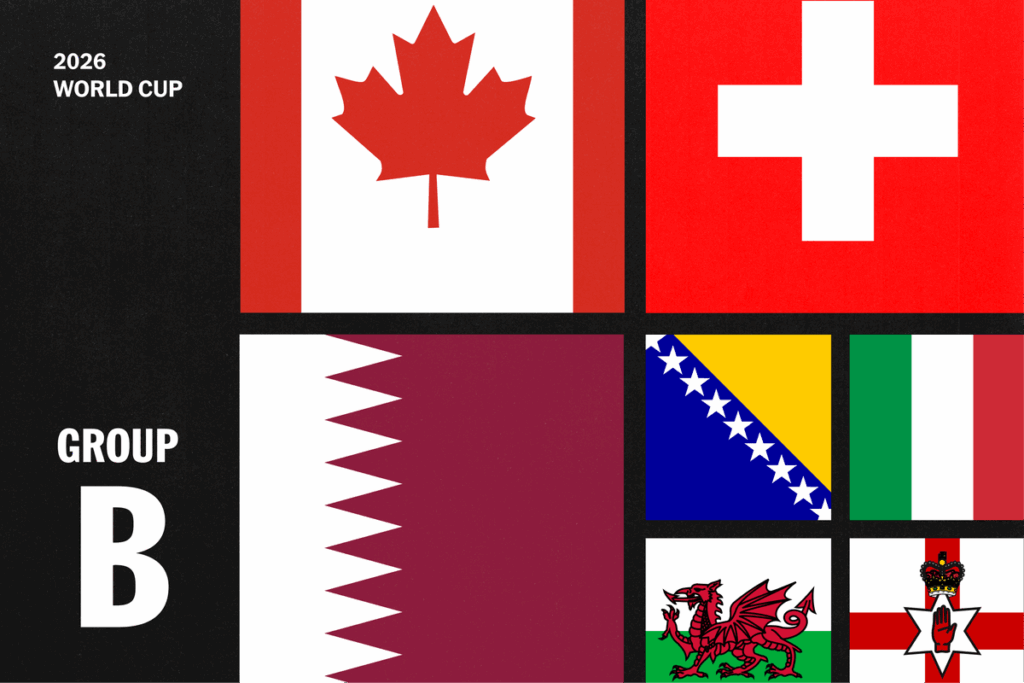
The World Cup draw is complete and Canada, Qatar, Switzerland and one of Bosnia and Herzegovina, Italy, Wales, and Northern Ireland have been drawn together in Group B.
How did the teams qualify? How do the different countries play? And who are the key protagonists in the group?
Games in: Los Angeles, Santa Clara, Calif., Seattle, Toronto, Vancouver, Canada
The schedule: Games, venues, dates and kick-off times
Matchday 1
- Friday, June 12: Canada vs TBC (3pm ET,12pm PT, 8pm BST) — BMO Field, Toronto
- Saturday, June 13: Qatar vs Switzerland (3pm ET,12pm PT, 8pm BST) — Levi’s Stadium, San Francisco Bay Area
Matchday 2
- Thursday, June 18: Switzerland vs TBC (12pm ET, 9am PT, 5pm BST) — SoFi Stadium, Los Angeles
- Thursday, June 18: Canada vs Qatar (6pm ET, 3pm PT, 11pm BST) — BC Place, Vancouver
Matchday 3
- Wednesday, June 24: Switzerland vs Canada (3pm ET, 12pm PT, 8pm BST) — BC Place, Vancouver
- Wednesday, June 24: TBC vs Qatar (3pm ET, 12pm PT, 8pm BST) — Lumen Field, Seattle
Canada
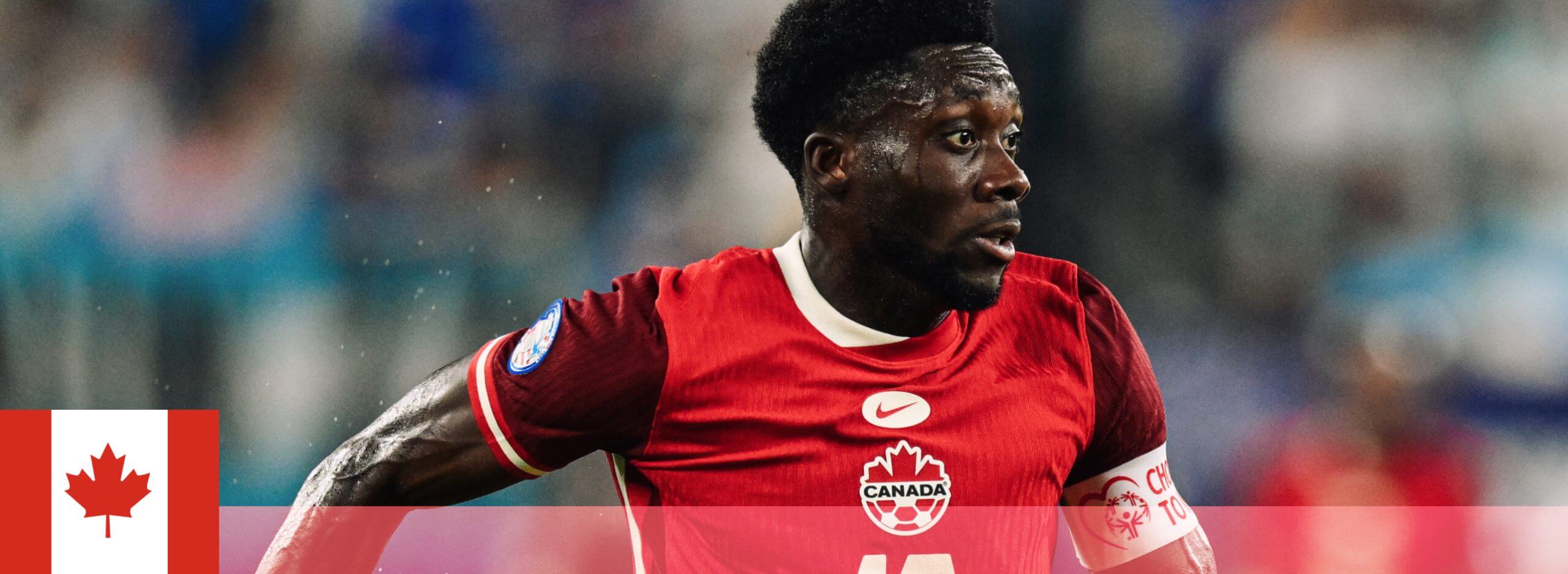
(Stephen Nadler/ISI Photos via Getty Images)
How did they qualify?
Canada return for their second World Cup in a row. They became one of the better stories of 2022 qualifying, improbably topping the CONCACAF table with a young team built on spirit and hungry up-and-comers. This time around, Canada qualified as co-hosts.
What is their World Cup pedigree?
Canada’s 1986 and 2022 tournaments both ended with three losses.
In 1986, they failed to capture the nation. A team built on grit was overpowered by European opponents. With no goals, the most memorable moment saw a rooster thrown on the field during their opener against France.
Canada’s last World Cup represented promise: they deserved a win after a superb display against Belgium but lost 1-0. Alphonso Davies then scored their first World Cup goal with a soaring header. A dramatic run seemed possible, but Canada’s inexperience caught up with them in losses to Croatia and Morocco. Talent needed to be matched with shrewdness.
Who is the coach?
Jesse Marsch is in his first international head coach stint. The former MLS original is a disciple of the Red Bull system, including coaching New York Red Bulls and RB Leipzig. He became the third American Premier League manager, taking charge of Leeds.
Marsch was hired to get the most out of an athletic but inexperienced squad. The gregarious coach has built on previous manager John Herdman’s cultural turnaround. Marsch has made Canada into a more aggressive outfit that does not just want to be invited to the dance. His experience has instilled belief that they should be winning World Cup games.
How do they play?
While the second year of Marsch’s Canada tenure has seen him add more tactical flexibility, they are still at their best when they are playing pacy and uncompromising Red Bull-inspired soccer. Canada are comfortable not having the ball. That could benefit them in games against intelligent, possession-heavy sides. Marsch utilizes remarkable speed and directness from his wide players in a 4-4-2 system. Getting buy-in from players who work in drastically different club systems allows Canada to counter-attack regularly and decisively.
Who is their key player?
Alphonso Davies remains Canada’s captain and a globally recognized star. Moise Bombito’s power makes him an elite centre-back, crucial to Canada’s tactical plans.
But goals are hard to come by in the World Cup and for the first time ever, Canada have a forward playing for one of Europe’s better clubs on their roster. Jonathan David is fresh off a summer move to Juventus after five seasons in Lille, where he averaged one goal every 162 minutes. David is Canada’s all-time leading goalscorer (37 goals in 73 matches) and possesses high-level intelligence to pick apart opposition defenders. Canada will hope he is playing regularly for Juventus so his form and confidence are sharp.
What else should we know about them?
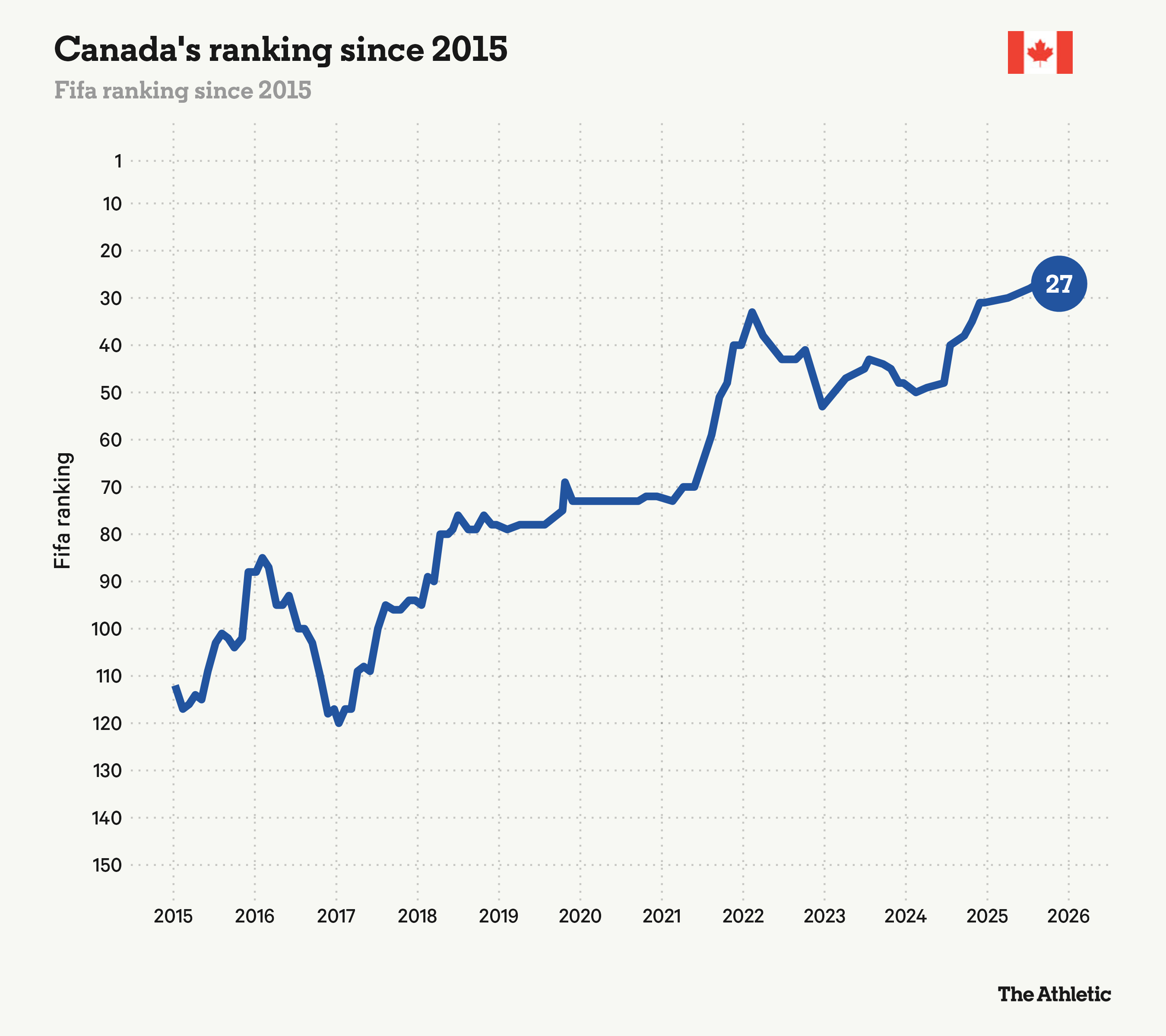
In January 2017, Canada were an afterthought, ranked 120th in the world. Canada Soccer paid television stations to broadcast games. Playing in the World Cup seemed laughable.
Yet soccer has larger participation numbers among Canadian youth than any other sport (yes, including ice hockey) and we are seeing the fruits of that investment. Canada’s drastic turnaround is rarely seen in international soccer.
Now, the men’s national team enjoy their highest-ever FIFA ranking (26th) and are on the verge of altering the Canadian sports landscape. Not since the United States hosting in 1994 could a country benefit from the World Cup like Canada might.
Joshua Kloke
Italy/Northern Ireland/Wales/Bosnia and Herzegovina
Italy vs Northern Ireland and Wales vs Bosnia and Herzegovina, with the two winners meeting in the final (Wales or Bosnia and Herzegovina will be the home team)
Only Brazil have won more World Cups than Italy but the Azzurri have somehow failed to reach the past two tournaments and face another serious fight to qualify for 2026. Having missed out to Norway and Erling Haaland in their group, they now host Northern Ireland in a play-off, a match which shouldn’t cause too many problems in theory, given Northern Ireland’s only competitive away victories in the past four years came at Luxembourg and San Marino.
Wales will be grateful for being drawn at home given their excellent record in Cardiff. They will have that advantage both against Bosnia and Herzegovina and for the potential final, should they make it. Wales against Italy in a one-off shootout for a World Cup place would be an incredible occasion, however Bosnia and Herzegovina were only 13 minutes away from pipping Austria to qualify from their group, while Italy lost at home to North Macedonia at the same stage four years ago, so no assumptions should be made for either semi-final.
Tim Spiers
Qatar
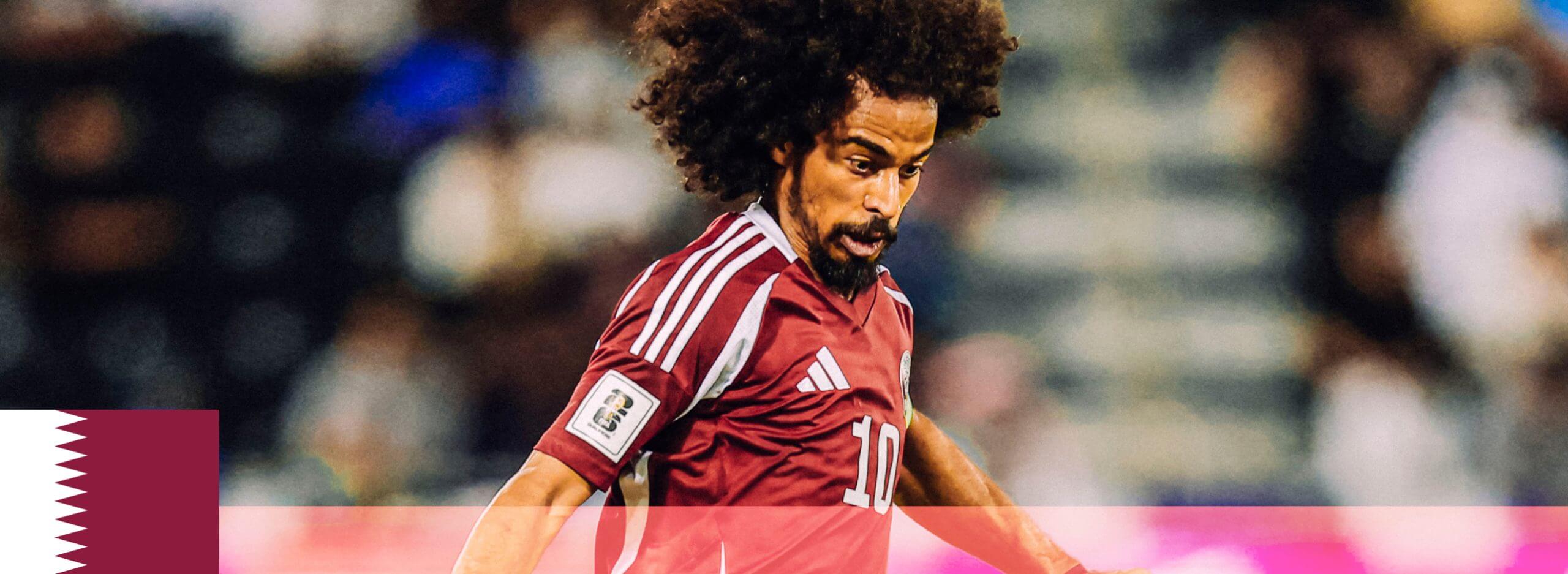
(Kareem Jafar/Getty Images)
How did they qualify?
In the end the 2022 hosts ensured a second consecutive World Cup appearance in a confident manner with 10 wins from their 18 qualifying games.
They sealed their place with a 2-1 win over United Arab Emirates in Doha, when even a late red card for substitute Tarek Salman and a 98th-minute opposition goal could not derail them.
That win meant they sat top of Group A in the fourth round of Asian qualification.
What is their World Cup pedigree?
In 2022 Qatar’s dream of becoming a major footballing power took a significant step as they hosted the tournament for the first time. It marked a series of firsts — the only time the World Cup has taken place in the Middle East and the only time it has not been staged during the traditional timeframe of May, June or July (to avoid the dangerous summer heat it was held in November and December).
Results did not quite match the ambitions, with three defeats in their three Group A games: although Mohammed Muntari scoring their first (and so far only) World Cup goal in the 3-1 defeat by Senegal was a highlight.
Who is the coach?
In May 2025 they unveiled former Spain, Real Madrid and West Ham United boss Julen Lopetegui as their new coach.
Domestically he won the Europa league with Sevilla in 2020, and on the international front the 59-year-old guided Spain’s U19s and U21s to success in their respective age-group European Championships.
Despite taking Spain’s senior side to unbeaten qualification for Russia 2018, he did not reach the competition himself. Lopetegui was sacked two days before the tournament started, after it emerged he would take charge of Real Madrid at its conclusion.
In his new role he succeeds another Spaniard, Luis Garcia, and has won two, drawn two and lost three of his seven games so far.
The wins were pivotal to getting Qatar to the World Cup.
Now, Lopetegui feels he has unfinished business to attend to.
In October 2025, he told Spanish radio station Onda Ceros he felt that “life owed him” a World Cup appearance.
He certainly seemed to enjoy himself after the win against the UAE, breaking into a dance as his players gathered around him.
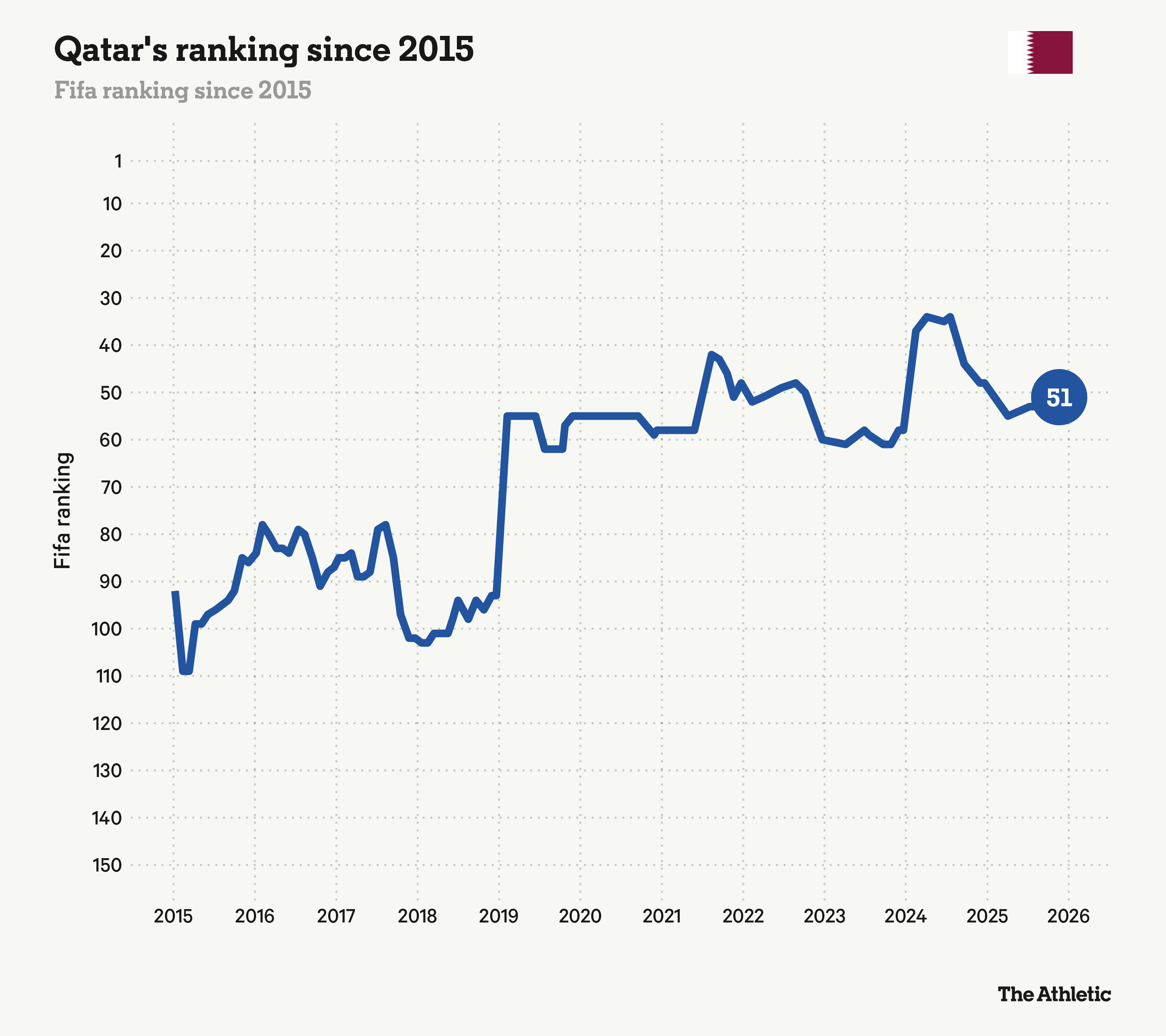
How do they play?
Under Lopetegui, Qatar have switched between 4-4-2 and 4-2-3-1, with the focus on organisation and hard work off the ball.
“We have a very balanced squad with players of different playing styles,” Lopetegui told Doha News after taking over in May.
Who is their key player?
Talismanic forward Akram Afif is considered one of Qatar’s best players. He has helped them win the AFC Asian Cup twice, and in 2024 won the Best Footballer in Asia award.
Afif has played for Villarreal, becoming the first Qatari to sign for a Spanish club, and had a previous spell with Eupen in Belgium. Now he is one of the main men for club side Al Sadd in the Qatari Stars League, where he is regularly scoring and providing assists.
Last term he struck 18 goals and created 15 in 22 matches.
Previous Maroon boss Tintin Lopez (yep, another Spaniard) called Afif a “unique player” in 2024.
“Akram is a quality player who always creates the difference,” he said. “That type of player always helps the team win in moments like this, and I hope he will always be available to help us.”
What else should we know about them?
In the second half of their win over UAE in October, Lopetegui brought on 42-year-old Sebastian Soria, and the need for a more youthful aspect to their squad was not lost on Lopetegui.
In an interview with radio station Onda Cero, he said: “We have a fairly old squad; we played in the second half with a 42-year-old player. We need to finalize the squad we will take to the World Cup.“
As for Soria, he was born in Uruguay but moved to play in Qatar in 2004 and became a citizen two years later.
If he makes it onto the squad for the World Cup he would become the third-oldest man to play at the tournament, behind Colombia’s Faryd Mondragon (43 years old and three days) and Egypt’s Essam El Hadary (45 years old and 161 days).
Greg O’Keeffe
Switzerland
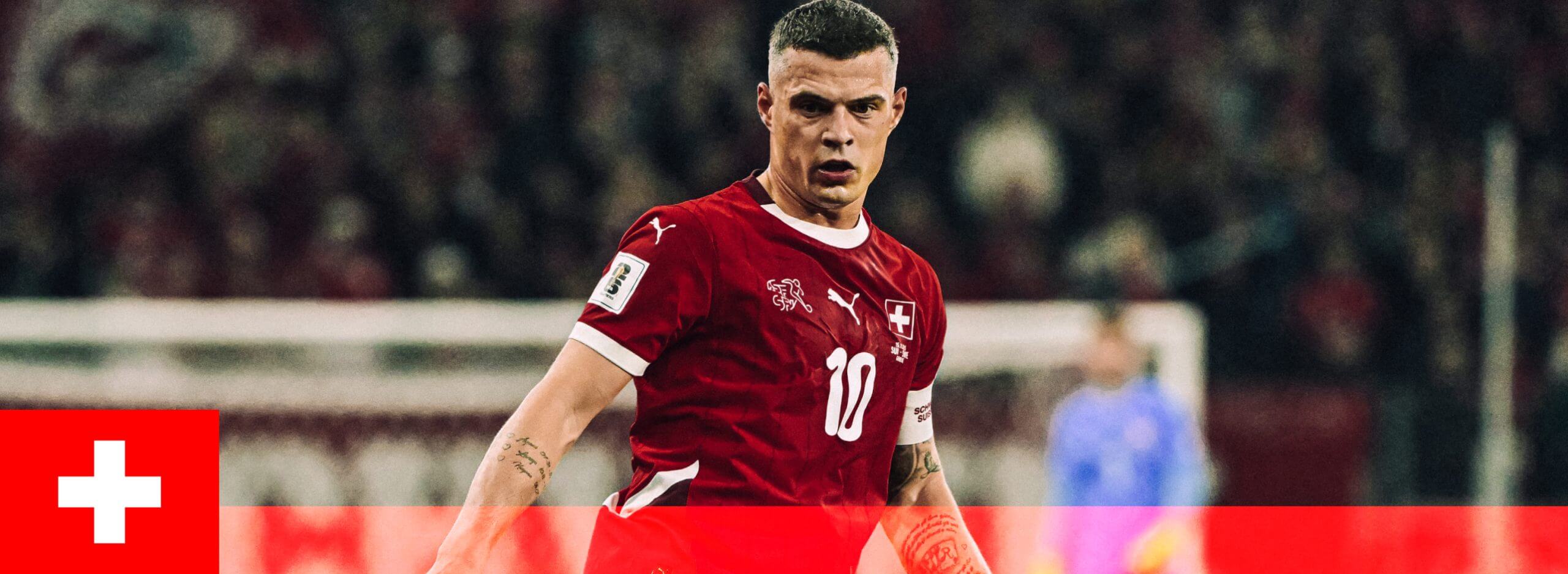
(Fabrice Coffrini/Getty Images)
How did they qualify?
With relative ease. They had one of the friendlier groups, but still made short work of it, going unbeaten and only conceding twice in six games. They spanked beleaguered Sweden 4-1 to all but seal their place, then completed the formalities with a low-key draw in Kosovo.
What is their World Cup pedigree?
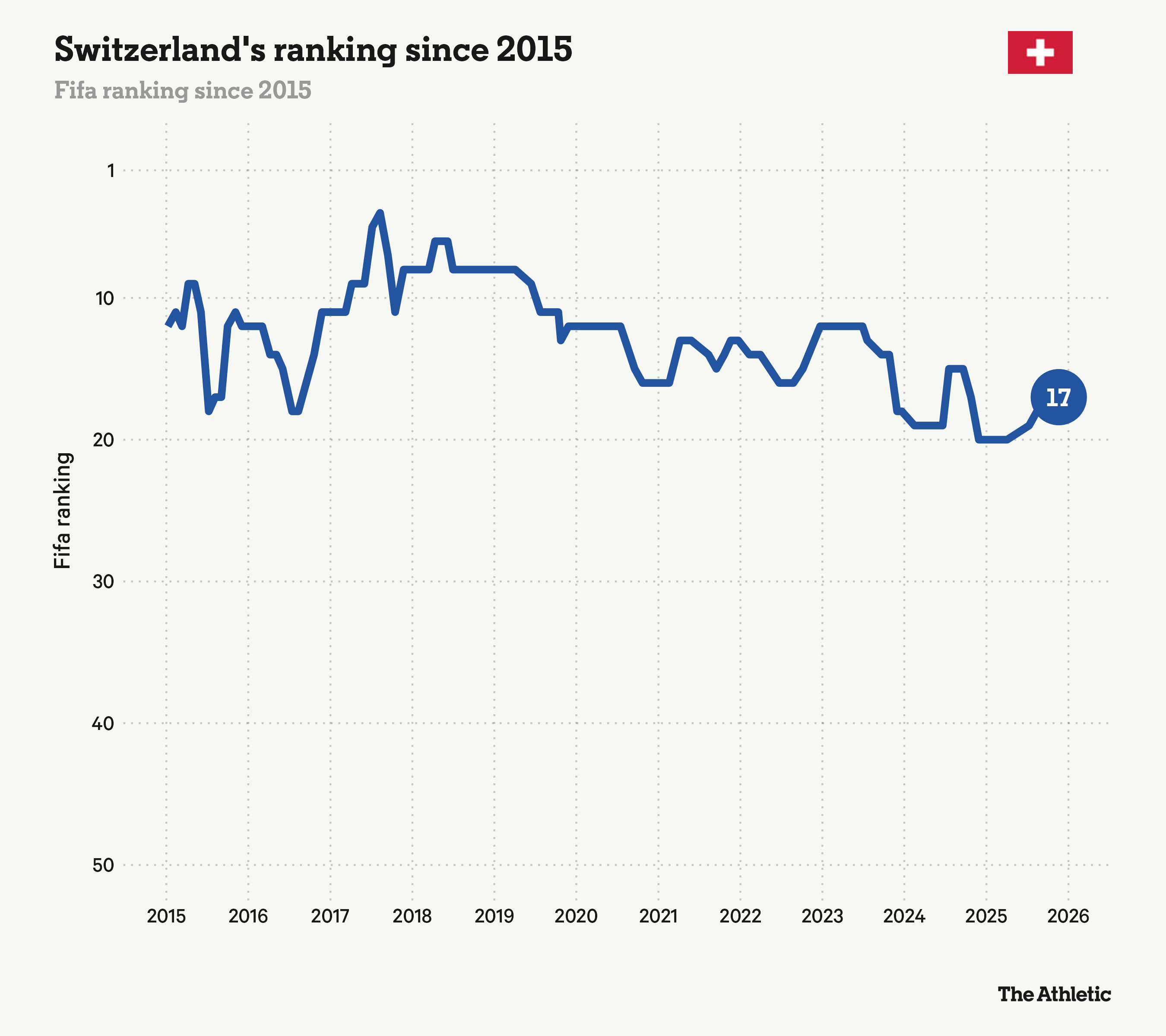
It is pretty standard stuff to see Switzerland at World Cups these days: their last appearance in America, in 1994, was their first qualification in 28 years, but this is now their sixth tournament in a row. The only other European teams with that sort of consistency are Germany, England, France, Spain and Portugal, three of whom have won the thing in that time. That said, the consistency also extends to their relatively limited progress after qualification: the Swiss have never won a World Cup knockout game, getting out of the groups in their past three appearances, but no further.
Who is the coach?
There was a reasonably sizeable faction in Swiss football that wanted rid of Murat Yakin before Euro 2024. Uninspiring results in qualification meant patience was wearing thin, but once at the tournament they knocked out defending champions Italy and only lost to eventual finalists England on penalties. At the tournament, he was asked about his status as a sex symbol, his stylish clothes and array of funky spectacles having attracted attention. “I hope my wife isn’t listening to this,” he replied. They had a poor Nations League last year, but they did not lose a game of any description in 2025 and he will take them across the Atlantic with the nation’s confidence.
How do they play?
They are tactically flexible. The success at Euro 2024 came in a 3-4-3, but this year they have settled into a fairly standard 4-3-3, with a front line of doughty stalwart Breel Embolo, flanked by Nottingham Forest’s Dan Ndoye and Sevilla winger Ruben Vargas. Ricardo Rodriguez — only 33 years old, a little surprising given he seems to have been around for decades — is still patrolling the left side of defence, but one fixture who will not be around this time is Yann Sommer, who retired from the international game last year.
Who is their key player?
It is still Granit Xhaka. The Swiss captain’s move to Sunderland from Bayer Leverkusen in the summer might have raised a few eyebrows, but his return to the Premier League will only be good news for Yakin. He is still the glue that knits their midfield together, and at 33 this will probably be his last World Cup.
What else should we know about them?
One narrative strand to keep an eye on could be Xherdan Shaqiri. The former Liverpool and Bayern Munich man retired from international football after Euro 2024, but since returning to Basel shortly thereafter he has been in stonking form and his been a regular goalscorer, which is impressive for a 34-year-old who looked absolutely cooked during his spell with Chicago Fire. All of which means, despite that retirement, Yakin is repeatedly asked about Shaqiri. “The statistics at Basel are extraordinary,” he told the media in November. But we have good players in his position… I’m not the one who closed the door.“
Nick Miller