
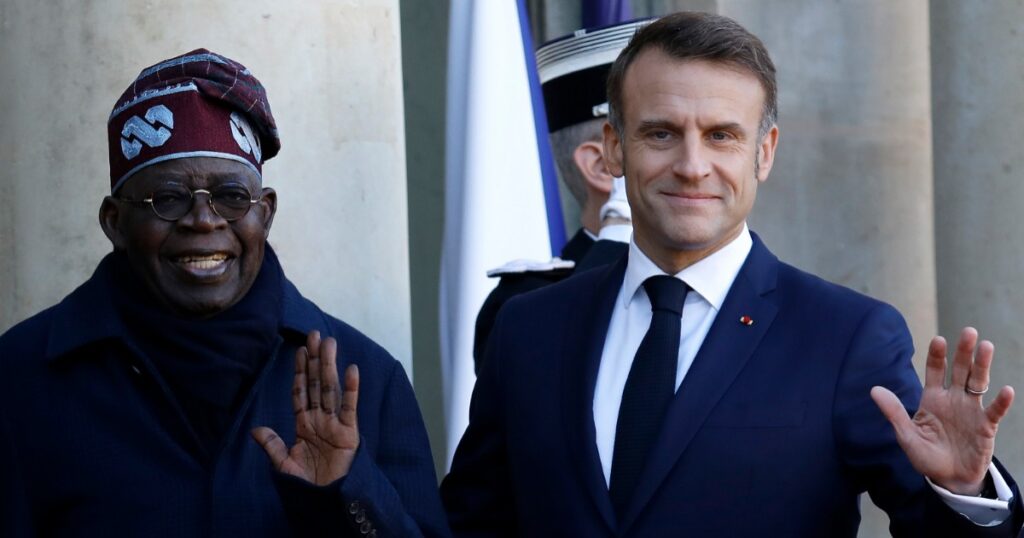
The announcement followed a December 7, 2025, call between French President Emmanuel Macron and Nigerian President Bola Tinubu, during which France committed to “strengthen our partnership with the authorities” and provide aid to populations affected by terrorism and armed violence.
French President Emmanuel Macron wrote on X: “I spoke with President Tinubu of Nigeria and conveyed France’s solidarity in the face of the country’s security challenges, particularly the terrorist threat in the North.”
“At his request, we will strengthen our partnership with Nigerian authorities and support the populations affected by violence. We call on all partners to step up their engagement — no one can remain a spectator.”
This comes amid heightened tensions between Nigeria and the United States, which led President Trump to designate Nigeria as a “country of particular concern” over allegations of persecution of Christians within the country.
Tinubu has repeatedly called for international support, emphasising the urgent need for coordinated efforts to protect civilians and restore stability.
Focus on training, intelligence, and humanitarian aid
France’s support is expected to concentrate on training, intelligence sharing, and targeted humanitarian assistance, reflecting a shift from large-scale military deployments toward a cooperative, advisory approach.
Analysts note this mirrors France’s evolving Africa strategy, prioritising capacity building for local forces rather than prolonged foreign troop presence.

The United States and Russia have also pledged assistance in intelligence support, logistics, and security-sector training, with Washington offering enhanced intelligence sharing, expedited defence-equipment support, and technical aid, while Moscow has committed to sharing counterterrorism strategies, supplying military hardware, and expanding specialised training cooperation with Nigeria.
Russian Foreign Ministry spokesperson Maria Zakharova disclosed that Russia is willing to aid Nigeria in its efforts against terrorism, after noting that the country’s counter-terrorism efforts have been “serious” thus far.
“Russia is prepared to continue providing the necessary assistance to its Nigerian partners,” she said, adding that Nigeria’s armed forces and law enforcement agencies have “accumulated significant experience in effectively countering terrorist threats.”
The involvement of multiple international partners highlights Nigeria’s strategic importance in West Africa and the Sahel, where insecurity has spilled across borders and destabilised neighbouring states.
Civil society and human-rights organisations have welcomed international support but emphasise that aid must be paired with governance reforms, respect for human rights, and community-based security initiatives to achieve sustainable results.
Amid France’s recent promises to support Nigeria, questions are emerging over its true intentions.
Critics point to Paris’s previous struggles in the Sahel and other African regions, where local governments expelled French troops and dismantled their security operations, raising concerns about whether France can deliver meaningful assistance this time or is seeking to reassert influence without lasting impact.