
Christmas is always a busy time for travel to and from Switzerland, but this year travellers may have to reckon with new rules, including the EU’s Entry & Exit System and the UK’s ETA.
If you haven’t crossed an international border for a few months, you might notice a few differences in travel this Christmas.
Over the past year, the EU has introduced its long-awaited and much-delayed Entry & Exit System (EES); meanwhile, the UK has extended its Electronic Travel Authorisation (ETA) to include nationals of EU countries and Switzerland.
All of Switzerland’s major airports have the new system in place.
Geneva and Basel EuroAirport have implement the EES on October 12th, 2025, while Zurich Airport’s system was launched on November 17th.
However, how exactly how these changes will affect you depends on your nationality and residency status, as well as where you travel from:
EES
This affects anyone crossing an external EU/Schengen zone border.
It does not, however, impact trips within the EU/Schengen zone.
The EES does not affect people who are travelling on the Swiss passport, or that of the EU or EFTA state (Norway, Iceland, or Liechtenstein).
Also exempt are people who are legally resident in Switzerland or in an EU/EFTA country.
READ ALSO: What you need to know about the start of new border checks at Swiss airports
Advertisement
If you are not in one of the exempt groups and you have not crossed the EU’s external border since the EES was launched in October, you may have to complete EES pre-registration.
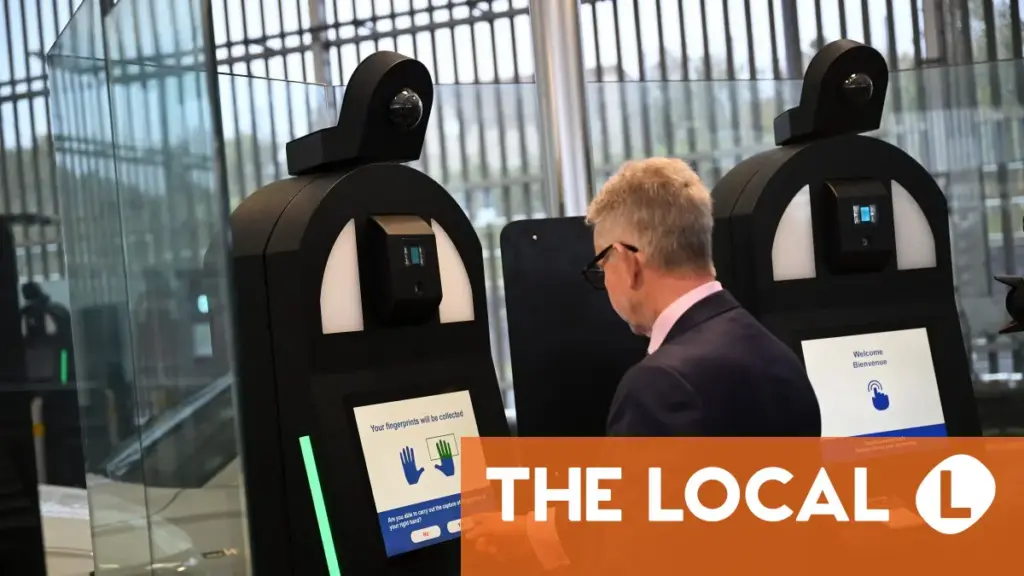
This is done upon arrival – you will be directed to the appropriate area – usually self-service kiosks – and will have to fill out a questionnaire, as well as provide fingerprints and a facial scan.
During the six-month introduction period (so until April 10th, 2026), entry ports also have the option to suspend EES registration on busy travel days and revert to manual passport stamping.
Unlike ETA and ETIAS (see below), there is nothing that you need to do in advance of your trip regarding the EES, as registration is done at the entry point itself.
However, the new system may cause delays and queues, especially during the Christmas season, so it’s best to arrive at the airport early.
Advertisement
ETA
This is a UK system, so it only affects people travelling to Great Britain.
The ETA is required for everyone apart from those who are travelling on either a UK or Irish passport. People who have a long-stay visa for the UK, or have residency in the UK, are also exempt.
When it comes to travellers who have dual nationality with the UK, the situation is complicated – find full details here.
Non-Brits who are married to a UK national aren’t exempt from ETA.
Iif you are not in one of the exempt groups, you will have to apply for the ETA before your travel. This can only be done online and costs £16 (about 17.15 francs).
But once you have the ETA, it is valid for two years, unless you get a new passport during that period.
There is no exemption for children, and if you are travelling in a group, each person must have their own ETA – even babies.
The ETA must be applied for in advance of travel. The UK government says that most applications are processed ‘within minutes’, but the official advice is to apply online at least three days in advance of your trip – especially at busy times like Christmas.
Also, make sure you are using the official UK government website – there is a growing number of scam ‘ETA’ sites.
Manual widget for ML (class=”ml-manual-widget-container”)
And what about ETIAS (European Travel Information and Authorisation System)?
This is a new EU digital pre-screening system for visa-exempt travellers (like the US, UK, or Canadian citizens) to 30 European countries, including Switzerland.
This is the second phase of the EU’s travel changes, introducing a visa waiver for visitors and tourists coming into the EU/Schengen zone.
It is very similar to the UK’s ETA (and the US’s ESTA), but it’s not something that you need to worry about this Christmas – it is currently due to be introduced in the second half of 2026.
Advertisement
What else could slow down your travel this holiday season?
If you flying out of the Zurich airport during the month of December, expect delays.
At the moment, 24 new CT scanners are being installed in Zurich, causing long waits at security checkpoints, especially during peak travel hours.
According to the airport’s management, 30 percent of screening capacity is currently unavailable, which means passengers are crammed onto fewer checkpoints.
Therefore, to avoid missing their flights, passengers are asked to show up 1.5 to 2 hours early for Schengen flights, and up to 2 to 3 hours earlier for non-Schengen destinations.
READ ALSO: Long wait times at Zurich Airport to continue throughout December