
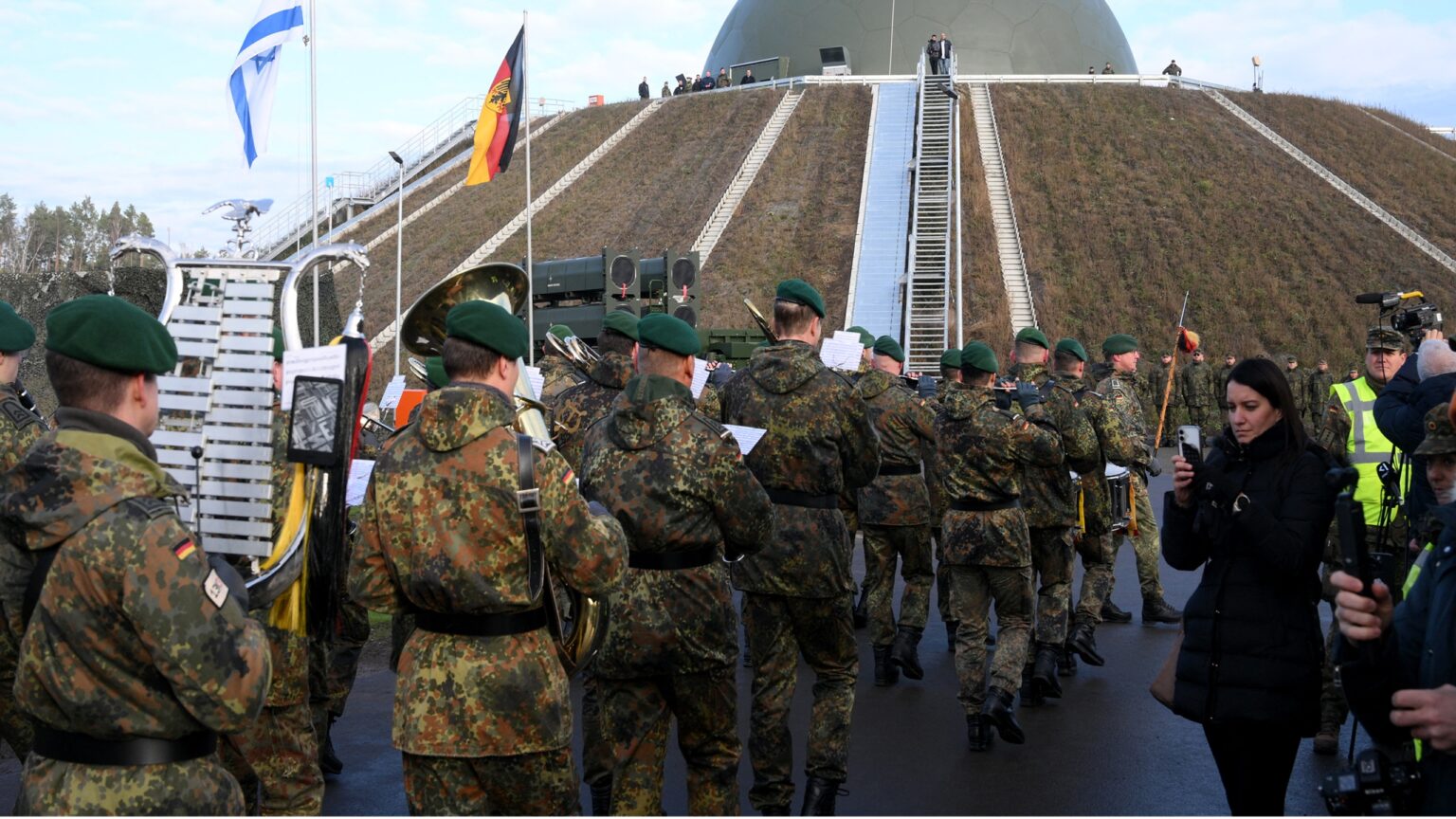
German Chancellor Friedrich Merz flew into Israel with tough messages on West Bank annexation and Palestinian statehood—then stood beside Prime Minister Benjamin Netanyahu as Germany took delivery of Israel’s Arrow 3 missile defense system in a $4.5 billion deal. That tension between public rebukes and deep security dependence is the thread Keren Setton pulls through in this sharp look at Europe’s uneasy embrace of Israeli weapons.
Merz warned in Jerusalem against “formal, political or structural measures” that would amount to annexation and backed recognition of a Palestinian state only at the end of peace talks. Netanyahu brushed that aside, rejecting Palestinian statehood and stressing that Israel will maintain security control “from the Jordan River to the Mediterranean Sea,” while tying the Gaza ceasefire’s next phase to Hamas’s disarmament.
Yet business is booming. Germany has resumed weapons approvals after its partial freeze and remains Israel’s second-largest arms supplier and now a top customer. Across Europe, governments from Spain to Finland talk sanctions and embargoes while still buying Israeli technology they see as vital against Russian drones and other threats. “There is a lot of hypocrisy,” says Dr. Yehoshua Kalisky, pointing out that “when it comes to their defense, they will purchase exactly what they need and want from Israel.”
Setton then widens the lens: soaring global arms demand after the Russia-Ukraine war, India’s push to become a weapons exporter, the rise of Turkey and Gulf producers, and Israel’s own fear that its know-how could leak to rivals. Expert Uzi Rubin cautions that some risk is impossible to avoid.
For readers tracking how war, politics, and business intersect, Setton’s full article is a rich, must-read tour through an arms market where principles and procurement often part ways.