
A passerby from southeast Saint-Jeannet was adamant: “You’ll see, it’s a highway!” A highway, really, the path winding up toward the heights above the village near the town of Vence? In truth, it is a steep, rocky trail, sometimes narrow and twisting, snaking along the side of the baou, the Provençal term for the massive limestone cliff that looms over the village. After an hour’s walk, the path widens, the slope eases, and at about 800 meters in altitude, it opens onto a breathtaking panorama: A 360-degree view stretching from the foothills of the southern Alps to the endless blue of the Mediterranean Sea.
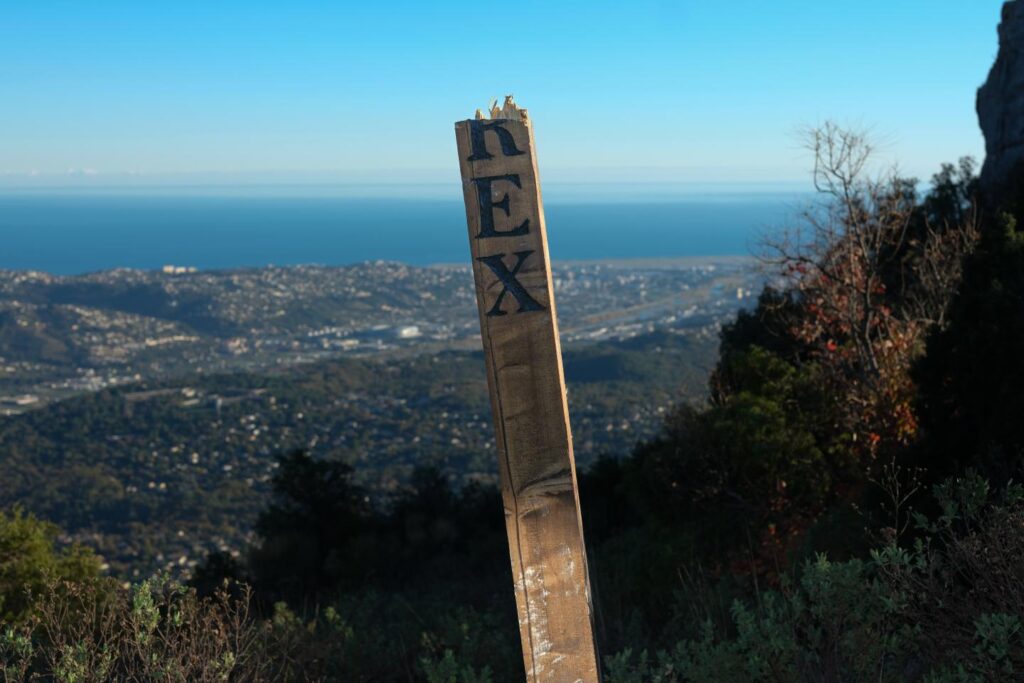
In the foreground, an unusual object catches the hikers’ eyes. At the cliff’s edge, a sort of wooden post emerges from a pile of stones. Barely a meter high, it bears three visible letters: “REX.”
The post is all that remains of a large cross bearing the inscription “Ave Christus Rex” (“Hail, Christ the King”) erected in early November. In mid-month, the Christian symbol was sawed down by an unknown hand. The incidents involving this Christian symbol set up on public land, as well as other crosses in the towns of Montgenèvre in the Alps and Quasquara on the island of Corsica, have stirred up an old French passion: the 1905 law separating churches and the state, as well as its enforcement.
At the summit of the Baou mountain in Saint-Jeannet, France, November 29, 2025. ELEONORA STRANO FOR LE MONDE
You have 88.01% of this article left to read. The rest is for subscribers only.