
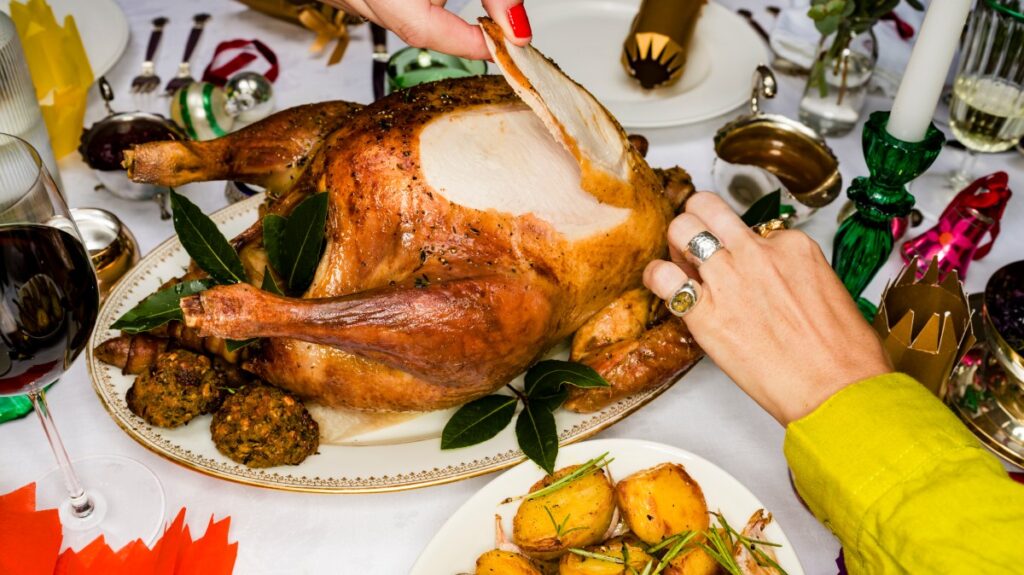
Christmas has delivered an unexpected gift: a cheaper meal of turkey and all the trimmings –– though only just.
At £32.46 for four, the average cost of a traditional festive dinner has fallen in price by 11p from last year. A modest saving, perhaps, but the first since Worldpanel by Numerator, formerly Kantar, started recording the data in 2021 and one that hard-pressed shoppers are unlikely to complain about. Over the three preceding years, the cost of Christmas dinner had risen by 20 per cent.
However, this year’s marginal drop in price hides the reality that most of the ingredients that make up the meal, including sprouts, carrots, stuffing, cranberry sauce and potatoes, have become more expensive.
• Christmas lunch burns hole in pockets
The overall cost has only fallen because the price of frozen turkey, which is by far the most expensive element, has dropped by 3.6 per cent this year to £13.52. Parsnips are also marginally cheaper, but only by enough to account for a saving of less than 3p.
Fraser McKevitt, head of retail and consumer insight at Worldpanel, said the price of turkey has fallen because of promotions applied by the supermarkets.
He explained: “The supermarkets are really conscious that people are struggling with the cost of living and they want to be able to talk about having the cheapest offer for Christmas. So they are focusing some efforts on discounting the single biggest item in most shops as a way to do that.”
The Worldpanel data shows that almost a third (31.2 per cent) of everything supermarket shoppers bought in November was on offer, up from 30 per cent a year earlier, as retailers competed furiously for December footfall. However, annual grocery price inflation overall remained at 4.7 per cent, unchanged from the previous month.

Families have been feeling the cost of living pressures
GETTY IMAGES
The data shows that the cost of Brussels sprouts is up 3.6 per cent on last year, while carrots are 5.5 per cent more expensive. The price of cauliflower has risen 4.2 per cent and stuffing mix is up 6.9 per cent. Even the potato, a longstanding ally of households watching their pennies, is up by 1.1 per cent.
However, the single biggest increase is on cranberry sauce, which is up 10 per cent.
McKevitt said food prices have risen because “the cost of labour has grown”. He added: “It’s also to do with the cost of fuels, and of course, that feeds through to the cost of fertilizer as well. To a large degree, retail is all about moving stuff around, which eventually comes down to energy costs.”
Despite consumers’ tighter budgets, the Worldpanel data showed that appetite for festive indulgence endures. Five million households bought chocolate advent calendars in November, despite chocolate prices being up 18.4 per cent on the year. One in ten shoppers also treated themselves to Champagne or sparkling wine, which has increased by 1.7 per cent.
• Christmas on the cheap! From food and fizz to fashion
Retailers have spotted this behaviour. Premium own-label products continue to rise in popularity, with one pound in every twenty spent on such “pick-me-up” items — Worldpanel’s term for shoppers’ urge to treat themselves despite the broader financial strain.

Frozen turkeys are 3.6 per cent cheaper this year
MONKEYBUSINESSIMAGES/GETTY IMAGES
The market share race among supermarkets reflects a year of tightly fought competition: Lidl has gained 0.5 percentage points to reach 8.1 per cent, Sainsbury’s has climbed to 16 per cent and Tesco remains ahead on 28.3 per cent. Asda and Co-op are both down.
Whether every Christmas guest is grateful for the financial lengths their hosts go to in putting on a traditional spread is debatable.
• Grocery price inflation dips in time for Christmas
Separate research published today by Dole Packaged Foods found that nearly half of Britons give the parts of Christmas dinner they don’t like to the dog.
So as the nation debates the rising price of sprouts, at least one demographic will remain entirely unbothered by inflation: Britain’s dogs, whose festive dining prospects are looking bright and cost free.
Biggest grocery price rises and falls over the past 12 months:Up
1. Chocolate confectionery average: +15.9%
2. Dairy, butters and spreads: +11.9%
3. Malt beverages and hot chocolate: +11.1%
4. Primary meat (unprocessed meats): +9.4%
5. Soft drinks, smoothies and juices: +9.3%
Down
1. Frozen bakery breads: -3.3%
2. Ambient sweet home cooking milk: -2.8%
3. Household pet dog: -2.5%
4. Household paper products: -1.6%
5. Household pet cat: -1.4%
Source: Worldpanel by Numerator (formerly Kantar)