
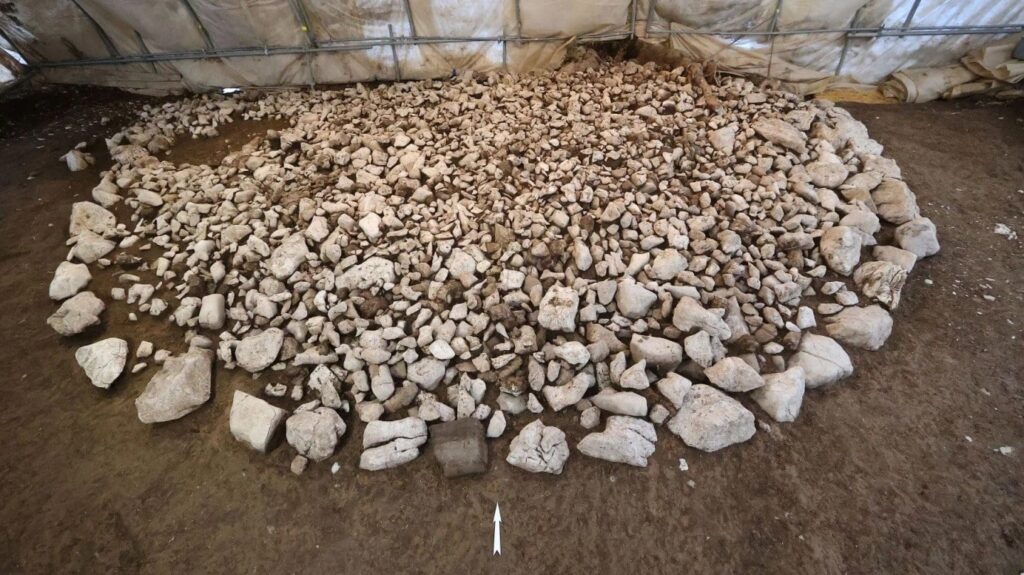
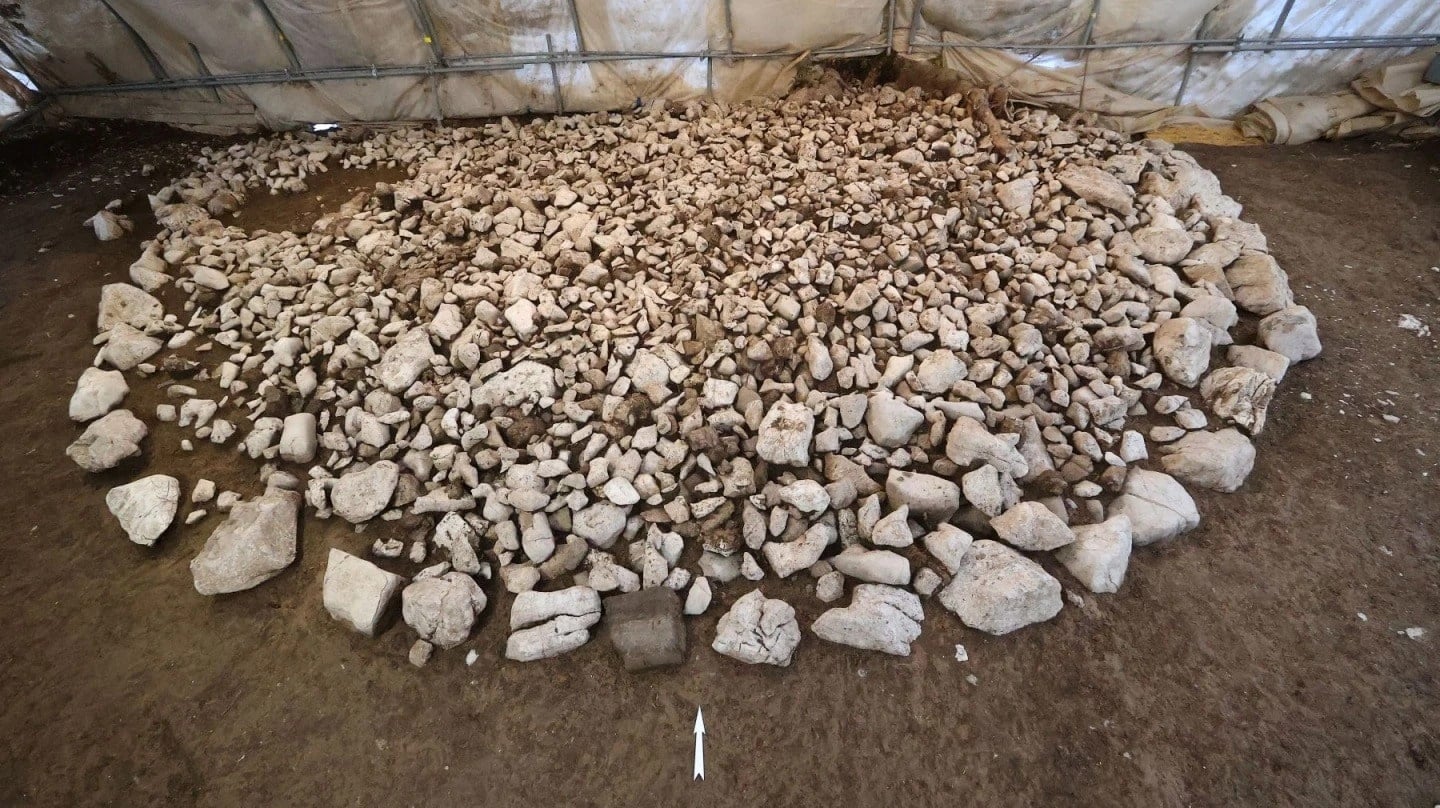
Excavations in Grandvillard. Credit: State of Fribourg
Archaeologists have uncovered a remarkably preserved ancient tomb in Switzerland’s Fribourg canton, a find that is reshaping views on early Iron Age social and ceremonial practices in the western Alps. Believed to be around 2,600 years old, the burial site offers rare insight into the lives of elite individuals who once lived in the Intyamon Valley.
The discovery was made in the village of Grandvillard, where teams from the Amt für Archäologie des Kantons Freiburg have been excavating an Iron Age burial ground since 2019.
The newly exposed mound measures about 10 meters (33 feet) wide and contains a single central grave. It is the third monumental tomb found at the site but stands out for its exceptional state of preservation.
Urgent measures to protect the eroding burial site
Urgent work began to save the structure from ongoing damage caused by a nearby mountain stream.
Erosion has already begun wearing away the outer edges of the mound. According to officials with the archaeological office, the priority is to document the site in detail before the natural environment causes irreversible loss.
Fieldwork will continue until January 2026. Researchers are using this time to carefully study the grave’s construction, layering, and contents. Every stage of excavation involves systematic recording through photographs, maps, and soil samples to preserve as much information as possible.
Elite burial reveals status and social structure
Initial analysis suggests the individual buried here held a position of high social importance. While the full list of burial items has yet to be released, the setting is consistent with other elite Iron Age graves in the region. Previous discoveries at the same necropolis have included bronze artifacts commonly associated with wealth and status during this period.
The find is also helping experts better understand the broader role of the western Alpine region during the early Iron Age, between 800 and 450 BC.
This era saw environmental shifts, including colder temperatures that affected farming and settlement patterns. In harder times, burial customs were simpler, but elaborate tombs like this one indicate periods of social stability and shared community effort.
Ancient tomb in Switzerland sheds light on Iron Age rituals
The Grandvillard tomb’s scale and visibility suggest it served as both a ceremonial site and a territorial marker.
Its preservation is giving researchers a detailed look at burial practices, body placement, mound structure, and offering choices—elements that reflect identity, beliefs, and community networks of the time.
Despite the challenges, archaeologists remain focused on recovering and preserving the full story behind one of Switzerland’s most significant ancient tomb discoveries.