
Turkey has emerged as the leading foreign economic actor in Syria’s reconstruction one year after the fall of Bashar al-Assad’s government, securing more than $11 billion in power and aviation contracts as Turkish companies and public institutions moved quickly to capture post-war opportunities, Deutsche Welle’s Turkish edition reported.
Turkish companies have obtained $7 billion in power generation contracts and $4 billion in airport expansion deals, awarded to a consortium including Kalyon İnşaat, Cengiz İnşaat and TAV Airports, along with Qatar’s UCC Holding and the US company Power International, according to sector documents reviewed by DW and Syrian government statements.
Mega-projects reshape post-war economy
The $7 billion energy agreement, signed May 29 in Damascus, commits the consortium to build 4,000 megawatts of natural-gas-fired generation capacity and 1,000 megawatts of solar power in Homs, Hama, Deir ez-Zor and southern Syria. Syrian officials say the plants will generate 35 billion kilowatt-hours annually and create 50,000 jobs.
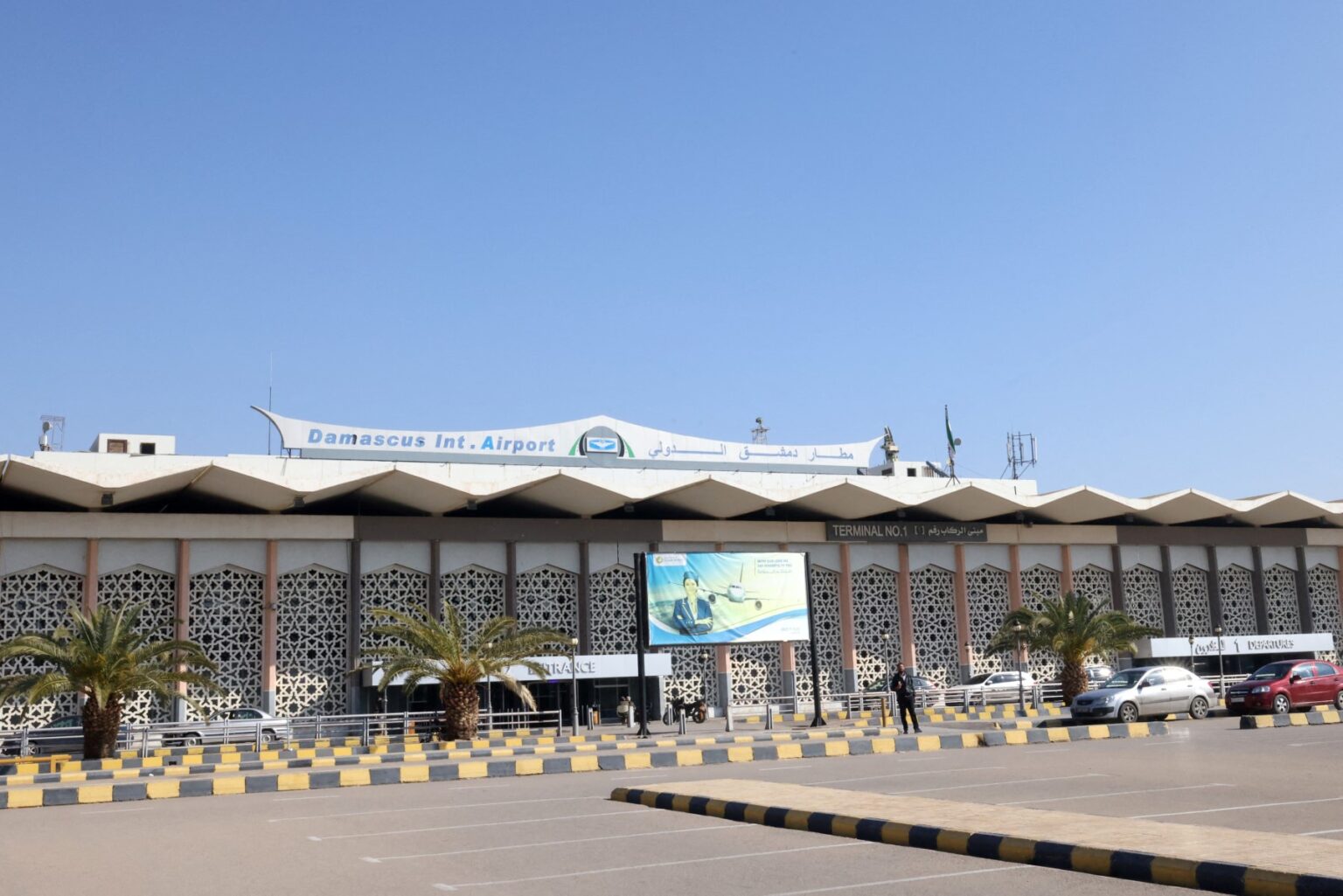
The $4 billion Damascus International Airport expansion, with terms agreed in late November according to sector documents, brings together the same three Turkish contractors that built İstanbul Airport. The build-operate-transfer concession aims to raise annual passenger capacity to 31 million within 10 years, according to project documents cited by DW.
A third major project, the Kilis–Aleppo natural gas pipeline, became operational August 2, delivering gas at a capacity of 6 million cubic meters per day. Syrian and Turkish officials say the link has eased power shortages in Aleppo and increased electricity availability from a few hours per day to much longer stretches in many districts.
Sanctions relief clears the path
The acceleration followed sweeping Western sanctions relief. US President Donald Trump signed Executive Order 14312 in June, effectively suspending most Caesar Act sanctions on Syria and removing many Syrian state institutions from the US sanctions list while keeping measures related to Russia and Iran. The European Union a month earlier had suspended or eased most of its sectoral restrictions on banking, energy and transport, while maintaining targeted measures on some individuals and entities.
These moves sharply reduced the threat of US secondary sanctions for routine reconstruction and trade activities that do not involve Russian or Iranian entities. They also enabled Turkish contractors and banks to enter Syria without the risk of penalty that had deterred large projects for years.
Trade and institutional architecture rebuilt
Bilateral trade rebounded. Turkish exports to Syria rose 54 percent in the first seven months of 2025, while monthly trade reached $233.7 million in December 2024, the highest in a decade, according to Turkish trade data cited in DW’s report.
Turkey and Syria established the Joint Economic and Trade Committee, known as JETCO, in August 2025 to coordinate tariffs, customs procedures and investment rules. Officials on both sides say they are negotiating an updated trade framework based on the 2004 Free Trade Agreement, which was suspended at the start of the war.
Tariff tensions surfaced in January, when Syria’s customs authority imposed steep hikes on imports, with some duties rising several hundred percent. Following Turkish diplomatic engagement, Damascus agreed to reduce tariffs on 269 Turkish products, including flour, eggs and iron and steel.
Border traffic expanded. Interior Minister Ali Yerlikaya said daily crossings at key frontier gates rose from about 3,000 to as many as 20,000. The Yayladağı–Latakia crossing reopened in December 2024 after more than a decade, restoring a direct link between Turkey’s Hatay province and Syria’s Mediterranean coast.
Gulf transit corridor reopens
The reopening of the Aleppo–Damascus–Nasib corridor has begun to restore direct overland access from Turkey to Jordan and, via Jordan, to Saudi Arabia for the first time in more than 10 years. Turkish exporters say shipments that previously took weeks by way of the Suez Canal now arrive in days when they move by road through Syria and Jordan.
A bilateral transit agreement signed in November 2025 is set to end the longstanding requirement to unload and reload cargo at the Syrian border, a practice that increased costs and transit times. Turkish officials say the new arrangement will allow sealed Turkish trucks to cross Syrian territory and reach Jordanian and Gulf markets under a unified permit system.
Banking connectivity strengthens
As several major Syrian banks reconnect to the SWIFT international payments system, Turkish lenders have started to explore new correspondent relationships to finance cross-border trade. Banking officials and policy analysis cited by DW say Turkish banks, including DenizBank, are positioning themselves to handle settlement for trade flows between the two countries as sanctions barriers recede.
Syria’s central bank has announced plans for monetary reforms, including a redenomination of the Syrian pound and the introduction of new banknotes. Syrian officials say the work draws on advice from international financial institutions and regional partners as the new government seeks to stabilize prices and restore confidence in the currency.
Private sector moves in
Turkish business associations have mobilized. The Turkey–Syria Business Council has signed cooperation agreements with chambers of commerce in Damascus, Aleppo, Latakia and Hama to promote joint ventures and trade fairs.
The 62nd Damascus International Fair hosted Turkey’s largest pavilion in six years, drawing a reported 500 Turkish businesspeople and company representatives. Exhibitors included companies from construction, textiles, food processing and household goods that already export to Syria or seek to invest in local production.
Syrian officials say plans are underway to establish an industrial free zone near the Turkish border that would be dedicated to Turkish manufacturers. They describe the project as part of a broader effort to attract investment, create jobs and encourage the voluntary return of some of the millions of Syrians who fled to Turkey during the war.