
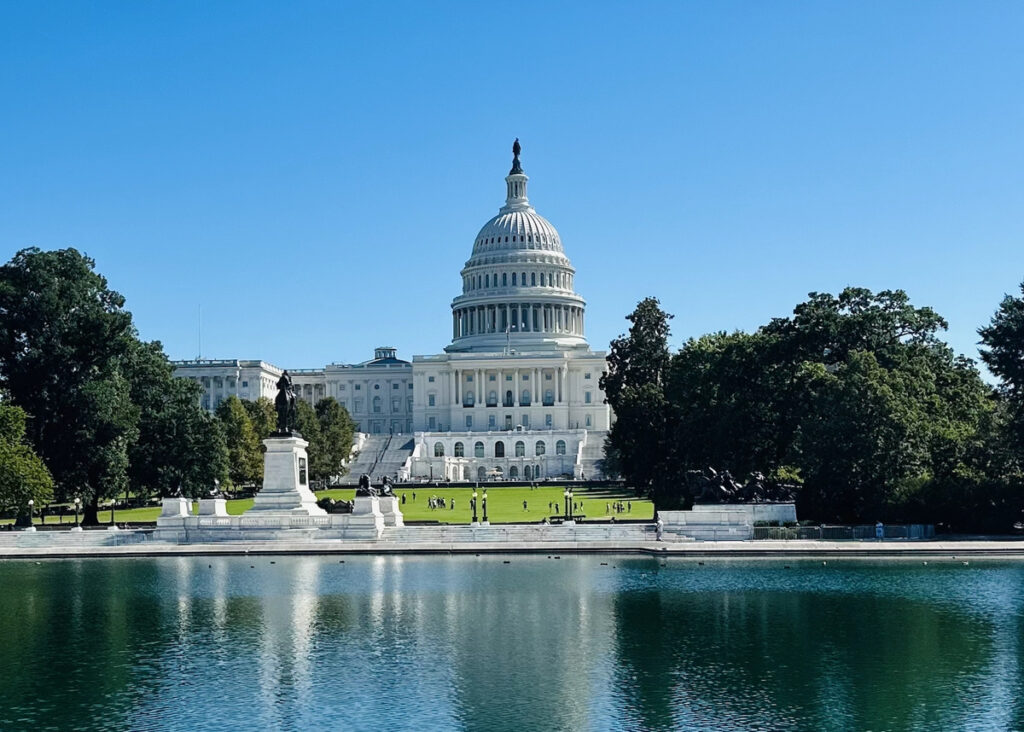
WASHINGTON, DC – The US Senate Foreign Relations Committee’s Wednesday hearing on the emerging “Arms Race 2.0” was intended as a routine oversight session. Instead, it became a grim acknowledgment of just how fragile global deterrence has become, with Russia’s was in Ukraine emerging as the hinge on which much of the world’s nuclear future now swings.
From the outset, lawmakers stressed that the crisis extends well beyond Moscow’s aggression. The deeper danger, they argued, is the precedent Russia is setting for every state that ever trusted security guarantees over nuclear weapons.
Follow our coverage of the war on the @Kyivpost_official.
Ranking Member Jeanne Shaheen (D-NH) delivered the sharpest warning, invoking the 1994 Budapest Memorandum – the deal that persuaded Ukraine to surrender its nuclear arsenal in exchange for protection Russia has since vaporized.
“If we allow Russia to swallow sovereign Ukrainian territory, other nations are going to draw the obvious conclusion: they need nuclear weapons to be safe,” Shaheen said. “That is a deterrence failure that we can’t afford.”
Even with rare agreement on Ukraine, lawmakers and witnesses remained deeply divided on how to confront the twin nuclear threats from Russia and China.
Moscow’s Deceptions and Washington’s Divide
For Chairman Jim Risch (R-ID), the diagnosis is unmistakable: Russia has already buried the Cold War’s arms control framework.
Other Topics of Interest
Moscow: No Talks With US on Zelensky Election Pledge
Moscow says it hasn’t spoken to Washington about Zelensky’s offer to hold wartime elections – as Trump’s pressure on Kyiv and EU unease grow.
He described today’s threat environment as an “unprecedented increase” in nuclear danger, arguing Moscow used decades of arms control not to stabilize the system but to “constrain US policy” while extracting concessions.
Risch pointed to Russia’s suspension of its New START obligations and its near-complete modernization of its strategic triad–ICBMs, SLBMs, and nuclear-capable bombers–as proof the Kremlin is long past playing by the old rules.
Former presidential arms control envoy Marshall Billingslea echoed that line, telling senators he does “not favor continuing to abide by New START limitations, or negotiation of any other form of militarily significant nuclear limitations, until we have first done our homework,” beginning with a new Nuclear Posture Review.
Democrats pushed the opposite way. To them, the collapse of arms control is precisely why the last remaining treaty must be preserved. Shaheen argued that arms control remains the “only option with a track record of success,” noting that US–Russian strategic arsenals fell from over 40,000 warheads at the Cold War’s peak to fewer than 2,000 deployed today.
Rose Gottemoeller, former Undersecretary of State for arms control, urged a practical middle ground: a one-year extension of New START coupled with a return to full verification, including on-site inspections.
Such a window, she said, would buy Washington critical time to prepare “without the added challenge of a Russian Federation, newly released from New START limitations, embarking on a rapid upload campaign.”
Further complicating the Russia picture is Moscow’s increasingly tight embrace of North Korea.
Risch warned that Russia is “likely providing technical expertise on advanced space and military capabilities” to Pyongyang, trading knowledge for wartime support in Ukraine–an axis with implications far beyond the Donbas.
China catch: Breathtaking pace
Even as Russia commands today’s attention, the committee’s long-term anxiety clearly centers on Beijing. Senators of both parties now treat China as a true nuclear peer–one racing toward parity at a pace unseen in the modern era.
Risch underscored that China exhibits “little to no interest” in arms control and is pursuing the fastest-growing nuclear buildup of any state.
Billingslea’s testimony supplied the most arresting figures: China now fields more than 600 operational warheads, is ahead of schedule to reach 1,000 by 2030, and is on track to reach at least 1,500 by 2035–rivaling the current US and Russian deployed arsenals.
The discovery of three new Chinese ICBM fields, he said, offers unmistakable proof of the scale and intent behind the expansion.
There was broad agreement on one point: the world will eventually need a trilateral framework restraining all three nuclear giants–Russia, China, and the United States.
But agreement ended there. Republicans view the looming New START deadline as leverage to force a new posture. Democrats see it as a bridge to preserve stability until engagement with China becomes possible.
The Commission on the Strategic Posture of the United States has already labeled this moment a “decisive decade,” and senators on both sides made clear they feel the weight of that warning.
Post–Cold War endgame
What emerged from the hearing was a clear consensus on only one thing: the Cold War’s nuclear order is gone.
In its place stands a new great-power contest born of Russia’s war in Ukraine and China’s breakneck buildup.
The real debate now is not whether change is coming, but how Washington should shape it–through renewed arms control, through rapid US modernization, or some uneasy combination of the two.
The clock on New START is ticking fast. Whether the US chooses to extend it, scrap it, or retrofit it for an age of competing nuclear peers will define America’s deterrence strategy for a generation.
And the emerging view on Capitol Hill is that the next era of nuclear doctrine must be built for a world with three rivals, not one–a paradigm shift that will eventually force the White House to decide which threats to prioritize, and which risks to accept.
In other words: the future of the nuclear order may hinge not only on Ukraine’s fate, but on how Washington chooses to rewrite rules that no longer exist.