
“We have to stop this revolving door of suffering, then getting a bailout,” Chester said.
Here’s how climate change is wreaking havoc in Massachusetts, by the numbers:
Major disasters have cost US taxpayers $500 million
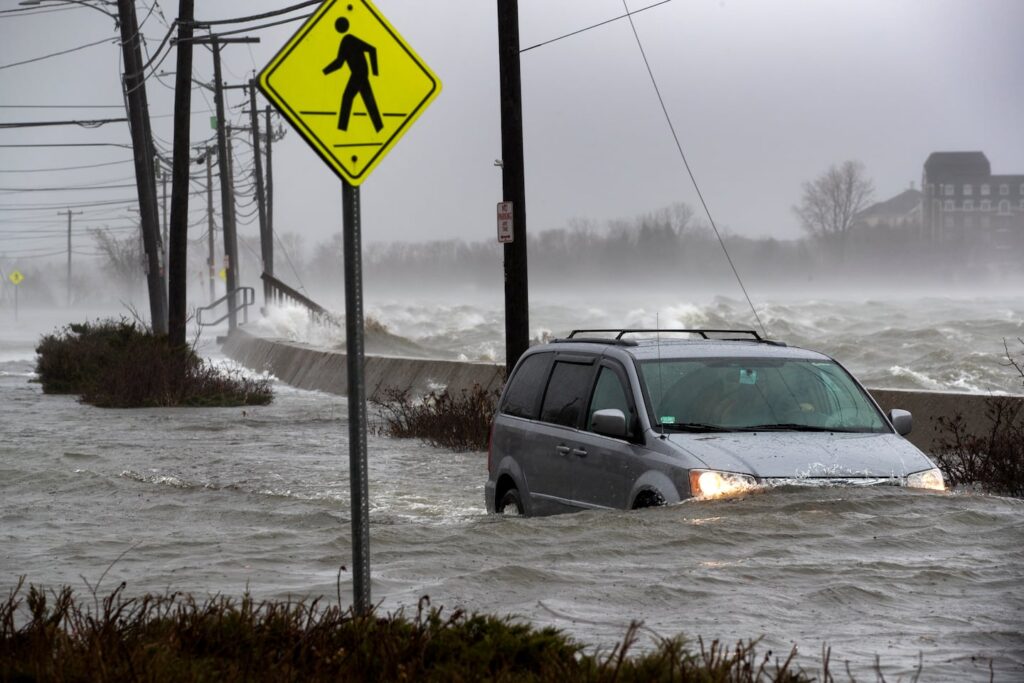
Massachusetts weathered a total of 11 federally declared major disasters due to extreme weather between 2011 and 2024. That cost US taxpayers more than $541 million. More than half of the events involved flooding, the most common and expensive extreme weather disaster, according to the report.
Beyond the expenses tallied in the report, the federal government spent an additional $7.5 million in individual assistance for homeowners and renters after a major disaster was declared in 2024 for severe storms and flooding, according to Robert Burgess, a spokesman for the Massachusetts Emergency Management Agency.
No county in Massachusetts was spared, but Bristol County and Suffolk County, which includes Boston, were hit especially hard. Both suffered eight of the declared disasters.
To receive a major disaster declaration from the president, a state must show that the disaster has exceeded its recovery capabilities and resources. A disaster declaration unlocks funding that communities can use to rebuild and also prevent future damage.
As natural disasters grow in frequency and intensity, so, too, has spending by the Federal Emergency Management Agency, which helps states respond to disasters that are too severe for them to handle alone. The Trump administration has delayed declaring disasters and canceled billions of dollars in payments.
Insurance premiums surged by about 16%
Home insurance premiums rose by nearly 16 percent in 2025 for Massachusetts homeowners, one of the highest increases nationwide, according to the report.
Climate change is driving up the cost of insuring homes, contributing to higher premiums and insurers dropping homeowners in coastal areas.
The higher premiums are forcing residents into a bind. According to the report, while only about 5 percent of homeowners in the state forego home insurance entirely, one in four homeowners struggle to find an affordable insurance carrier.
Despite frustration among residents about rising premiums, Steve Long, the director of policy and partnerships for The Nature Conservancy in Massachusetts, said there is an appetite to increase home insurance prices further — if it goes toward climate mitigation and adaptation projects, such as installing heat pumps and restoring wetlands.
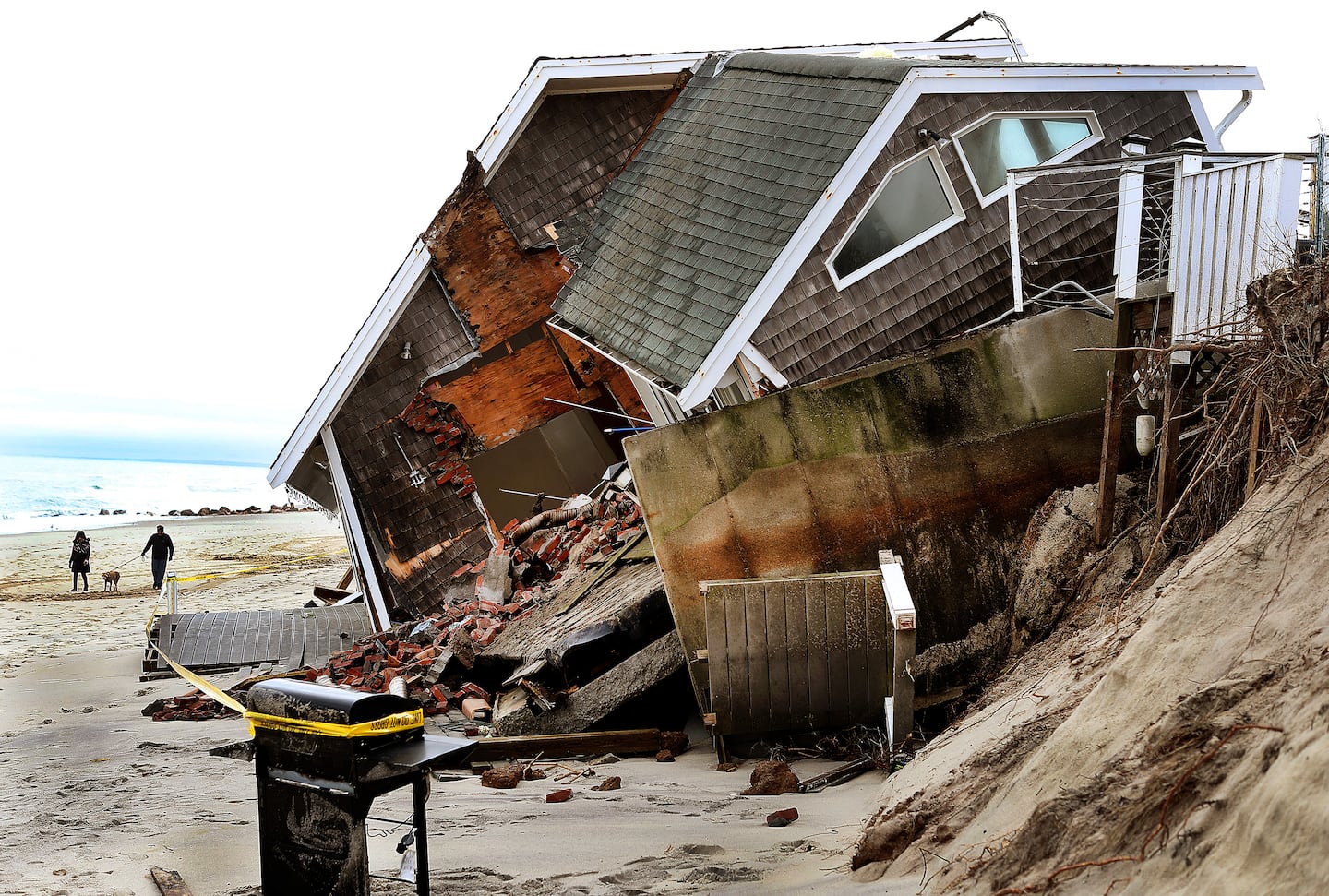 Extensive erosion and damage from a nor’easter on Feb. 3, 2021, took its toll on homes along the beachfront on Salt Marsh Road in Sandwich. John Tlumacki/Globe Staff
The Nature Conservancy has been leading a push for legislation that would put a 2 percent surcharge on home insurance premiums, which he said would come out to about $20 to $30 per year for the average homeowner. The Nature Conservancy commissioned a poll that found strong support for a fee in that range, he said.
He said the policy could raise up to $95 million a year for climate-related projects.
“We’re in a tight spot in Massachusetts,” Long said. “We have an affordability crisis across the board. So we need to be really, really sensitive in how we identify funding and financing options.”
Tidal flooding has increased by 333% since 2000
Rising seas and heavier rains are driving devastating flooding that threatens Massachusetts communities.
The Massachusetts coast has already seen sea levels rise by about 8 inches since 1950, which has driven a 333 percent increase in tidal flooding since 2000, according to the report. In Boston, coastal sea levels were recently measured about 14 inches above levels in 1921, when record-keeping began.
The number of properties threatened by flooding is also increasing. By 2050, an additional 22,000 homes in the state will be at substantial risk of structural damage from flooding, the report said.
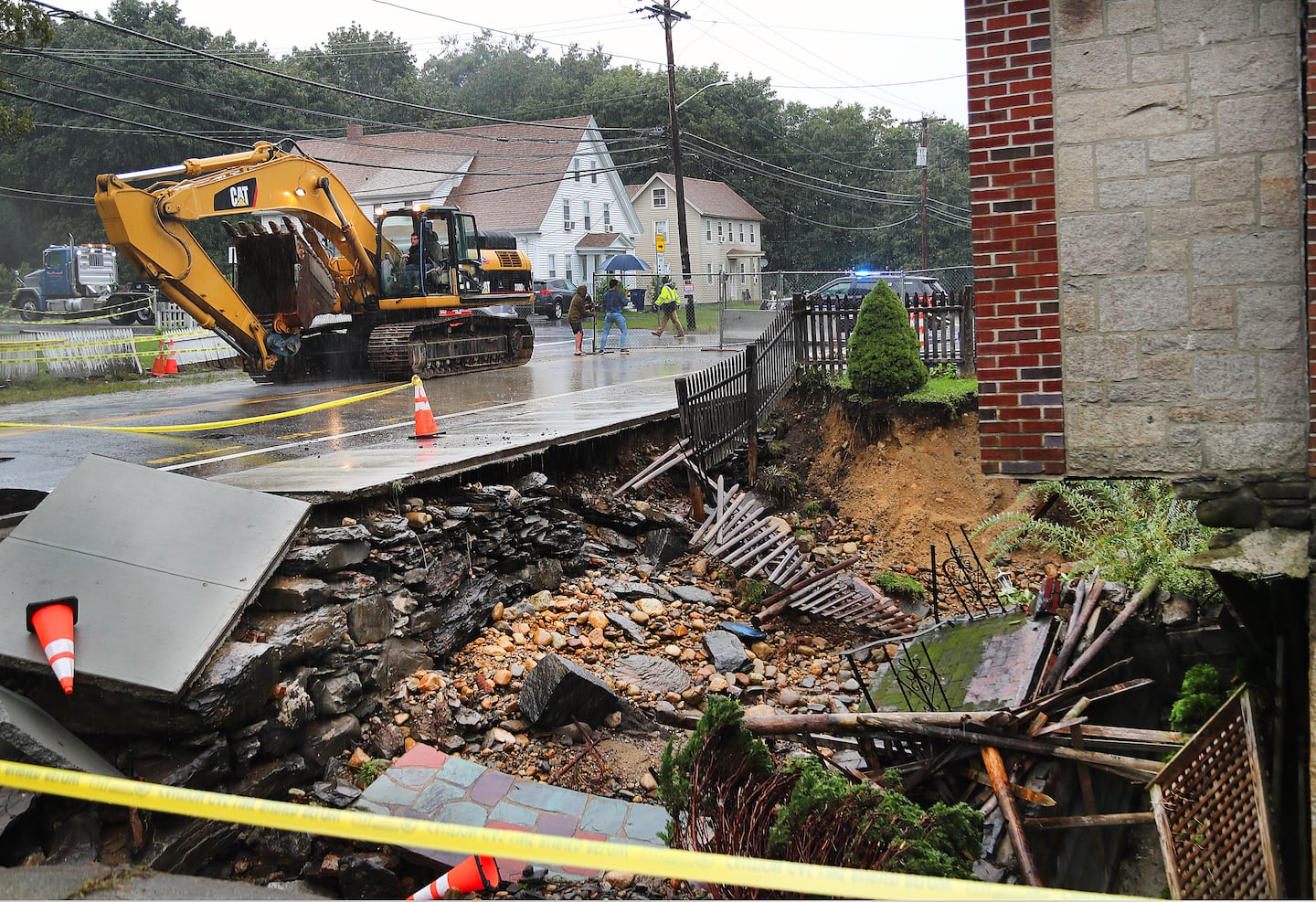 A bucket truck was brought in to work after a massive sinkhole formed following heavy rains, damaging a home on Colburn Street in 2023. John Tlumacki/Globe Staff
Despite the growing risk, few residents in Massachusetts have flood insurance. Flood protection isn’t included in most home insurance policies, and less than 2 percent of homeowners are insured through the National Flood Insurance Program, the report said.
“We’re really undercounting flood risks,” said Emma Gildesgame, the climate adaptation director for The Nature Conservancy in Massachusetts. “We need better data to understand the extent of flooding, and we also need action to help people understand and address their flood risk.”
More than 1,000 wildfires ignited in 2024
The Massachusetts wildfire season in 2024 was historic, with more than 1,300 blazes igniting across the state, according to the report.
October and November were especially volatile, fueled by drought conditions across the state. That fall, wildfires damaged or destroyed seven homes and over 40 outbuildings.
Climate change has fueled rising temperatures and shifting rainfall patterns that increase the intensity of droughts. But the risk of wildfires is compounded by human decisions.
 Sharon Firefighter Kurt Simpson put out hot spots on a trail as firefighters remained on the scene of a massive wildfire at the Blue Hills Reservation, which burned close to 40 acres in 2024.John Tlumacki/Globe Staff
The vast majority of these wildfires were sparked by burning debris piles, abandoned campfires, and equipment that lit a spark, according to the Massachusetts Municipal Association. The decision of nearly half of Massachusetts residents to live in or near wooded areas also drives up the odds of a destructive blaze.
Emergency room visits spiked during the June heat wave
During a heat wave in June that set record-high temperatures across New England, emergency room visits in Massachusetts for heat-related illnesses surged from 57 to 848 per 100,000 residents, according to the report.
Extreme heat is one of the deadliest weather hazards, driving fatalities directly caused by heat, such as heat stroke, and increasing the risk of mortality from other illnesses by putting stress on the body.
The report said that Massachusetts could see as many as 29 days a year where temperatures reach or surpass 90 degrees Fahrenheit by 2050.
Hessann Farooqi, the executive director of the Boston Climate Action Network, said Boston is especially at risk of heat-related health complications due to the urban heat island effect, in which cities are significantly warmer than surrounding areas because of how their buildings, roads, and sidewalks absorb sunlight.
“Our buildings are not going anywhere,” Farooqi said. “It’s going to require us being very creative about how we protect our residents.”
Kate Selig can be reached at kate.selig@globe.com. Follow her on X @kate_selig.