


In 2025, Kentucky faces a persistent mental health crisis. Notable statistics include an increase in youth mental health diagnoses in emergency departments from 9.5% in 2021 to 10.7% in 2023, and an 18% rise in emergency department visits for mental health and substance-use disorders between 2020 and 2023. Overall behavioral health utilization has risen, with a need to improve access to care and reduce unmet needs.
Close to 21.6% of all Americans – 68.8 million people—will have a mental illness in any given year, said psychotherapist Joseph D’Ambrosio, the clinical health director of behavioral health at the University of Louisville’s Trager Institute.
He suggests using artificial intelligence (AI) as a supportive tool in therapy, to help people communicate more effectively. For instance, in couples therapy, it could offer guidance on responding to a partner with empathy and compassion in challenging situations.
“AI can assist the therapist, but it is no substitute for a therapist,” he said. “There are not enough mental health providers and the ones in practice are not paid enough. The use of telehealth is improving mental health outcomes but consider that many parts of our state do not have good internet services.”
 One answer, D’Ambrosio believes, is in spending more time integrating primary care with behavioral health via paraprofessionals. He advocates for a behavioral health telehub where licensed professionals are available online to provide brief, solutions-focused interventions — 20- to 30-minute sessions designed for short-term support.
The federal Health Resources and Services Administration (HRSA) has awarded UofL’s Trager Institute a grant to build and test a new model for the behavioral health workforce. Up to 30 social work students will work directly with UofL physicians to test out new models to address behavioral health in primary care.
“Telehealth is the future of mental health,” he said.
Tech-driven support for mental health
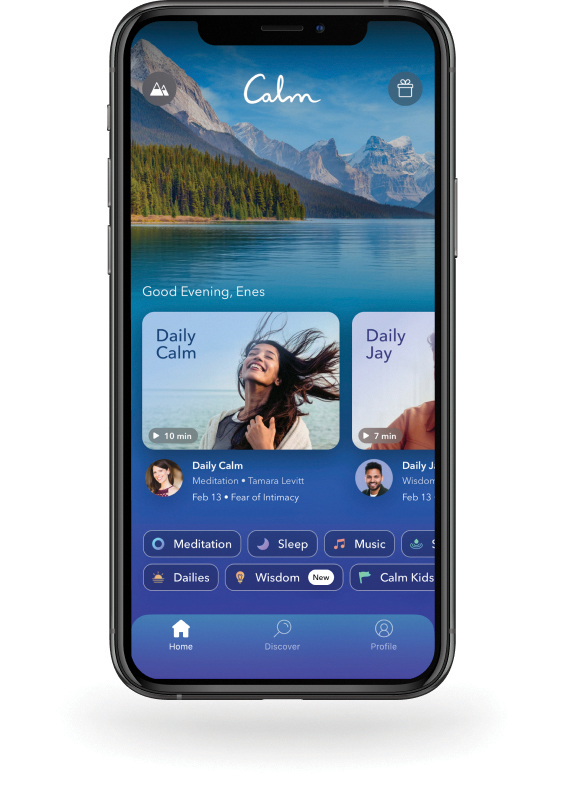
Other forms of technology can also play in role in improving mental health. For meditation and mindfulness, applications like Calm can be very useful, D’Ambrosio said.
Nationwide, mental health mobile applications are trending because the need is great and entrepreneurs can now tap into AI to assist. The global mental health apps market reached new heights in 2025, with valuations of $7.48 billion to over $8 billion and growth rates of 14-17% annually for the next 10 years, according to the Kentucky Counseling Center.
Mobile applications now represent a fundamental shift in how individuals approach their own mental health, regardless of age or race.
The drive to create new ways to address mental health challenges has even made its way to the high school level. In 2022, Natalie Fite, Reese Varney and Ian Belcher — who attended Belfry High School in Pike County — designed an app called “Sm;)e” to provide mental health resources on mobile devices. They were the national Congressional App Challenge winners that year.

Since then, many more startups are now designing mental health approaches in the digital realm. Nationally, recommended mobile apps from therapists include: Calm and Headspace for meditation and sleep; Wysa for AI-powered chatbot support; and BetterHelp and Talkspace for therapy and counseling services.
Rachel Edenfield, a former social worker and founder of the Kentucky-based startup Swell Health (getswell.app), created her mental health platform to help self-reliant individuals — especially military personnel and first responders — connect with therapists. Swell Health offers telehealth services through Tricare in 28 states.
Edenfield has a focus on military families and law enforcement, where many push through their issues and do not reach out, in part because of time and expense. She has worked in military circles through participation in another startup and saw the pressures. Now she is working directly with police departments.
In Paducah and Shively, for example, everyone in the department gets enrolled on her platform and even spouses get a buddy pass. This gives them 24/7 access to the platform. An investment, in the form of a $25,000 grant from the Kentucky State Police Department, showed her the need for neutral paths for people to get into a system.
“Through our AI-powered app, we have clinical models for intervention. Many people may not say they are depressed or upset, but they will enter our app. There is a shortage of therapists; even if every American had access to solid health insurance to cover therapy, we would have only enough therapists to cover about 14% of those who need it,” Edenfield said. “We need to meet people where they are, and that is what Swell is trying to do.”
Creating novel solutions
According to aggregated findings from the 2025 Kentucky Cabinet for Health and Human Services’ Behavioral Health Kentucky Advisory Committee, the state has higher rates of depressive disorder and mentally unhealthy days than national averages:
- Kentucky ranks seventh highest in the nation for overdose-related deaths, according to the National Center for Health Statistics.
- Suicide is the second leading cause of death for Kentuckians ages 10-34, according to the Centers for Disease Control & Prevention, Suicide Mortality by State.
- 29% of high school students reported poor mental health and 40% reported persistent feelings of sadness or hopelessness, according to the Department of Education.
- 12.2% of Kentucky adults aged 65 and older have frequent mental distress, with 19.6 suicides per 100,000 adults aged 65 and older, according to America’s Health Rankings, 2024 Senior Report by State.
In terms of Medicaid utilization, outpatient mental health and substance-use disorder (SUD) services appear to be concentrated in the southeastern and western portions of the state. Inpatient mental health and SUD services are largely concentrated in the northern and central regions of the state, in the urban areas where more inpatient care is available.
Western counties — namely Hickman, Carlisle and Union — have higher rates of suicide and self-inflicted injury deaths. They also have relatively few providers.
The central eastern region of Breathitt, Owsley, Lee, Estill, Powell and Menifee counties have disproportionately high rates of deaths due to overdose. Like Western Kentucky, the area has relatively few providers, according to Health & Human Services.
Improving the mental health of Kentucky children and adults is a new priority in the state plan that is currently underway and addresses “adverse childhood events” that impact mental health.
“The real issue is to find what people are dealing with; that is the real challenge,” said Dr. Dawn Forbes, owner of Louisville-based NASCEND. “Tech is wonderful and it can make life easier to connect in some ways, but it is less personal and people are feeling more disconnected than ever. Behavioral health and medicine need to work together and understand the why for each individual in crisis.”
NASCEND is an innovative clinical solution, education and technology company dedicated to improving outcomes for infants and families affected by maternal substance-use disorder (SUD). Each year, an estimated 15% of infants are affected by prenatal exposure to alcohol or illicit drugs. One infant born every 15 minutes requires treatment for neonatal abstinence syndrome (NAS), with an aggregate cost of care of more than $2.5 billion.
NASCEND is transforming the experience of NAS with technology, live training, evidence-supported guidelines, and family-focused intervention, she said.
The good news is that in the last two years, Kentucky — particularly Eastern Kentucky — has been cited for making progress in lowering the number of drug overdoses by creating recovery ecosystems, according to the East Tennessee State University Center for Rural Research data.

A new approach to emergency care
But there is still more work to do. At the Eastern State Hospital in Lexington, which serves 50 counties as a psychiatric facility, there are measurable results in the EmPATH (emergency psychiatric assessment treatment and healing) unit established there in 2024. It is the country’s 30th EmPATH unit and the first in the state.
The EmPATH model calls for patients to receive treatment immediately upon arrival, in a living room–style setting, by licensed practitioners such as physician assistants, nurses and social workers as well as peer support specialists. Anyone in the state (or even from a neighboring state) can go to an EmPATH center without an appointment for any mental health issue and expect to be seen. The facility is open 24/7, including holidays. A referral is not required nor is advance notice. People from at least 30 states have received EmPATH treatment.
The facility provides a trauma-informed environment that combines group spaces with private areas and ongoing monitoring. It has 16 chairs — recliners with wheels, not beds. Facilities of this type have doubled follow-up appointment rates while reducing stigma.
“If patients do not make their follow-up appointment, they are going to continue to have challenges,” said Lindsay Jasinski, chief administrative officer of the UK Eastern State Hospital and a licensed clinical psychologist.
Once a patient is cleared for outpatient care, the Lexington facility will transport anyone needing it back to their residence, regardless of their hometown, even providing airfare if needed.
“We do not divert people and we do not disrupt their lives. Their employer need not know,” said Marc Woods, chief nursing officer for Eastern State Hospital and nurse leader of Eastern State Hospital as part of UK HealthCare’s management team. “We talk about innovations in behavioral health. But it’s not robotics. It’s not shiny lights. It’s not lasers. This facility represents one of the first solutions to address the high suicide rate in the state.”
Woods notes that about two-thirds of those seen have suicide ideations. The Kentucky EmPATH unit also reports seeing high rates of substance abuse.
The EmPATH model currently serves those age 18 and older but a facility for younger patients is being considered as well.
Since its opening last year, the EmPATH unit has seen more than 6,000 patients. To help meet the increased need, New Vista opened a behavioral health urgent care center in Lexington in April 2025 and a New Vista mental health services facility opened in Boyle County last March.
“I think one of the things we’ve seen in the state is increased collaboration,” Jasinski noted. “The pandemic opened conversations around mental health. We work closely with the police and EMS. The trend in behavioral health is integrated health. Across the state, this is being done better than ever. You can’t have overall health unless you include mental health.”