
COP30 — the annual Conference of Parties for the UN Convention on Climate Change — wrapped up in Belém, Brazil on Nov. 21. Despite the engagement of representatives from across the world, the United States government did not attend, providing definitive evidence of the impacts of America’s recent withdrawal from the Paris Agreement.
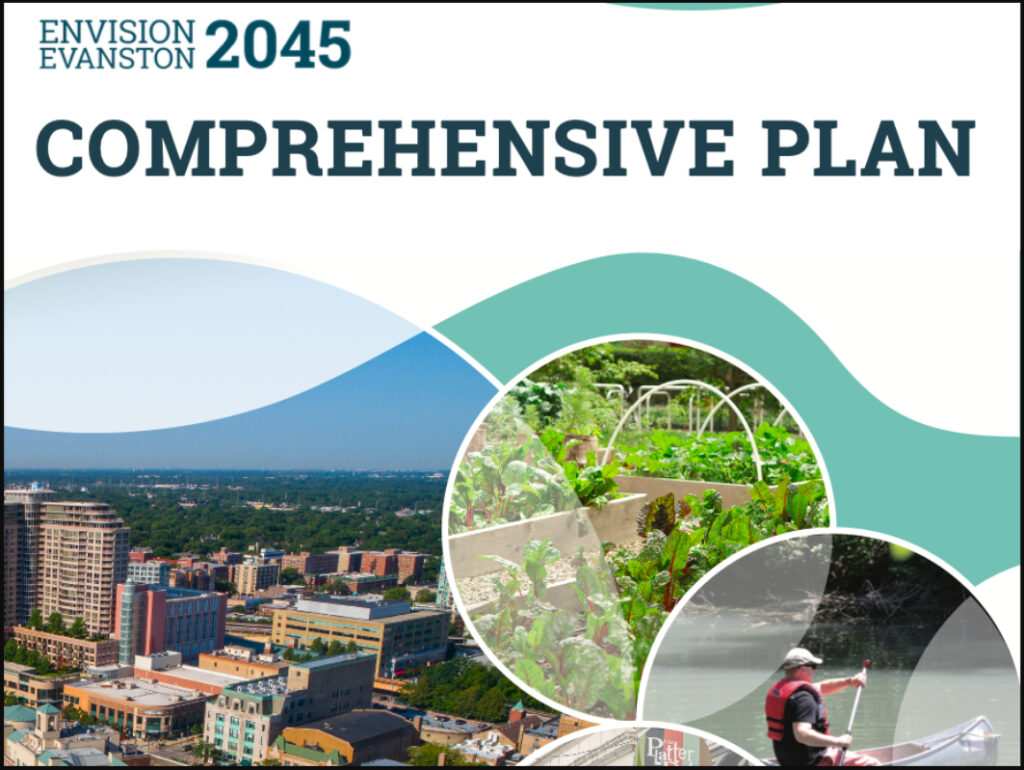
In a time of federal inaction on climate change, the pressure is on local municipalities to take responsibility for shaping key contributors such as energy use, land use, waste management and construction. Envision Evanston 2045, a collaborative project that set goals for future zoning and development policy, offered an opportunity to mold the ideological foundations that shape our homes, workplaces and streets. As we move into the implementation phase, we must ensure sustainability has a loud voice in the conversation.
Evanston’s Climate Action and Resilience Plan sets an ambitious goal of citywide carbon neutrality by 2050. Right now, this is an impossible task if our building efficiency standards and car-centric transportation system continue business-as-usual.
The city’s final Comprehensive General Plan set a framework to address climate concerns. Now, as it comes time to adopt and implement that plan, we should use already-set goals of decarbonization to inspire stricter efficiency requirements on new buildings and strategic integration of residential and commercial spaces.
New buildings, new standards
Most of Evanston’s emissions reductions thus far have occurred through the transportation sector — largely due to federally-mandated increases in fuel efficiency.
However, buildings currently contribute 80% of Evanston’s greenhouse gas emissions. The upzoning called for by Envision Evanston will open the door for new, larger buildings across the city.
New buildings slated for construction in rezoned plots should be required to meet strict specifications that outpace the emissions-reduction timeline set for existing buildings by the Healthy Buildings Ordinance — after all, it’s easier to build a new building with sustainable characteristics than redesign an old one piece-by-piece.
Universal standards for both existing and new development could have a monumental impact on how our indoor spaces are powered, heated and designed. A majority of Evanstonians support such a goal — Envision’s survey showed that around 60% of residents believe that “new buildings in Evanston should be required to meet the highest standards of energy efficiency and carbon reduction.”
Establishing citywide requirements for better insulation, efficient systems, renewable sources and green roofs during development could ensure that sustainable infrastructure is in place from the beginning, not something we have to transition into over time.
The transportation puzzle
As someone who lived in the fully-residential area of the 6th Ward between Green Bay and Crawford throughout childhood, I rarely took public transportation for my daily commutes to ETHS or downtown. The closest bus stop was a 15-minute walk from my house, and especially when temperatures dipped to the negatives or ice covered the sidewalks, I always preferred the freedom of a car.
My experience isn’t unique; most Evanstonians surveyed by Envision agreed that one “needs a car to comfortably live/work in Evanston.” This dependence on private vehicles will only increase if population centers far from important destinations such as places of work, commercial districts and schools are universally upzoned.
To combat high transportation-related emissions, some experts recommend stricter zoning (i.e. limiting development) in “high carbon” areas such as suburbs, while lowering restrictions in “low carbon” areas, where population is already dense and people generally live close to business centers.
As the city tackles the question of how to implement the Comprehensive Plan’s guidelines, it must consider the unique location of its services in relation to its people. For instance, on my block, building 20 additional units for families would add 20+ cars to the streets.
By increasing the range of Evanston buses (especially into large residential blocks) and only upzoning in areas serviced by public transportation or within walking distance of business centers, strategic zoning can ease the emphasis placed on car ownership in Evanston and lower our vehicle-related emissions.
It’s not just emissions — the bigger picture of environmental justice
The cost of sustainable development could raise the prices of new construction, making housing inaccessible for residents with limited economic means. While the implementation of carbon-efficiency in buildings may make initial cost higher, the long-term savings homeowners receive on electricity and heat services far outweigh the initial investment.
Furthermore, Evanston neighborhoods already bear unbalanced environmental burdens due to historically racist zoning ordinances, which impact factors such as urban canopy (the Fifth Ward has 5-20% less tree cover than bordering Wards), heat island effect (it also experiences temperatures 0.7-2.0 °C higher) and pollution. These inequalities cannot be solved by small, noncommittal change — they require large-scale restructuring.
Development is an environmental issue. It’s also a housing issue, an equity issue, a historic issue — one that should be powered by a desire to keep people’s environments clean and conducive to high quality of life. Protection of our environment can, and should, happen alongside protection of our citizens’ rights to affordable housing and accessible transportation.
By expanding options for multifamily homes and broadening the reach of buses across Evanston, Envision could make our city a realistic destination for people of all backgrounds, while addressing the systemic inequalities already present in minority communities.
What’s next?
The Comprehensive Plan is set to be implemented on a ward-by-ward basis, meaning the key decisionmakers will be councilmembers and their constituents. Go to a City Council meeting — held on the 2nd or 4th of each month — and make a public comment on Envision Evanston 2045, or go to your local Ward meeting, gatherings which are usually casual and small in attendance.
If you’re too busy for the weeknight trip, sending an email directly to your Ward’s councilmember or Mayor Daniel Biss letting them know what you care about — whether that’s climate change, urban canopy or lake level rising — helps the City know what we stand for and what we want to see in our local government.
The Comprehensive Plan is just that: a plan. As we transition into the stage of implementation, civic engagement can play a huge role in how much of the plan remains as an ambitious dream, and how much becomes our new reality.
Related Stories