
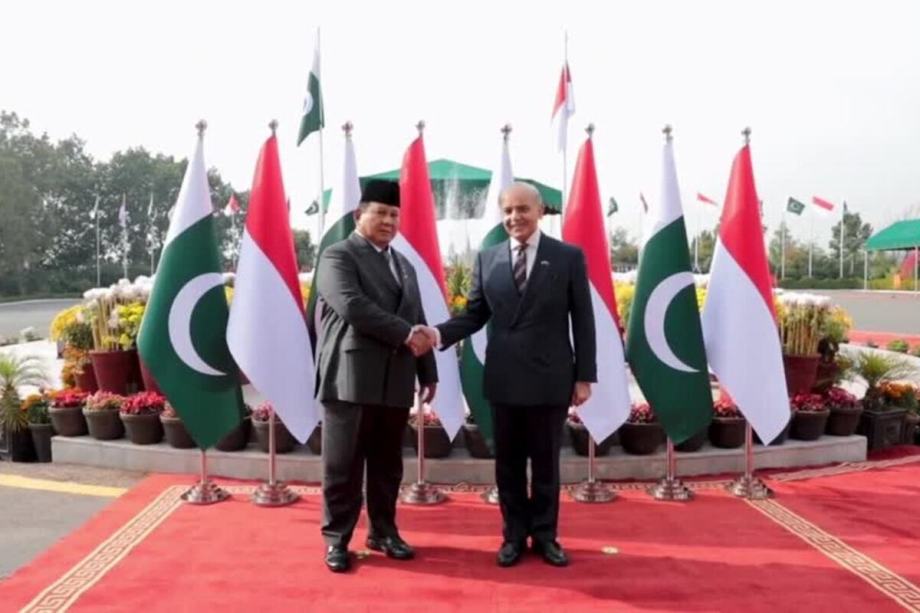
Prabowo Subianto’s appearance in Pakistan this week followed a script that has been performed too many times to count. Standing beside Prime Minister Muhammad Shehbaz Sharif in Islamabad, Indonesia’s president once again reaffirmed Jakarta’s support for a two-state solution as the answer to Gaza and Palestine. The words were familiar not because they are persuasive, but because they are endlessly repeated, even as the reality they claim to address collapses further into catastrophe.
There is nothing new about pointing out that the two-state solution does not work. Its failure has been mapped, documented and lived. What is new is how openly destructive this framework has become. The two-state paradigm has united world leaders not around stopping genocide, but around managing their response to it. It has revealed an almost universal tolerance for genocide, paired with an almost universal refusal to treat Palestinian rights as immediate and non-negotiable.
The framework was never designed to end oppression. It required an occupied people to negotiate their freedom with the power that controls their land, borders and survival. It demanded restraint from those under siege while granting endless flexibility to the state exercising domination. This imbalance was not accidental. It was the point.
Today, the two-state solution functions as political cover. It allows governments to issue statements while avoiding consequences. Genocide is reduced to a “crisis.” Starvation becomes a “humanitarian challenge.” The mass killing of civilians is treated as a regrettable interruption to a peace process that no longer exists. By invoking future negotiations, leaders excuse their refusal to confront crimes unfolding in the present.
Israel benefits directly from this arrangement. As long as the international community remains trapped in the two-state paradigm, Israel can claim commitment to peace while eliminating its possibility. Each reaffirmation delays accountability. Each diplomatic gesture buys time. And time, measured in erased neighbourhoods and destroyed families, has consistently favored Israeli power.
READ: Indonesian Navy says 3 hospital ships ready for Gaza mission
Indonesia’s continued endorsement of this framework reinforces that dynamic. However sincerely it is expressed, repeating the two-state formula helps sustain the illusion that Palestinian liberation can still emerge from a structure that has enabled occupation, fragmentation and now genocide. This is not neutrality. It is participation in a system that shields perpetrators and abandons victims.
The deeper failure of the two-state paradigm is moral. It has normalised silence in the face of genocide. It has trained the world to prioritise diplomatic language over human life. When mass death is met with calls for restraint rather than accountability, the language itself becomes complicit.
This complicity works in Israel’s favour. The two-state narrative manufactures a false balance between occupier and occupied, between overwhelming military force and a besieged civilian population. It dissolves responsibility by reframing genocide as a breakdown in negotiations rather than as a crime demanding immediate consequences.
Indonesia’s role matters precisely because of its moral authority. As a post-colonial nation and the world’s largest Muslim-majority nation, Indonesia is often seen as a principled defender of Palestine. When such a country continues to champion a framework that has helped obscure genocide, it legitimises a global consensus that tolerates annihilation as long as it is wrapped in the language of peace.
This critique persists because the conditions that demand it persist. As long as genocide is met with recycled formulas and diplomatic comfort, the two-state solution will remain a target of scrutiny. Supporting Palestine today cannot mean repeating a script that has accompanied decades of dispossession and mass killing. It must mean naming genocide, confronting power and demanding accountability without delay.
By continuing to elevate the two-state solution, Indonesia helps preserve a diplomatic order that rewards delay, denial and impunity. Israel benefits from that order every day. Until that reality changes, the insistence on challenging this framework is not obstinacy. It is necessity.
OPINION: King Abdullah’s visit to Jakarta: Key takeaways
The views expressed in this article belong to the author and do not necessarily reflect the editorial policy of Middle East Monitor.