
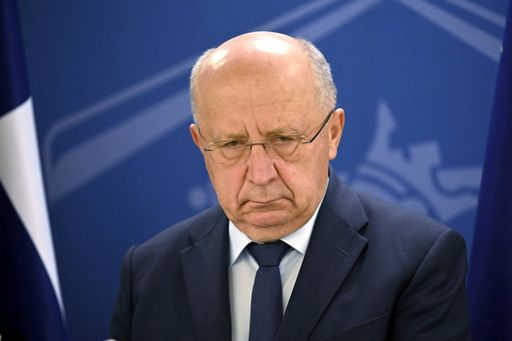
He pointed to critical areas such as space-based data, intelligence, and satellite communications, where Europe currently relies heavily on US support.
On NATO’s future, the commissioner stressed that although he does not foresee the US abandoning the alliance, Europe must prepare to take on greater responsibility both within the bloc and in general security matters.
Addressing the ongoing war in Ukraine, Kubilius suggested integrating Ukrainian armed forces’ battlefield experience and industrial capabilities into European defence structures.
“We also need to discuss a possible European Defence Union, a new security architecture that could include the UK, Norway, and Ukraine, to consolidate Europe’s defensive capabilities. As for the idea of a European army, it is probably too early to say anything concrete. It is a difficult and complex path, but we must begin to discuss it openly, looking at the next five to ten years,” he said.
On financing Ukraine’s needs, Kubilius highlighted proposals to use Russian assets seized in Europe as a mechanism to support both military and budgetary requirements, stressing that the decision rests with EU heads of state and government.
“The best guarantee for Ukraine’s security is a strong army. At the same time, we should help Ukraine become a successful country after peace, including through EU integration,” he said.