
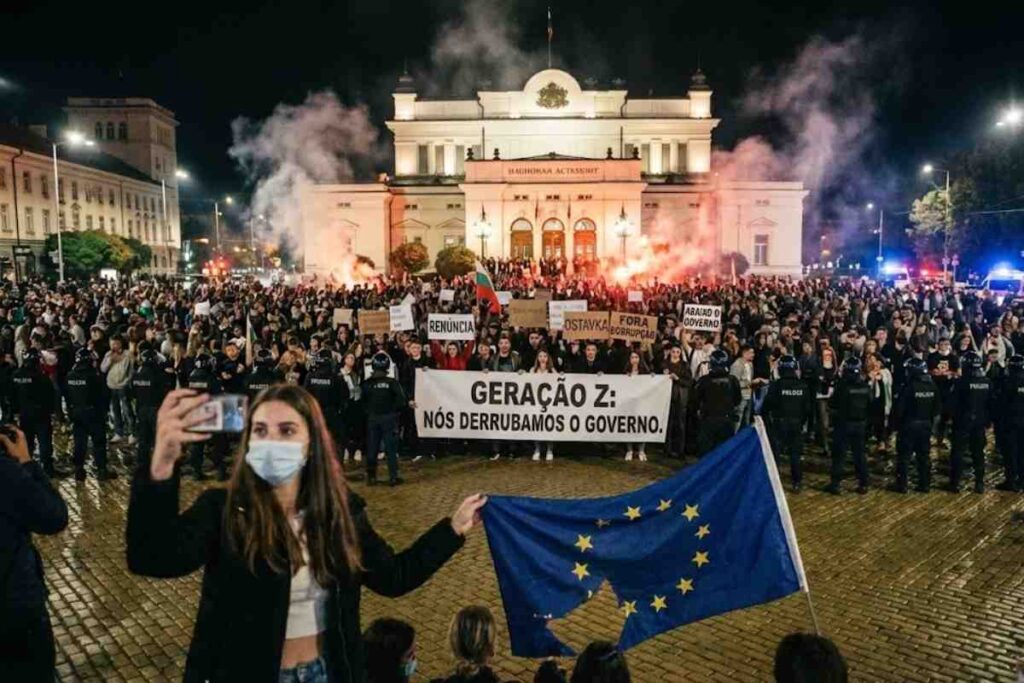
On the eve of Bulgaria adopting the euro on January 1st, Generation Z protests took over Sofia and dozens of other cities, toppling Prime Minister Rosen Zhelyazkov and making the country the first European victim of a youth anti-corruption wave that has recently shaken Asia, Africa, and Latin America as well.
On Thursday, December 11, 2025, after weeks of crowded streets in Sofia and dozens of other cities, the Protests by Generation Z against corruption and economic policy brought down Prime Minister Rosen Zhelyazkov., who announced in a televised address the resignation of the government minutes before facing a vote of no confidence in Parliament.
One day after the resignation, this Friday, December 12, 2025, Bulgaria woke up as the first country in Europe to see a government fall under direct pressure from the generation born between 1997 and 2012.just days before entry The official announcement in the eurozone on January 1st, amidst a climate of political fatigue and widespread distrust.
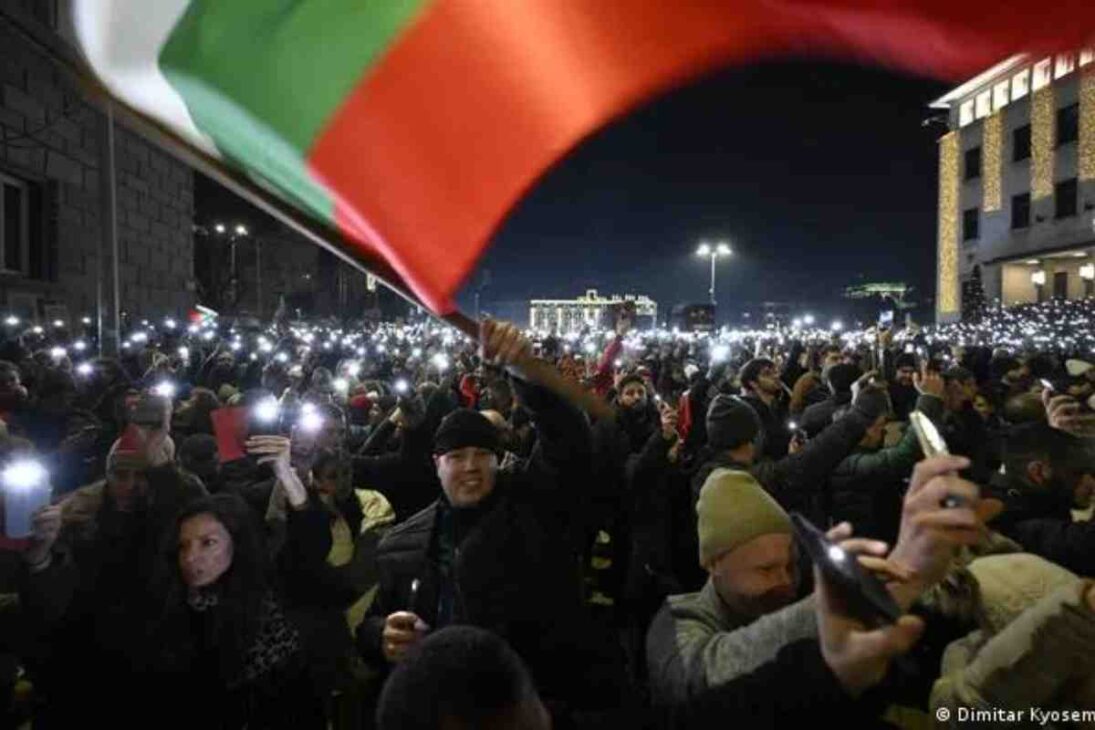
The Gen Z protests in Bulgaria did not emerge in a vacuum. They They are following in the footsteps of youth mobilizations that have already toppled governments in Bangladesh, Nepal, Sri Lanka, and Madagascar., always mixing street activism and digital pressure.
In other countries, such as Serbia, the Philippines, Mexico, Indonesia, and Peru, the same generation has been pressuring governments, exposing scandals, and surrounding centers of power.
With their mastery of social media, live streaming, and mass organization through messaging apps, Generation Z has established itself as a political force of its own.
This generation connects economic frustration, rejection of corruption, and distrust in traditional elites within a globalized discourse., which circulates in videos, memes and hashtags, but ends up in squares and avenues.
From revolt to the collapse of the Zhelyazkov government
Rosen Zhelyazkov led a minority governing coalition, headed by the center-right Citizens for European Development of Bulgaria (GERB) party.
The trigger for the crisis was a draft budget for 2026, the first one entirely designed in euros.which provided for increased social security contributions and taxes on dividends, in exchange for more public spending.
Faced with pressure from the streets, the government backed down from the budget plan. Even so, The protests did not subside and came to symbolize something bigger than the fiscal debate.A rejection of years of perceived corruption, cronyism, and impunity.
In a country that has held seven national elections in just four years, the most recent in October 2024, the population has come to see the government as yet another chapter in an endless crisis.
In his resignation speech, Zhelyazkov admitted that the protests were not only social, but “about values.”
By acknowledging that the revolt united different groups within Bulgarian society, the prime minister confirmed that he had lost the most important battle: legitimacy in the eyes of public opinion.
Squares taken over, provocative banners and clashes in Sofia
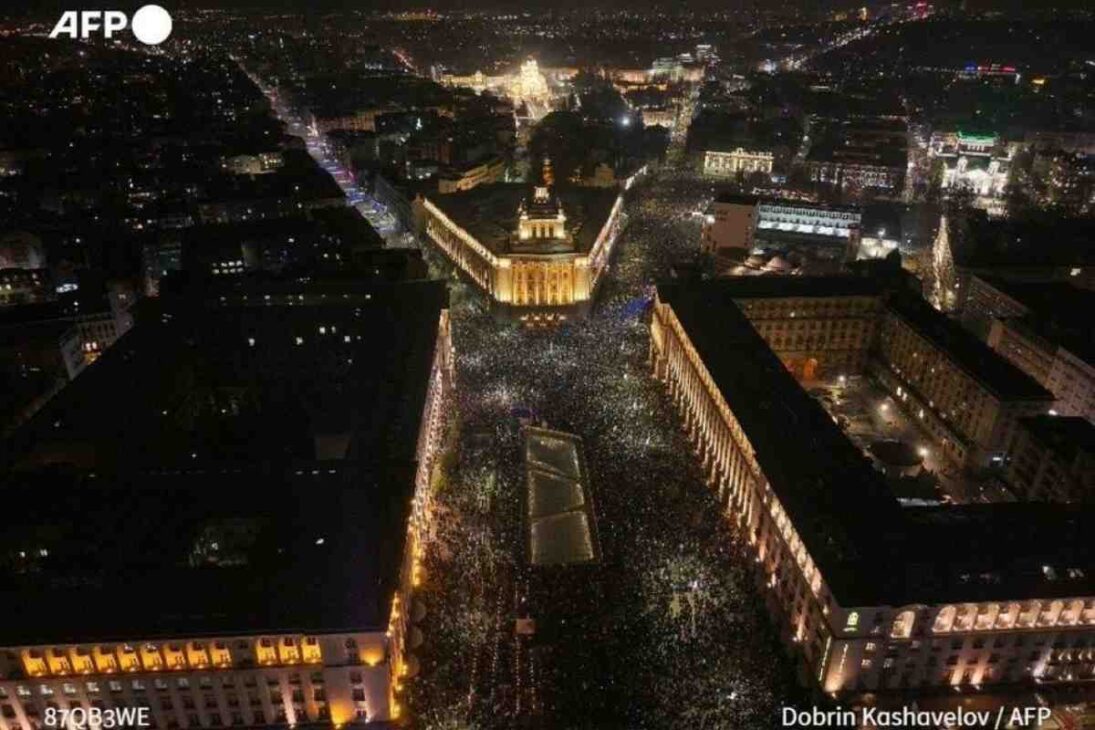
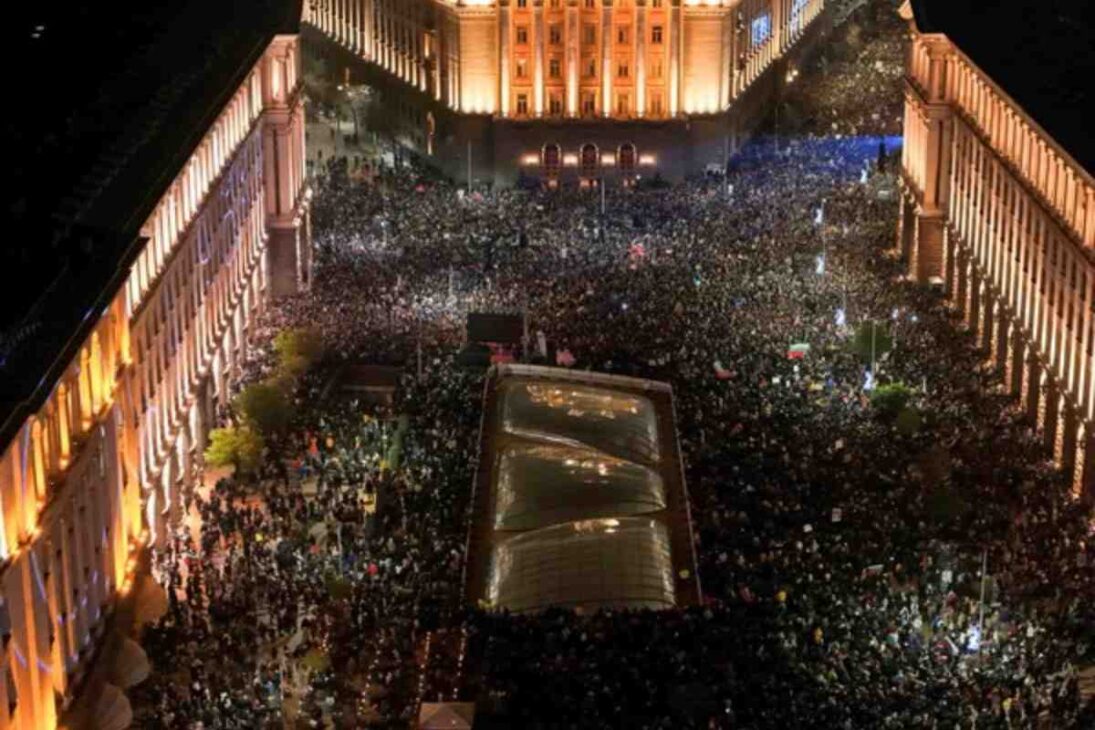
The Wednesday before, December 10, 2025, had set the tone for what was to come. Thousands of people, mostly young, occupied the area surrounding the Parliament in Sofia., chanting slogans and demanding the immediate resignation of the government.
The banners displayed direct messages, such as “Generation Z is coming” and “Young Bulgaria without the mafia.”
The demonstration began peacefully, but ended in confrontation. Small groups moved to the offices of the main governing parties and began throwing plastic and glass bottles, fireworks, and stones at buildings and police officers.
Emergency services reported injuries were transported to hospitals and on-site treatment was provided, while police reported the detention of ten people.
For young people, it wasn’t just about wages, taxes, or inflation. The message was moral: “We will not allow them to lie to us, we will not allow them to steal from us.”
The Gen Z protests transformed diffuse indignation into a clear demand: a government that respects the rules, fights corruption, and listens to the streets.
Dispute over narrative: opposition, president, and political future.
The opposition rushed to fill the vacuum left by the resignation. Asen Vassilev, leader of the “Continue the Change” party, described Zhelyazkov’s departure as the “first step” towards Bulgaria becoming “a normal European country.”
He went on to advocate for “fair and free” elections, without manipulation., in reference to the allegations regarding the previous parliamentary election.
President Rumen Radev also sided with the protesters. In a message on social media addressed to parliamentarians, he asked them to listen to “the public squares” instead of giving in to “fear of the mafia.”
The phrase reinforced the feeling that the Gen Z protests had become, in practice, the moral compass of the Bulgarian political crisis.
According to the Constitution, it will now be up to Radev to consult with the parties represented in Parliament to try to form a new government.
If no viable coalition emerges, the president will have to appoint an interim cabinet until new elections are held, while Zhelyazkov’s ministry continues in purely administrative functions.
Eurozone in turmoil and instability at the heart of the EU.
The fall of the government comes on the eve of a historic step. Bulgaria, a member of the European Union since 2007, is preparing to adopt the euro on January 1st.This change is seen as key to deepening economic integration with the bloc and attracting investment.
But the political collapse raises doubts about the country’s ability to meet fiscal targets, ensure stability, and implement reforms demanded by Brussels.
By overthrowing the government at this precise moment, the Generation Z protests are sending a message that resonates beyond Bulgarian borders: European integration without a real fight against corruption does not satisfy a hyper-connected and impatient generation.
A generation that topples governments – and tests democracy.
From Bangladesh to Madagascar, now passing through Bulgaria, The same combination repeats itself: connected young people, high cost of living, distrust of traditional politicians, and intensive use of digital tools to organize large-scale protests.
The difference is that, this time, the shock hit a European Union country on the doorstep of the eurozone.
Governments in other countries are watching closely. While in Asia, Africa, and Latin America this wave has already ousted leaders from power, The Bulgarian experience shows that even democracies embedded in large economic blocs are not immune to the pressure of streets dominated by Generation Z.
Given this scenario, Do you believe that Generation Z protests will bring down more governments in Europe in the coming years, or that leaders will be able to respond to the demands of this generation before that happens?