
Some contemporary monuments in Malta which depict embracing arms commemorate the end of the Cold War and also offer visitors a placid environment to reflect on the past. – Times
Malta and the United States have both benefited from close political, diplomatic, trade and social bonds for many decades. The island nation also played a key part in one of the defining moments of the 20th century involving the U.S. and Russia, when in December 1989 the two superpowers moved to end the Cold War during a high-profile summit on the island.
In the present era, taking advantage of its geographical location, Malta is leading global maritime enforcement.
Considered by many historians as the most important meeting between the U.S. and the U.S.S.R. since the end of World War II, the two-day event culminated in the famous leaders of the two countries taking crucial decisions to reduce the immediate nuclear threat on mankind. “The 1989 Malta Summit heralded a new era of international relations,” said the Malta’s Ministry of Foreign Affairs about the milestone. “The choice of venue was highly symbolic as the islands are strategically located at the geographic center of the Mediterranean. “This was significant in the context of political and ideological divisions between the capitalist West and the Communist East. Furthermore, the choice of Malta was ideal due to the country’s neutrality stance. Malta declared its neutrality from the two superpowers in 1980. The endeavor was also in line with Malta’s views about the world, as the islands adopted a policy openly advocating against the possession of nuclear weapons.”
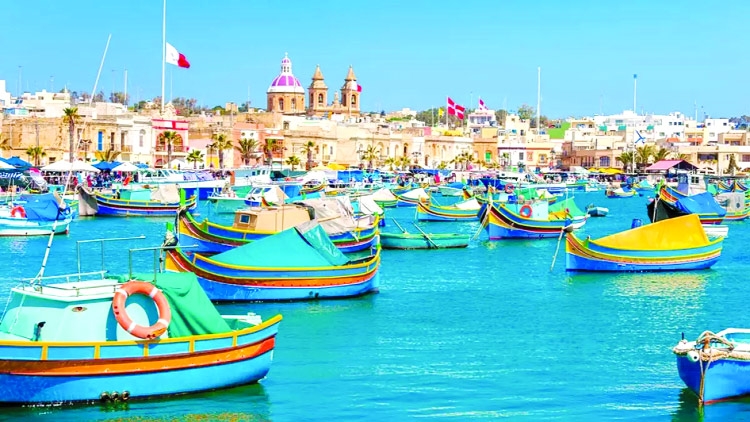
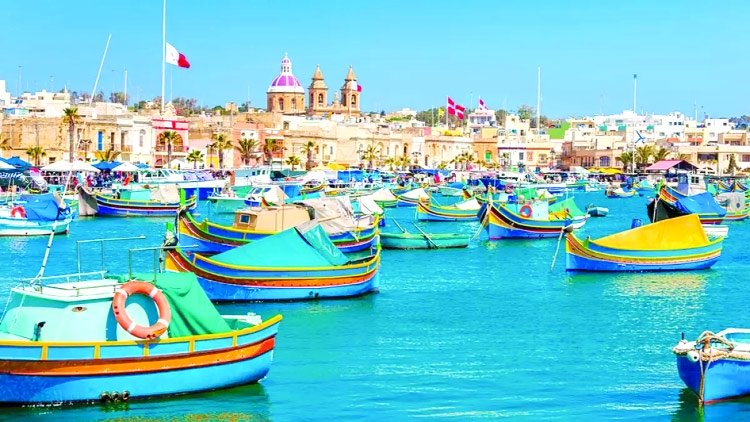
The famous events of December 2-3, 1989 are set in stone courtesy of The End of Cold War Memorial in the picturesque village of Marsaxlokk, adjacent to Birzebbuga. The contemporary monument, which depicts embracing arms, commemorates the end of the Cold War and also offers visitors a serene environment to reflect on the past. Of course, while Malta is happy to celebrate its rich history, its sights are very much set on the future, with the country now seeking to play a leading role in global maritime enforcement through its state-of-the-art Global Center for Maritime Sanctions Monitoring (GCMSM).
Billed as a first-of-its-kind international organization, the GCMSM launched in November and is designed to support real-time monitoring of sanctions implementation at sea, strengthen the integrity of flag registries and reinforce global maritime domain awareness. “In this regard, it responds to a critical gap in global maritime enforcement, as it will focus on supporting flag states, particularly open registries, in building capacity for vessel screening, monitoring, and compliance, while addressing the widespread issue of flag-hopping, maritime sanctions evasion and transnational crime,” explained Borg. “This initiative brings together technology, intelligence and capacity development.”
Thanks to Malta’s leadership, in partnership with Antigua and Barbuda, and Malta’s alliance with the United Nations Office on Drugs and Crime (UNODC) and the European Union (EU), Valletta is empowering maritime administrations to deter sanctions violations and enhance accountability in global shipping,” the Foreign Ministry of Malta upholds this idea.

Latest News