
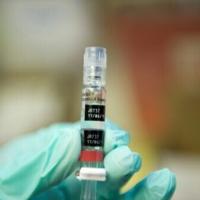
Despite a federal decision to no longer recommend the hepatitis B vaccine for newborns, the Colorado Department of Public Health and Environment said parents and providers should continue birth-dose immunizations for the potentially chronic disease.
“We support continued universal newborn vaccination with the hepatitis B vaccine because the evidence base is strong and the risk of missing an infection at birth is real,” CDPHE Chief Medical Officer Ned Calonge said. “The hepatitis B vaccine has one of the best safety records of any childhood vaccine, and giving it at birth remains a critical tool to protect infants from preventable, lifelong disease.”
According to CDPHE, the U.S. has seen a 99% decline in pediatric hepatitis B infections since the first universal birth dose was nationally recommended in 1991.
Between 2001 and 2015, Colorado documented just more than 20 cases of perinatal hepatitis B, with zero confirmed cases since 2016.
Since nearly 29% of live births lack early prenatal care, the department said many pregnant women are likely not screened for the virus — leaving the vaccine as the sole line of defense.
“Colorado has spent decades building an effective system of maternal screening and universal birth dose vaccination that has nearly eliminated infant hepatitis B infections in our state,” CDPHE Executive Director Jill Hunsaker Ryan said.
Since the Advisory Committee on Immunization Practices no longer recommends the birth-dose vaccine, it is now considered a “shared clinical decision” between the parents and providers.
To learn more about hepatitis B prevention and infant immunization recommendations, visit cdphe.colorado.gov.
Mesa County Public Health recently announced that its fees for birth and death certificates will increase with the start of 2026.
Effective Jan. 1, 2026, the price for an individual’s first copy of a birth or death certificate will rise from $20 per copy to $25. The cost of additional copies will increase from $13 per copy to $20.
According to the department’s press release, the rise in birth and death certificate costs is due to the Colorado Office of the State Registrar of Vital Statistics, which sets the fees statewide.
To learn about the process of requesting birth and death certificates, visit Mesa County Public Health’s website. Those with questions can contact 970-683-6658 or healthinfo@mesacounty.us.
Alongside the birth and death certificate fees, the cost of water quality tests at Mesa County Public Health’s Regional Lab will also increase.
E. coli tests will rise from $25 to $30; coliform tests will increase from $27 to $35; and heterotrophic plate counts will jump from $30 to $35.
According to a press release, the lab’s bacterial testing ensures safe drinking water in various settings: real estate transactions, new water lines, irrigation system repairs, local swim beaches and private wells. Regional suppliers like Reddy Ice and Culligan also use the lab to ensure their products are safe.
“We are adjusting water testing fees to better reflect the actual cost of providing these services,” a department press release said. “This update supports the same accurate, reliable testing you rely on – while ensuring we can keep offering these services for years to come.”
Meals on Wheels Mesa County is seeking additional volunteers and community support in feeding homebound individuals and older adults through the holidays.
The community-based program delivers fresh, hot meals to locals who are unable to shop or cook for themselves, with the added benefit of a check-in and social contact to mitigate the isolation that many homebound people experience.
According to a press release, the local Meals on Wheels serves about 450 meals each day for five days of every week and is on track to provide around 120,000 meals total this
As Meals on Wheels Mesa County worked to mitigate its loss of nearly $200,000 in government …
year. The organization boasts around 300 volunteers per year, but given the holiday season, it “encourages the community to consider supporting the program through contributions or signing up to volunteer.”
To learn more, call 970-298-9844. To make a donation, visit mealsonwheelsmesacounty.org/make-a-donation/.
Montrose Regional Health will open its own Plastics and Reconstructive Surgery Center, 3330 S. Rio Grande Ave., on Jan. 8 to “expand access to plastic and reconstructive procedures on the Western Slope.”
According to a press release, the new surgery center will be based within the system’s Ambulatory Care Center and led by board-certified plastic surgeon Hunter Oliver-Allen.
The center will offer surgical and nonsurgical services, including breast, head, neck and cancer reconstruction, trauma and limb salvage surgery, scar revision, wound care, aesthetic breast and body surgery and aesthetic treatments like injectables.
Starting next month, the surgery center will operate Mondays through Fridays, from 8 a.m. to 5 p.m. To learn more or schedule an appointment, call 970-497-5535.
The Dyslexia Foundation of Western Colorado announced its “2025 Quarter Four Scholarships” are open for applications.
Four scholarships will be available across three categories: assistive technology, where awardees receive an iPad and a one-year “Learning Ally” membership; post-secondary support, subsidizing educational or occupational pursuits beyond high school; and educational intervention, including $300 for a qualified tutor.
Applicants must clearly indicate which category they are requesting, and only one application per individual is allowed per month.
Applications must be submitted by 5 p.m. on Dec. 18, and applicants will receive a response by Dec. 21. To learn more or begin the application process, visit dyslexiaco.org.
Grand Junction-based Myndful Wellness (2829 North Ave., Unit 103), a new mental health practice that specializes in esketamine and transcranial magnetic stimulation, announced it is now accepting patients and insurance, including Medicaid.
Psychiatric Nurse Practitioner and Myndful Wellness Owner Jessica Schmalz said the clinic stemmed from more than a decade of mental health work in the valley, in which she observed the need for integrative treatment outpace local availability.
Through Myndful Wellness, Schmalz said patients can receive a tailored combination of therapeutic tools, including traditional talk therapy and medications, as well as more cutting-edge approaches, like Spravato (esketamine) for medication-resistant depression and transcranial magnetic stimulation.
According to Schmalz, TMS is a drug-free, non-invasive treatment modality for those with depression and anxiety.
She added that the U.S. Food and Drug Administration approved its use for individuals 16 and older, “which is especially important because this age group is most vulnerable to antidepressant-related increases in suicidal thoughts.”
To learn more or schedule an appointment, visit www.myndfulwellnessgj.com.
Montrose Regional Health will open its own Plastics and Reconstructive Surgery Center, 3330 S. Rio Grande Ave., on Jan. 8 to “expand access to plastic and reconstructive procedures on the Western Slope.”
According to a press release, the new surgery center will be based within the system’s Ambulatory Care Center and led by board-certified plastic surgeon Hunter Oliver-Allen.
The center will offer surgical and nonsurgical services, including breast, head, neck and cancer reconstruction, trauma and limb salvage surgery, scar revision, wound care, aesthetic breast and body surgery and aesthetic treatments like injectables.
Starting next month, the surgery center will operate Mondays through Fridays, from 8 a.m. to 5 p.m. To learn more or schedule an appointment, call 970-497-5535.
Health Headlines is a Sentinel feature compiled by Jace DiCola, health and wellness reporter. Email him at jace.dicola@gjsentinel.com. This series is not an endorsement of specific clinics or medical services.