
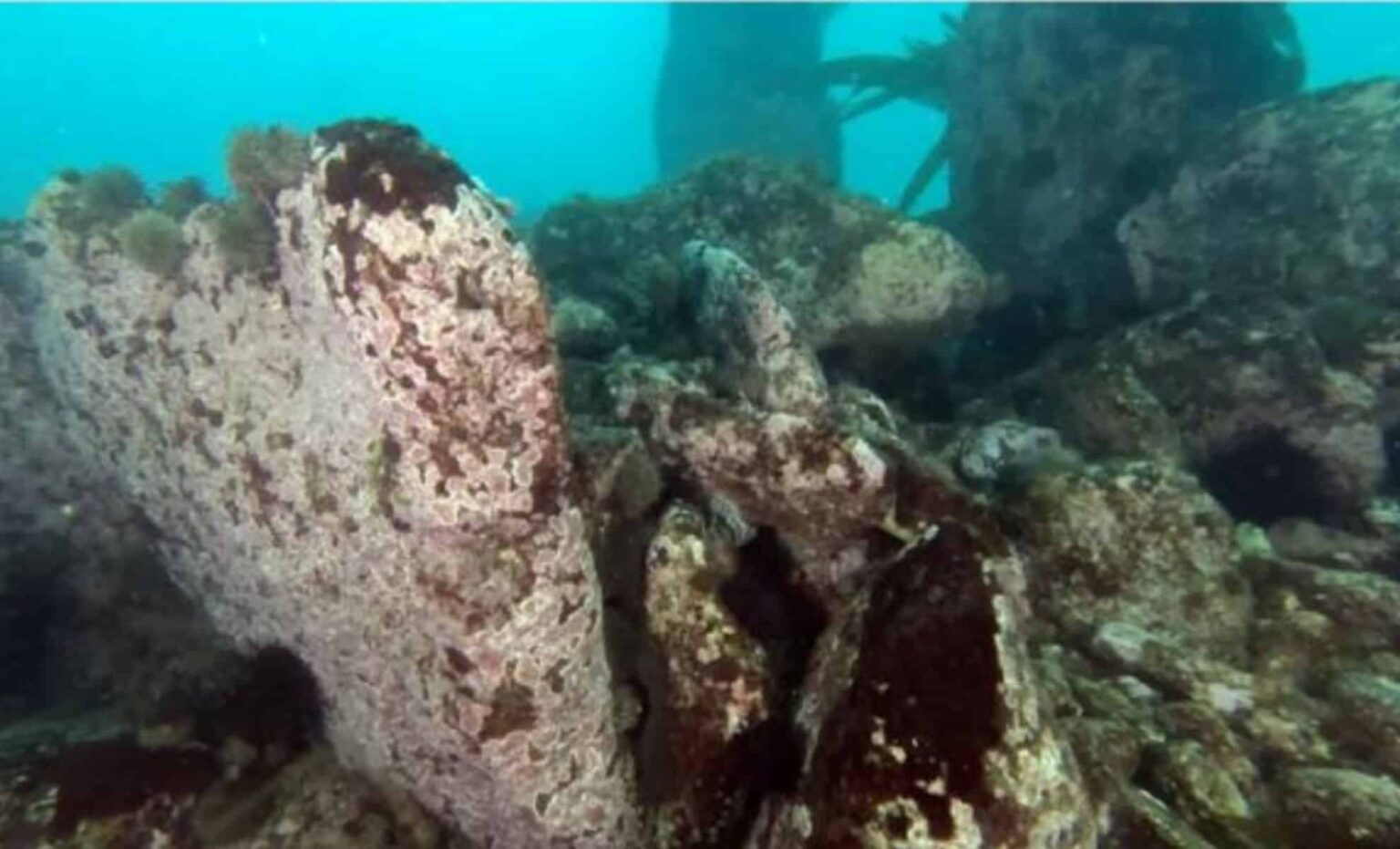
Located near the Ile de Sein, the discovery consists of a 120-meter-long granite wall along with several smaller structures. Experts believe these remnants belong to a time when sea levels were significantly lower than today, providing a unique glimpse into how ancient people adapted to their environment. The find could also help explain local legends of sunken cities, further highlighting its cultural significance.
A Closer Look at the Discovery
The underwater structures were first detected by retired geologist Yves Fouquet in 2017, who identified them using sonar technology that mapped the ocean floor. The structures were then explored by divers between 2022 and 2024, who confirmed their presence and the excellent preservation of the granite materials. According to archaeologist Yvan Pailler from the University of Western Brittany, this discovery marks a breakthrough in underwater archaeology and has the potential to reshape our understanding of early human societies.
The wall and other associated structures lie about nine meters underwater today, but during their construction, they would have been at or near the shoreline. The exact purpose of the wall is still under debate. Some researchers suggest it may have been a fish trap, while others believe it could have been a dyke or barrier designed to protect against rising sea levels. The size and craftsmanship of the wall indicate that it was built by a well-organized society with the technical know-how to move and position large stone blocks, similar in scale to the famous megaliths found across Brittany.
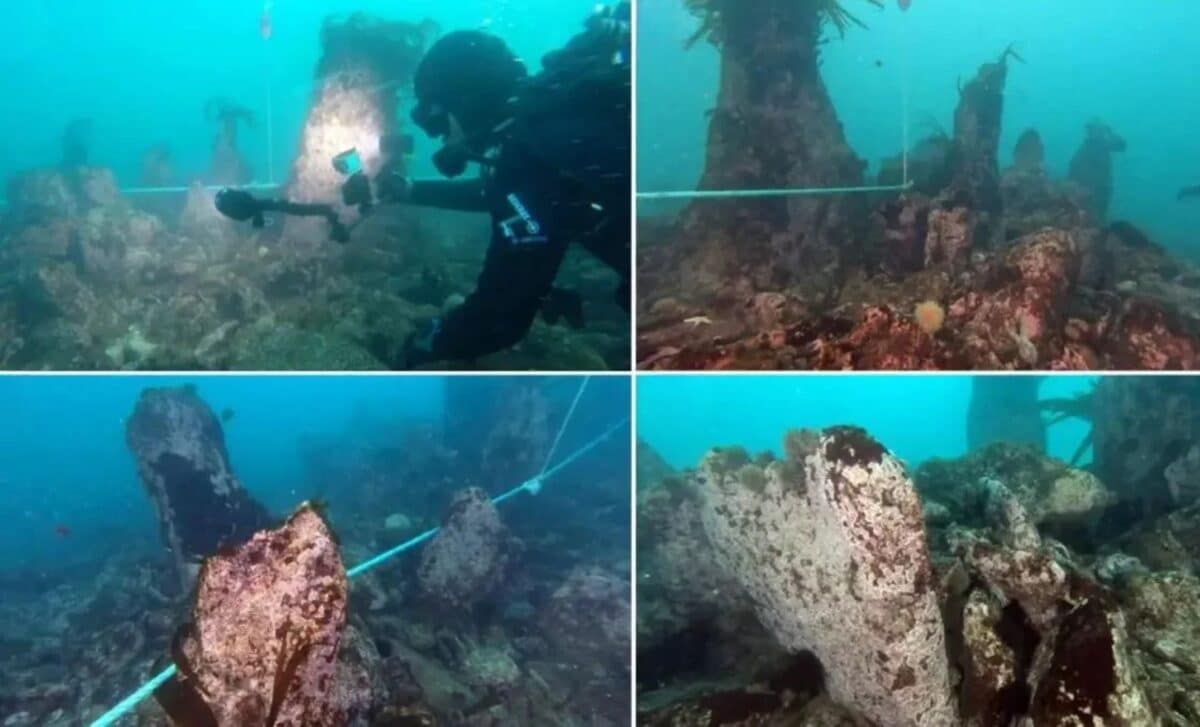 Photos taken on the TAF1 structure during winter 2023 © SAMM, 2023 / Yves Fouquet et al. International Journal of Nautical Archaeology (2025)
Link to Local Myths of Sunken Cities
One intriguing aspect of the discovery is its potential connection to local myths. The region is home to legends of sunken cities, particularly the fabled city of Ys, which was believed to have been submerged beneath the waters of the Bay of Douarnenez. Researchers suggest that the loss of a well-developed coastal society to rising sea levels could have inspired these stories. According to the study published in International Journal of Nautical Archaeology, “It is likely that the abandonment of a territory developed by a highly structured society has become deeply rooted in people’s memories”.
These myths, which date back centuries, may reflect the real-world experience of ancient peoples who witnessed their settlements gradually submerged. The discovery of the wall further supports the idea that the rapid rise in sea levels, triggered by the end of the last Ice Age, had profound impacts on early coastal communities. As rising waters swallowed up homes and fishing structures, it would have left an indelible mark on the collective memory of the people.
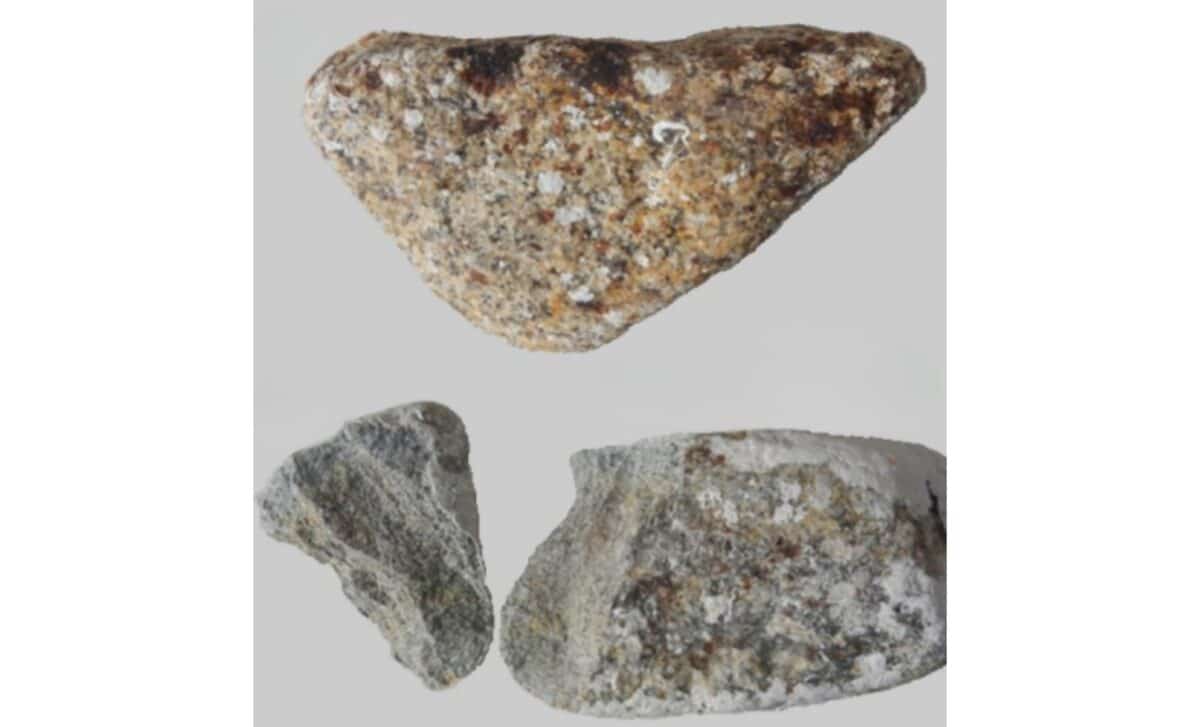 Boulders taken from the TAF1 wall © SAMM, 2023 / Yves Fouquet et al. International Journal of Nautical Archaeology (2025)
Significance of the Wall’s Preservation
Another remarkable feature of the find is the excellent preservation of the structures. Despite being submerged for millennia, the granite stones are still in remarkable condition. According to archaeologist Yves Fouquet, the preservation of such well-crafted stonework was not anticipated due to the harsh underwater conditions. This exceptional state of preservation provides a rare opportunity to study ancient coastal engineering and the social organization of early societies.
The wall’s survival is also a testament to the technical prowess of the people who built it. The structure’s scale and the use of large monoliths suggest a level of organization and knowledge of construction that predated the better-known megalithic sites of the Neolithic period. Researchers believe the techniques used to construct this wall may have influenced later monumental stoneworks, further cementing its importance in the broader history of ancient Europe.