
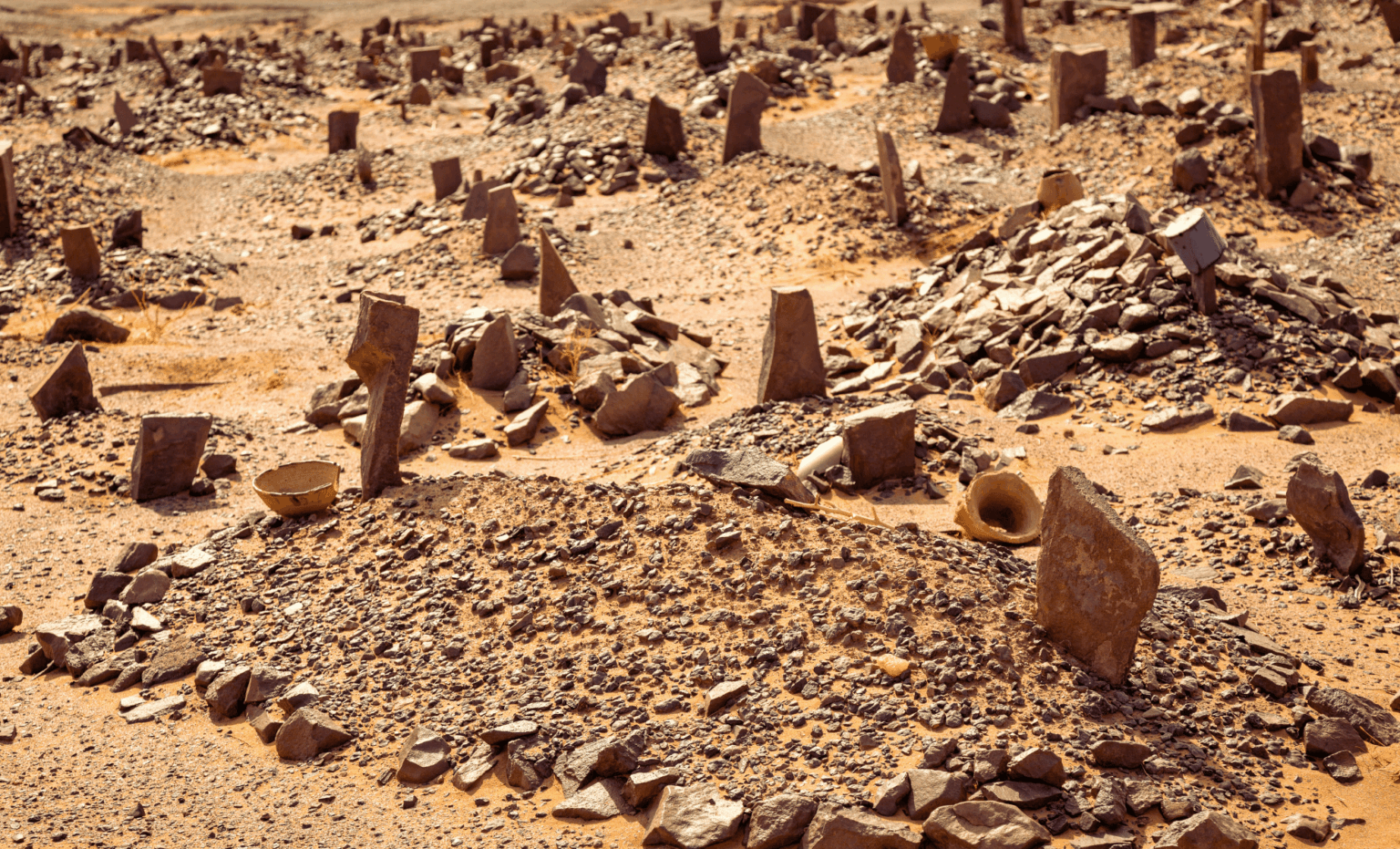
In an extraordinary discovery, archaeologists have uncovered the remains of nearly 600 animals in a 2,000-year-old pet cemetery on the outskirts of the ancient Egyptian seaport of Berenike. Published in the journal Antiquity, the find challenges traditional views of pet burials, suggesting that humans in ancient Egypt may have had a much deeper emotional connection with their animals than previously thought.
A Curious Discovery at Berenike
The site, first discovered in 2011 by Archaeozoologist Marta Osypinska and her colleagues at the Polish Academy of Sciences, is located near the ruins of Berenike (also known as Berenice Troglodytica) on Egypt’s Red Sea coast. At first glance, the cemetery may appear similar to those found across the world, where animals are buried after serving practical roles in human society. However, upon closer examination, this burial site reveals something more profound: it suggests a bond between humans and animals that transcends mere utilitarian purposes.
According to a study published in the journal Antiquity, archaeologists found nearly 600 animal remains carefully laid to rest, many wrapped in fabric shrouds and accompanied by decorative items such as collars and mementos. Among the 585 animals discovered were 536 cats, 32 dogs, and a variety of other creatures like monkeys, birds, and even a fox. The careful treatment of these animals suggests that they were not merely working creatures or ritual sacrifices, but rather, beloved companions who were cared for in life and after death.
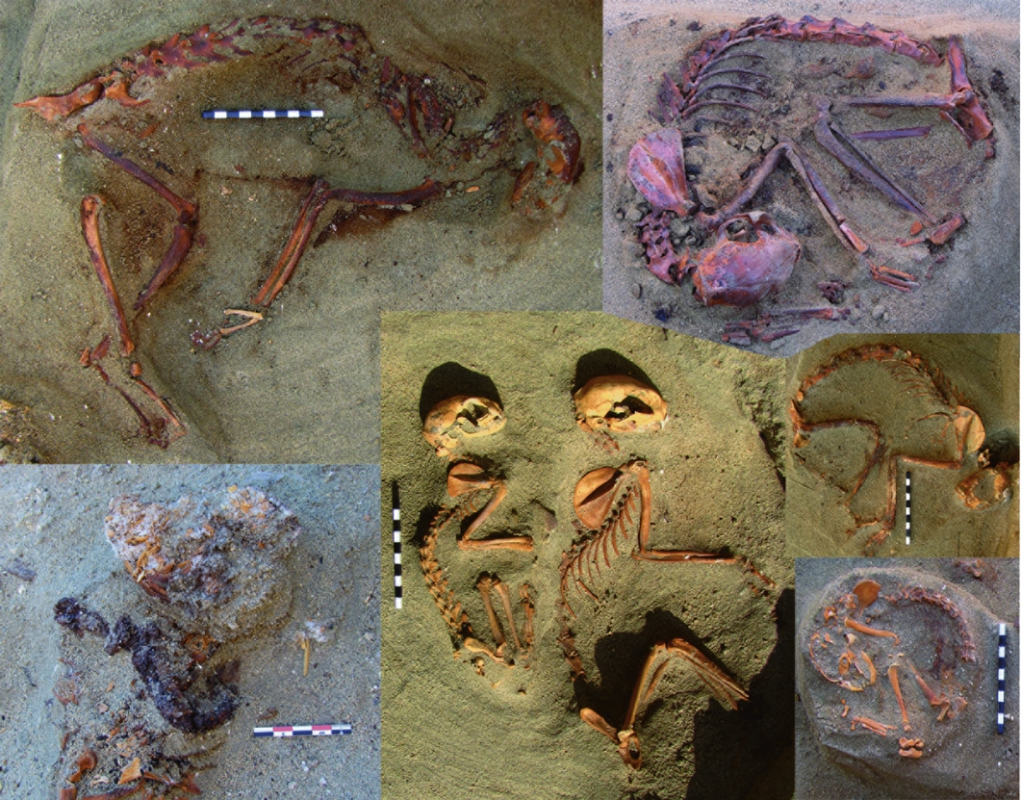 Selection of cat burials from Berenike (photograph M. Osypińska).
Unpacking the Evidence: Why Berenike is Likely the Oldest Pet Cemetery
Marta Osypinska and her team point to several compelling features of the burial site that suggest these animals were indeed pets, rather than animals kept for work or religious purposes.
“In our opinion, the described features suggest that the Berenike finds could be defined as a cemetery of house-kept pets,” wrote Osypinska.
The lack of human burials at the site, coupled with the absence of evidence of ritual sacrifices or mummification (common for religious offerings in ancient Egypt), strongly indicates that these animals were treated as family members and not merely for functional purposes.
Interestingly, the animals show signs of long-term injuries or illnesses, which would have rendered them less useful for traditional work tasks like hunting or guarding. This further supports the idea that the animals were kept for companionship, as their owners would have continued to care for them, even when they could no longer fulfill practical roles.
The Historic Significance of Animal Burial Practices
While the Berenike pet cemetery is a remarkable find, it also fits into a larger historical context. Humans have been burying animals with care for thousands of years, though it was typically believed that such practices were relatively modern or reserved for certain cultures. The burial of animals has been documented in various ancient cultures, but few sites match the scale and meticulousness of Berenike.
Despite this, some critics urge caution when interpreting these findings as proof of a pet culture in the ancient world.
“Too often, this sphere of social life is considered as modern behaviour exclusively,” Osypinska noted in her study. “The finds at Berenike seem to break with this stereotype.”
While animals have long been valued for their roles in providing protection or controlling pests, the discovery at Berenike challenges the idea that humans did not form emotional connections with their animals in the distant past.
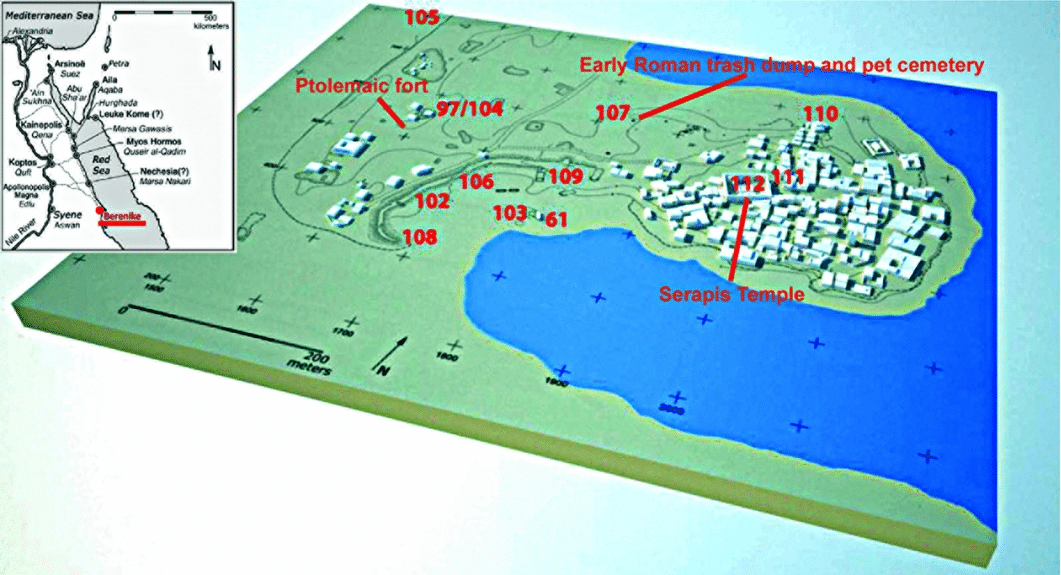 Location of the Berenike and specific town zones (drawn by M. Hense).
A New Understanding of Ancient Egyptian Society
The implications of the Berenike discovery are profound, shedding new light on the social and cultural dynamics of ancient Egypt. Cats, in particular, were highly revered in Egyptian society, often associated with the goddess Bastet, the protector of the home and fertility. The presence of such a large number of cats, along with other animals, suggests that these creatures may have been cherished for their companionship, not just their ability to serve humans in more practical roles.
Moreover, the evidence from Berenike may force historians and archaeologists to rethink the role of animals in ancient societies. While some may have seen animals as mere commodities, the careful burials at Berenike show that, for some Egyptians, animals were valued as companions—perhaps even as family members.