
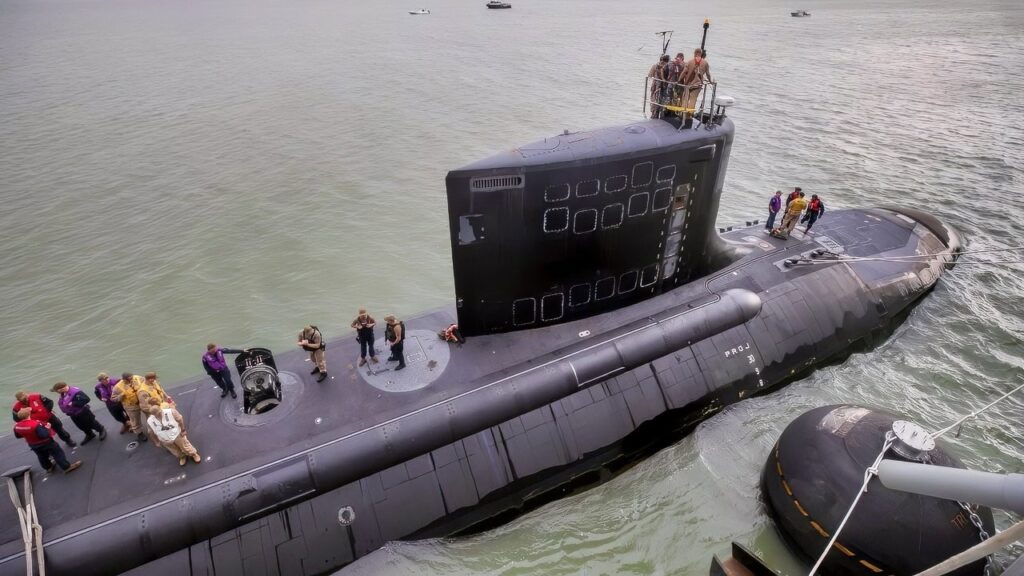
Key Points and Summary – The U.S. Navy has only 53 fast-attack submarines against a formal requirement of 66, even as missions multiply from deterring China and Russia to striking Houthi targets in Yemen.
-Aging boats, extended maintenance backlogs, and nuclear-trained crew shortages have left as many as 40 percent of attack subs sidelined. Senator Roger Wicker warns the industrial base is only delivering about 1.2 submarines per year, far below what AUKUS and U.S. force plans demand.
-New facilities in Alabama, South Carolina, and Connecticut will help, but only sustained political will, funding, and oversight can deliver the “submarine renaissance” America needs.
America’s Silent Submarine Crisis: Why 53 Fast-Attack Boats Aren’t Enough
The US Navy has only 53 fast attack submarines, and it needs a total of 66, which is formally required. With the rise of China and Russia, these boats are part of a unique mission set. They are hunter-killers and mighty destroyers of targets with Tomahawk cruise missiles. They can run fast and silently, dive quickly, insert Navy SEALs, and sail unseen or unheard in some of the most strategic waters in the world.
The USS Virginia-class made history when the USS John Warner was the first of the line of subs to fire Tomahawk missiles in combat against Syrian chemical weapons facilities in 2018.
The Geopolitical Environment Requires More Fast Attack Boats
However, there may not be 66 fast attack boats until 2054, so the US Navy’s silent service will have to make do until then. But during that time, China could take over Taiwan, and Russia could attack a NATO country. The US attack sub fleet is stretched thin, and more mission requirements are coming each year.Take the Iranian-backed Houthi terrorists in Yemen, who have been terrifying international shipping and Navy vessels. The Houthis tied up two carrier strike groups earlier in year and their accompanying submarines in the Middle East. This unforeseen contingency has surprised the Navy and the Department of Defense.
President Donald Trump is aware of how the Houthis required a robust response. Having more attack subs in the region could send additional Tomahawk missiles toward Yemen to take out weapons storage and surface-to-air missile batteries.
One Senator Is on a Mission
US Senator Roger Wicker, the Senate Armed Services Committee chairman, advocates for more fast attack subs. He considers the boats the “crown jewels” of the Navy. The submarines are strategically, operationally, and tactically superior to the boats the Russians and Chinese deploy.
But Wicker knows that some older fast attack subs will soon retire. Plus, many are in maintenance and refit periods – perhaps as many as 40 percent were out of service at any time in 2023. The USS Connecticut had a mishap in the South China Sea in 2021 and will not be ready to patrol again until 2026.
Sub-builders Are Only Producing 1.2 Subs Per Year
“By comparison, during the 1980s, we bought four times as many. The effort to ramp up production to a rate of two attack submarines a year has been plagued with workforce and supply-chain challenges. To keep the commitment made under AUKUS and not reduce our own fleet, the US would have to produce between 2.3 and 2.5 attack submarines a year,” Wicker said in an op-ed.
Personnel Shortages Are Being Rectified
Personnel requirements have also hit the nuclear submarine service hard. During the COVID-19 pandemic, the number of Navy recruits went down. Sailors assigned to submarines must pass through a complex and lengthy nuclear power school. This makes trained sailors for fast attack boats hard to come by. The Navy has turned that around and will have a much-improved recruiting base this fiscal year, but the submarine service has been set back by personnel shortfalls from 2020 to 2023.
The aforementioned maintenance problems have been difficult to rectify. Under new secretary John Phelan, the Navy aims to fix that situation, but it could take the rest of his tenure to get more boats off the sidelines.
Shipyards Need to Be Improved
Phelan will also have to address the limitations of American shipyards. Only two of the Navy’s ten shipyards are qualified to build nuclear-powered ships: Huntington Ingalls Shipyard in Newport News, Virginia, and General Dynamics Electric Boat in Groton, Connecticut. Both are operating full-time, with little physical space to expand.
Some Good News for US Submarine Construction
In 2024, Austal USA was awarded a $450 million contract to make a new submarine construction facility in Mobile, Alabama. This 370,000-square-foot, high-tech plant will be dedicated to building non-nuclear modules for the Virginia and Columbia submarines. In 2024, HII signed a letter of intent to refurbish a 480,000-square-foot manufacturing operation in Goose Creek, South Carolina. In 2025, General Dynamics bought a 55-acre property in Connecticut to build a large warehouse. This building will store components that naval submarine suppliers are being asked to deliver on a speedy basis. The parts will be sent to the General Dynamics shipyard for final assembly.
These developments will help the Navy achieve its goals for the fast-attack submarine program. However, it will take continued leadership from the White House, the Department of the Navy, and Congress to make submarine construction a priority.
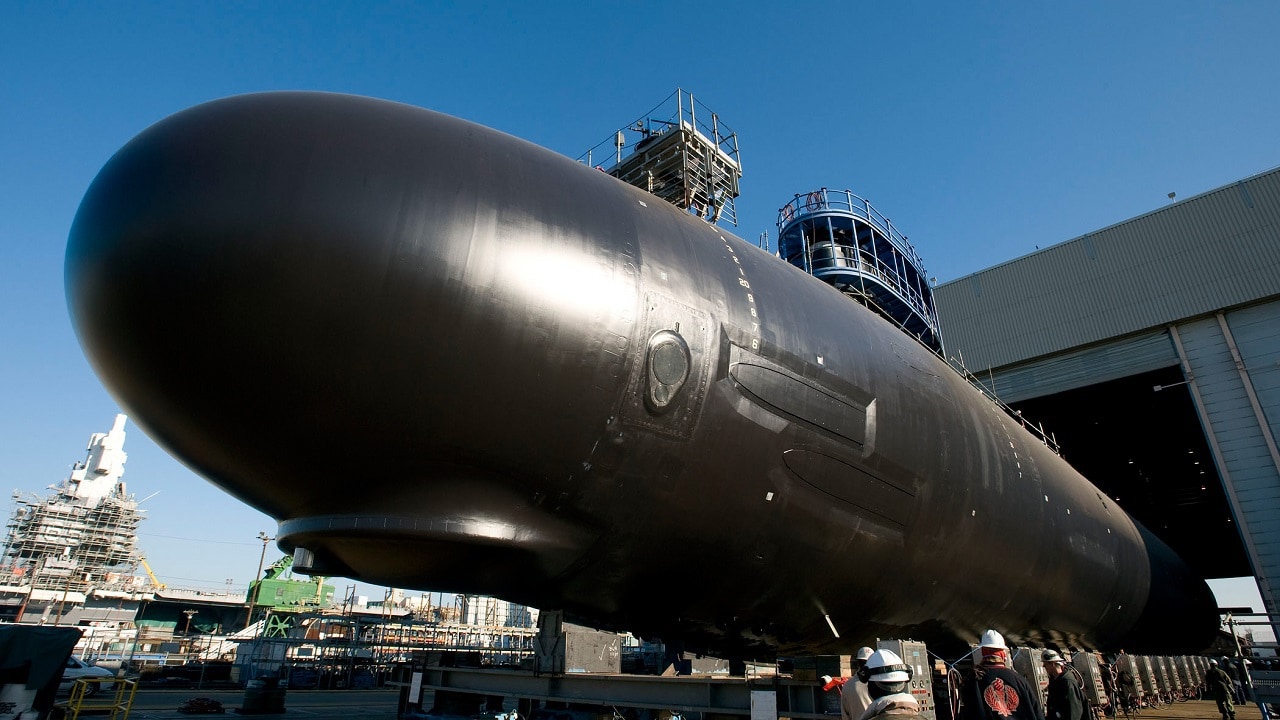
Virginia-Class. Image Credit: Creative Commons.
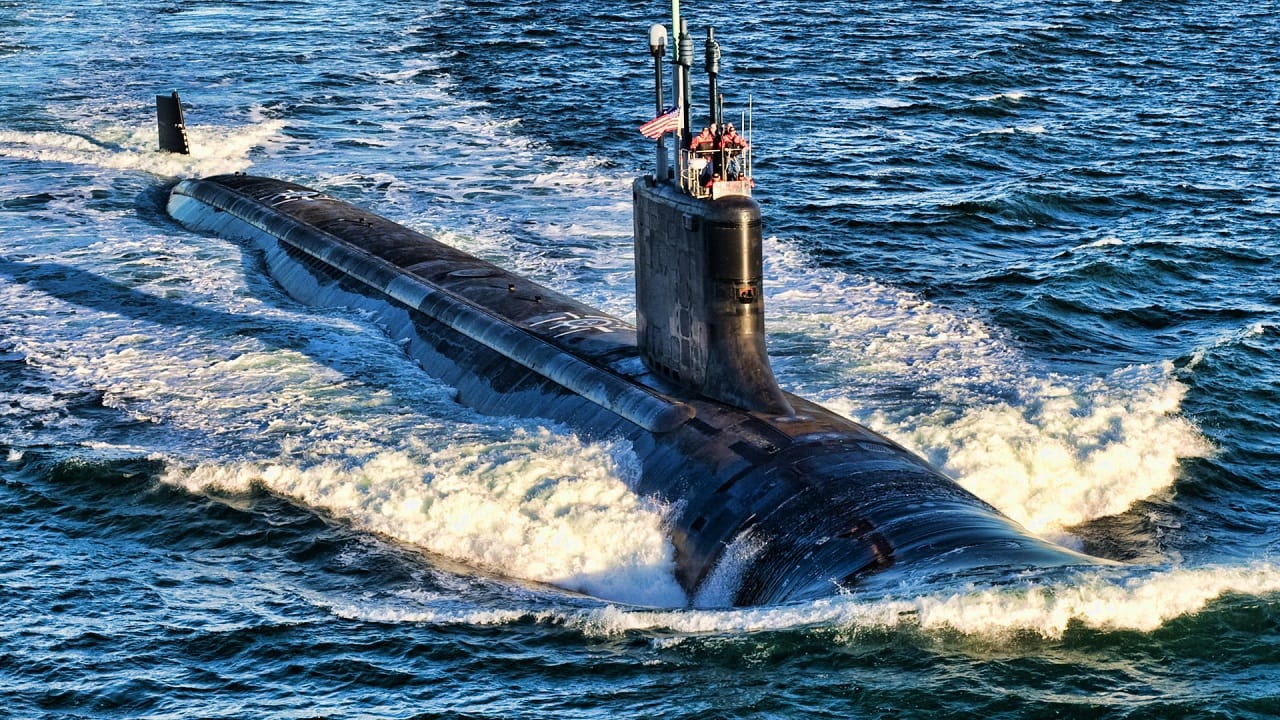
US Navy Attack Submarine. Image Credit: Creative Commons.
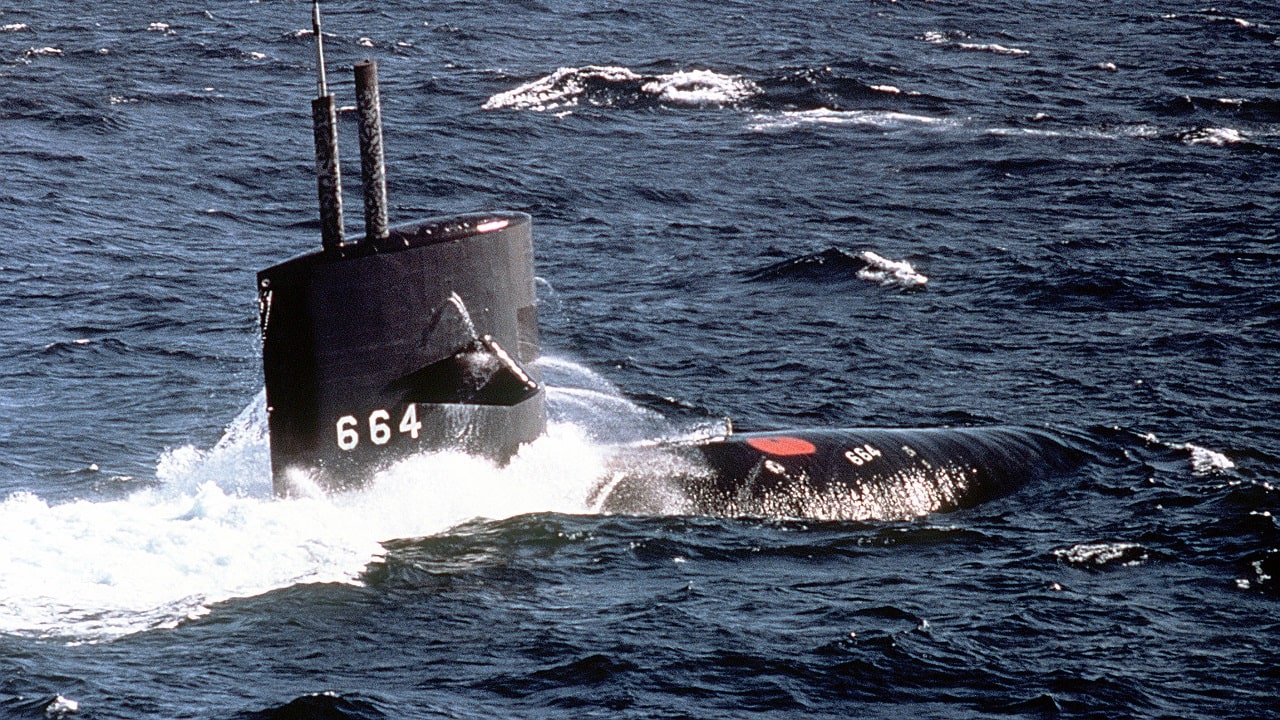
A starboard bow view of the nuclear-powered attack submarine USS SEA DEVIL (SSN-664) underway off the Virginia Capes.
The United States needs 66 fast-attack submarines as soon as possible. They have unmatched ability in the future fight as China and Russia become more dangerous and regularly exceed the Americans with new weapons systems.
Improvements to manpower, maintenance, and shipbuilding capacity will help, but this problem needs constant supervision and oversight to succeed. The United States has most importantly identified the need; now, it must execute a renaissance in submarine manufacturing and maintenance.
About the Author: Dr. Brent M. Eastwood
Brent M. Eastwood, PhD is the author of Don’t Turn Your Back On the World: a Conservative Foreign Policy and Humans, Machines, and Data: Future Trends in Warfare plus two other books. Brent was the founder and CEO of a tech firm that predicted world events using artificial intelligence. He served as a legislative fellow for US Senator Tim Scott and advised the senator on defense and foreign policy issues. He has taught at American University, George Washington University, and George Mason University. Brent is a former US Army Infantry officer. He can be followed on X @BMEastwood.