
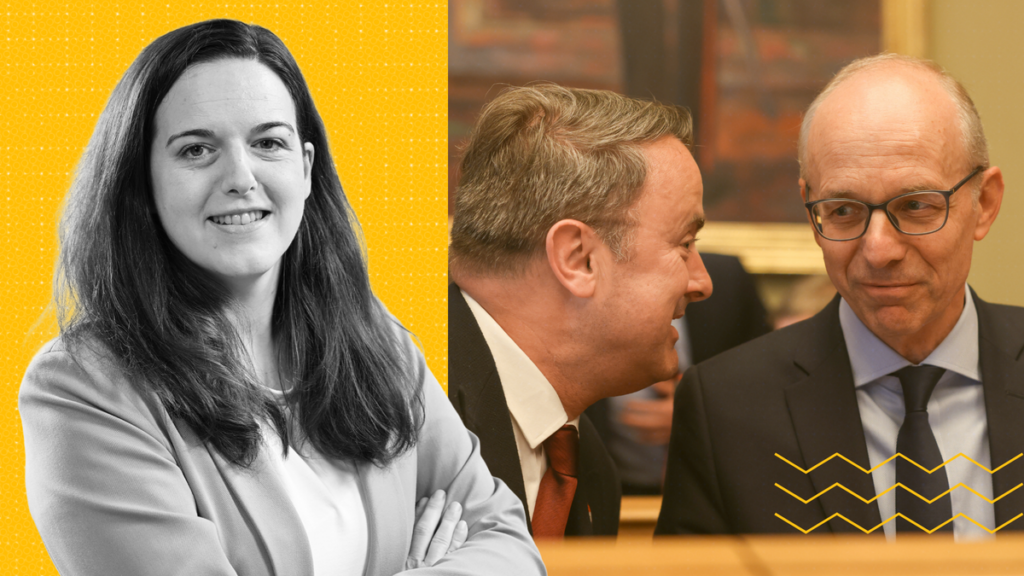
Luc Frieden made history this week – though not the kind any prime minister wants. For the first time since the Politmonitor public opinion poll began, a sitting premier was not ranked among the top ten most popular politicians.
The fall has been steady, from third place in the first survey after assuming office in November 2023 to eighth after announcing a contentious pension reform and now 12th.
Frieden was never among the most liked politicians (his likeability score in March 2024 was 58 points, compared to 42 in the latest survey), but voters now also think him less competent in the job, a value that has decreased from 73 points to 60 in the span of one and a half years.
This is more than a statistical blip.
Frieden himself previously declared that polls don’t dictate policy. But policy is clearly colliding with public resistance.
But where is Frieden going wrong?
He has often been accused of running the country like a CEO, a top-down decision maker. And he just cannot find his groove.
Labour and Sports Minister Georges Mischo on Sunday handed in his resignation after weeks of rumblings. Unions had publicly called him as amateurish and unfit for office. Then came the sports museum debacle.
Instead of taking responsibility, however, Frieden blamed the resignation on outside pressure no longer allowing Mischo (and the rest of the government) to do his job. While it could be considered laudable for the PM to defend his minister, it was a missed opportunity in showing decisiveness.
So far, reform attempts – from pensions to shop opening hours and collective bargaining – have gone down like a bucket of warm sick with Luxembourg’s unions. Meanwhile business leaders have described the country as reform averse.
Union opposition has turned reform plans into half-baked compromises. Labour groups demand social dialogue, but have shown no willingness to budge from a position that ultimately seeks to enshrine their power and status as the government’s opposition outside of parliament. Broadening consent would likely help boost Frieden’s ratings, but public outreach – instead of union pandering – could be a more effective course.
A clear reform ledger, showing who pays and who benefits, would help make changes easier to grasp. What economic data supports longer shop opening hours, what analyses and projections went into the pension reform? We only found out after it was adopted by the cabinet that it would delay the problem by just a couple of years.
Weighing up the fairness between the public and private sectors will be part of that challenge. For example, the government has saddled self-employed workers with a 1% increase in pension contributions (compared to 0.5% for employees) under the reform now on the table after leaving them out of reform talks.
Frieden’s slump also exposes Luxembourg’s democratic gap: thousands of residents who pay taxes yet cannot vote (and are not surveyed by the Politmonitor). Reforms that reshape pay cheques and social security – with CNS funding the next big problem on the horizon – sharpen this tension.
Warnings like those of the Chamber of Commerce that Luxembourg’s economy is failing must be taken seriously instead of brushed.
A slated tax reform, that could rob the state of €900 million in tax revenue, will be more easily welcomed by many than the pension reform. But there must be clear paths for the state budget and sound financial policy to back it up.
As Frieden enters the second half if his mandate – the next elections are expected in 2028 – he must turn reforms into shared solutions instead of half-heartedly imposed burdens, or risk falling even further in public esteem.