
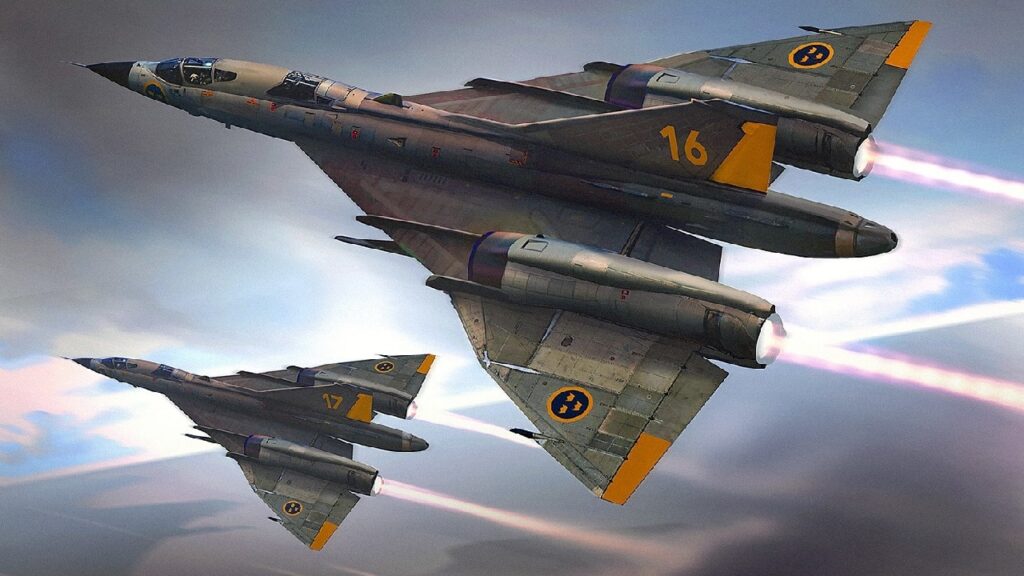
Key Points and Summary – This piece revisits the Saab 36, a forgotten Swedish supersonic nuclear bomber project born from Cold War fear of the Soviet Union.
-Designed as a fast, regional strike platform to deliver an 800 kg nuclear bomb across the Baltic, the Saab 36 died as Sweden abandoned its nuclear ambitions and the design’s narrow, single-mission role became hard to justify.
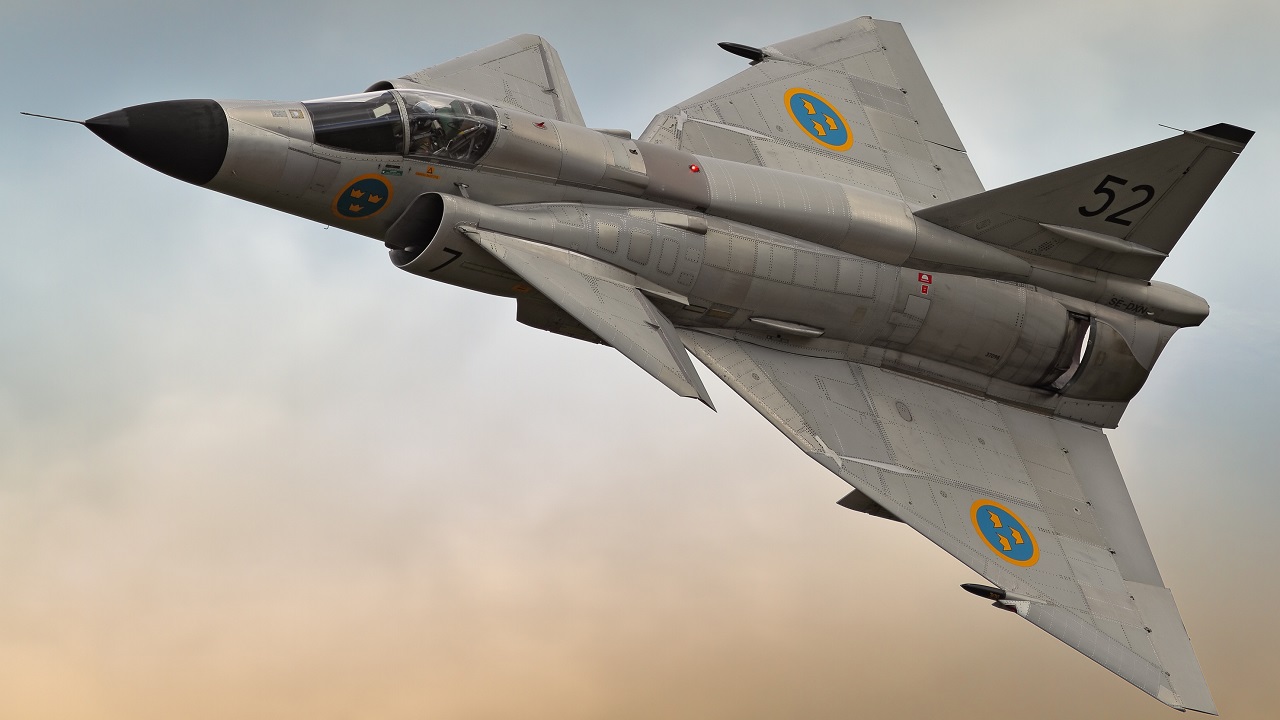
Saab 37. Image Credit: Creative Commons.
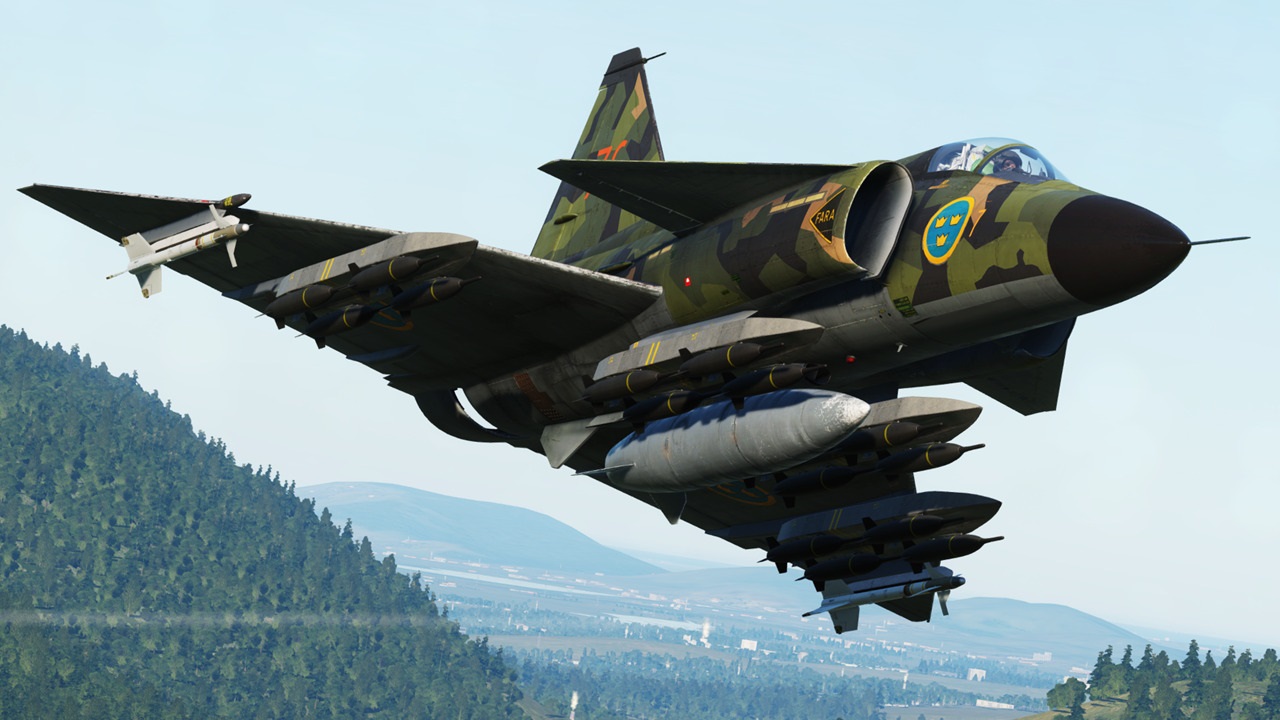
JA 37 by Saab. Image Credit: Creative Commons.
-Its cancellation freed Saab to pivot toward versatile multirole fighters and exportable systems, culminating in today’s Gripen successes and booming European contracts.
-The Saab 36 becomes a case study in how killing a niche nuclear bomber unlocked Saab’s modern, flexible defense strategy.
Saab’s Nuclear Bomber Dream: The Secret Saab 36 Story
In light of Saab’s recent surge in defense contracts – from submarines to fighter jets – the story of the Saab 36 is worth revisiting.
It’s a story of Swedish defense ambitions that were once defined by nuclear deterrence but have since morphed into something else: modern multirole capability.
The Saab 36 is a forgotten supersonic bomber project that reveals much about Saab’s shifting strategy, its ability to produce remarkable hardware for global customers, and how the changing threat environment constantly pushes its defense industry to develop equipment that provides an alternative to costly (and closed) American systems.
Saab’s Nuclear Bomber Dream
In the early 1950s, as the Cold War intensified, Sweden – while officially neutral – could feel the looming power and threat of the Soviet Union across the Baltic.
To offset its conventional military limitations, Swedish planners began preparing a nuclear deterrent of its own – and for that, they needed a delivery system.
Project 1300 was intended to build that delivery system, and the result was a delta-wing, twin-engine supersonic bomber that could carry a free-falling nuclear bomb weighing up to 800 kg.
The design borrowed heavily from Saab’s existing research into high-performance delta-wing aircraft, sharing the same aerodynamic philosophy that made the Saab 35 Draken fighter such a success.
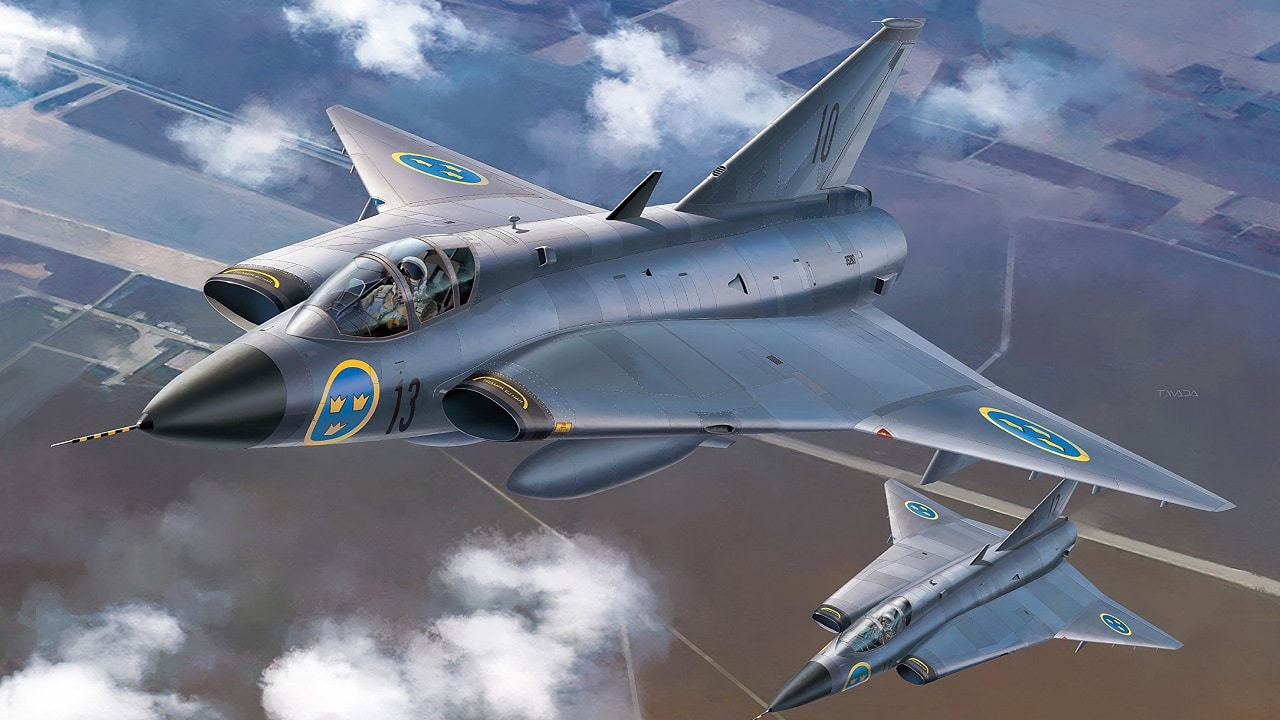
Saab 35. Artist Rendering.
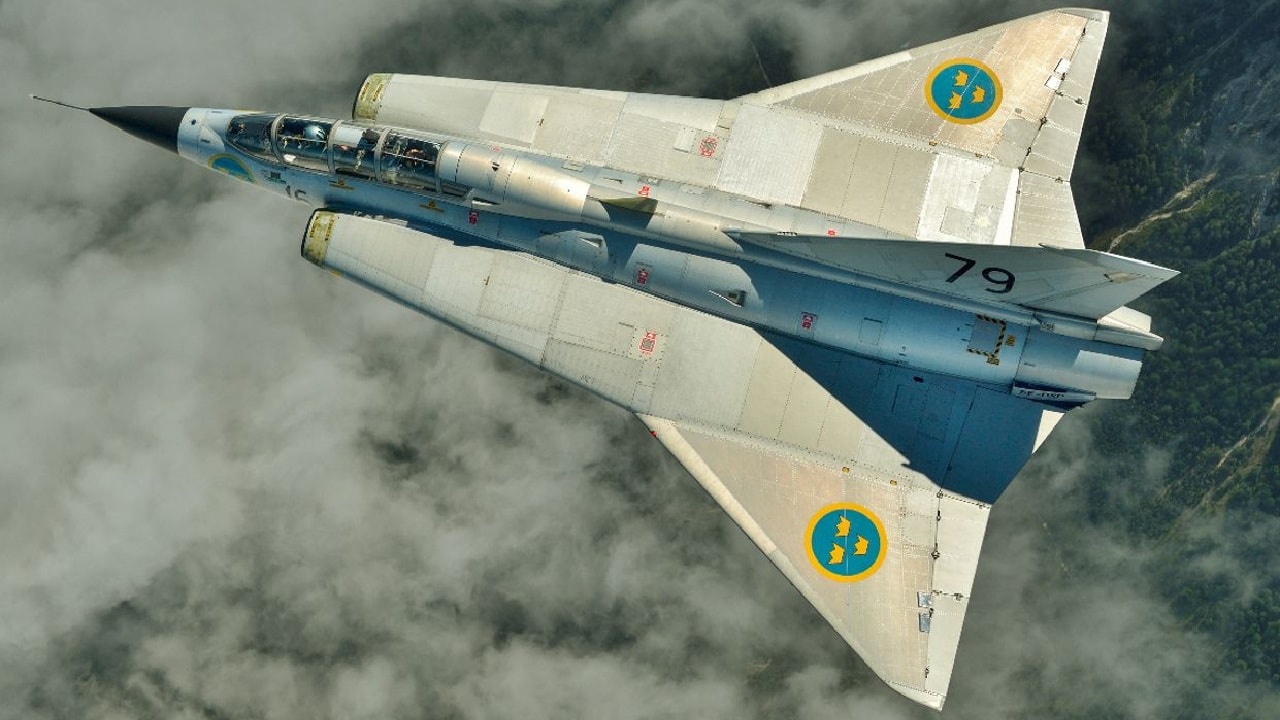
Saab 35. Image Credit: Creative Commons.
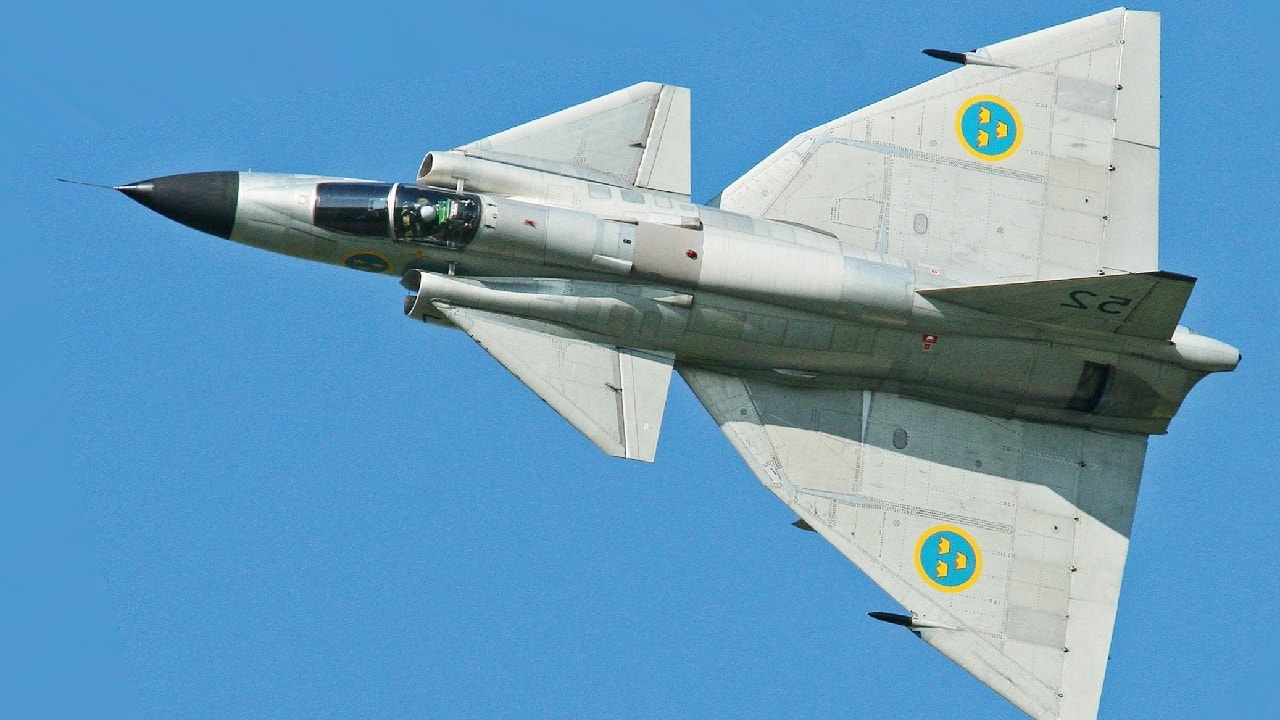
Saab S37. Image Credit: Creative Commons.
The intended design had projected speeds that exceeded Mach 2 and a service ceiling near 60,000 feet. It was intended to be a fast and high-flying nuclear-capable bomber that could surge across the Baltic Sea and quickly strike potential Soviet targets in the Baltic states and beyond.
Crucially, though, this wasn’t designed to be a global bomber. It was never envisioned as a platform that could travel across oceans, and its range was limited.
Instead, the aircraft was intended to be optimized for Sweden’s own regional geography. Its operational radius would have been enough to hit targets just beyond the Baltic without needing long-range refueling. And that’s all Sweden believed it needed.
Why It Never Took Flight
By 1957, the Saab 36 project had been canceled due to strategic, political, and technical factors that made it neither feasible nor necessary.
First, Sweden’s ambitions to build its own nuclear arsenal gradually began to disappear.
Although the nuclear-bomb delivery system was slated for the Saab 36, the broader Swedish nuclear weapons program was eventually shut down in the 1960s – meaning there was no need for the bomber.
Second, the design tradeoffs that came with the Saab 36 were enough to make the platform useful.
To reach supersonic speeds and reduce aerodynamic drag, engineers chose a delta-wing design with an enclosed internal weapons bay.
But that approach also limited the aircraft’s payload to a single 800 kg bomb, which was enough for a tactical nuclear weapon, but insufficient for a broader strategic deterrent. In other words, the aircraft would have only been good for one thing.
What’s more, internal fuel and space constraints severely limited its operational flexibility, undermining the entire case for investing large sums in this kind of platform.
And then there’s the fact that global deterrence strategies were maturing as the program was underway. Conventional airpower technology advanced as well, weakening the rationale for a dedicated nuclear bomber.
Swedish planners and Saab engineers began to shift their focus onto more versatile aircraft instead – a decision that ultimately gave rise to a series of other successful Saab fighter jet programs.
A New Beginning for Saab
The end of Saab’s nuclear deterrence efforts could arguably be described as a new beginning for the firm and for Sweden’s defense industry. The Saab 36 may never have come to fruition, but Saab itself continues and has seen a significant resurgence, particularly recently.
In 2025, Saab secured major contracts, including a $3.6 billion deal with Colombia for 17 of its modern JAS 39 Gripen jets – and it’s just one example of Saab jets becoming popular options for countries looking to operate capable fighter jets at a fraction of the cost of the United States’ F-35 platform.
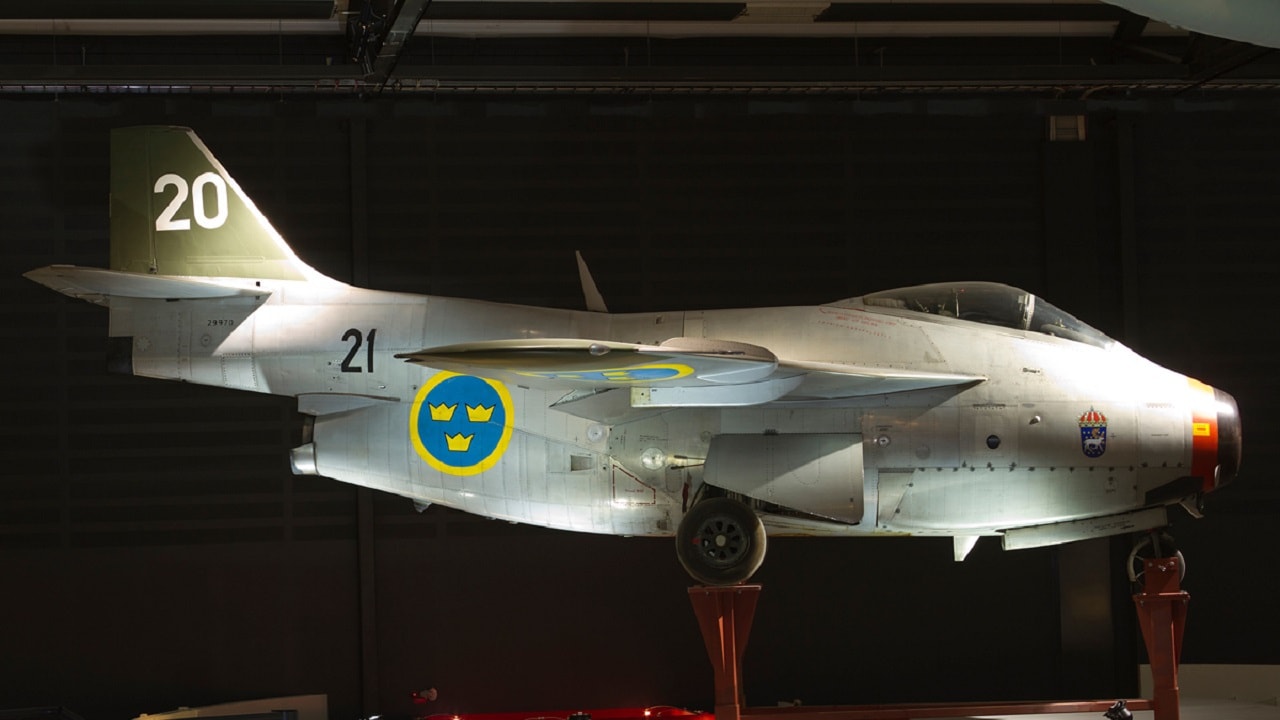
Saab J-29 Tunnan on permanent display at the Swedish Air Force Museum in Linköping, Sweden.
Meanwhile, Sweden’s defense procurement is increasing, with Saab recently securing a contract worth approximately SEK 2.1 billion ($219.8 million) for ground-based air defense systems to bolster the country’s protection against drone and missile threats.
Sweden’s security environment is evolving, and so is Europe’s – and Saab is well positioned to benefit from it.
The volatile post-2022 European security landscape – now shaped by renewed tensions across the Baltic and amid Russian expansionism – demands greater flexibility, rapid response, and more diversified capabilities.
Saab’s latest contracts reinforce just how far the company has come since it abandoned the Saab 36 bomber, pivoting from a single-mission concept to the broad, export-driven products we see today.
About the Author:
Jack Buckby is a British author, counter-extremism researcher, and journalist based in New York who writes frequently for National Security Journal. Reporting on the U.K., Europe, and the U.S., he works to analyze and understand left-wing and right-wing radicalization, and reports on Western governments’ approaches to the pressing issues of today. His books and research papers explore these themes and propose pragmatic solutions to our increasingly polarized society. His latest book is The Truth Teller: RFK Jr. and the Case for a Post-Partisan Presidency.