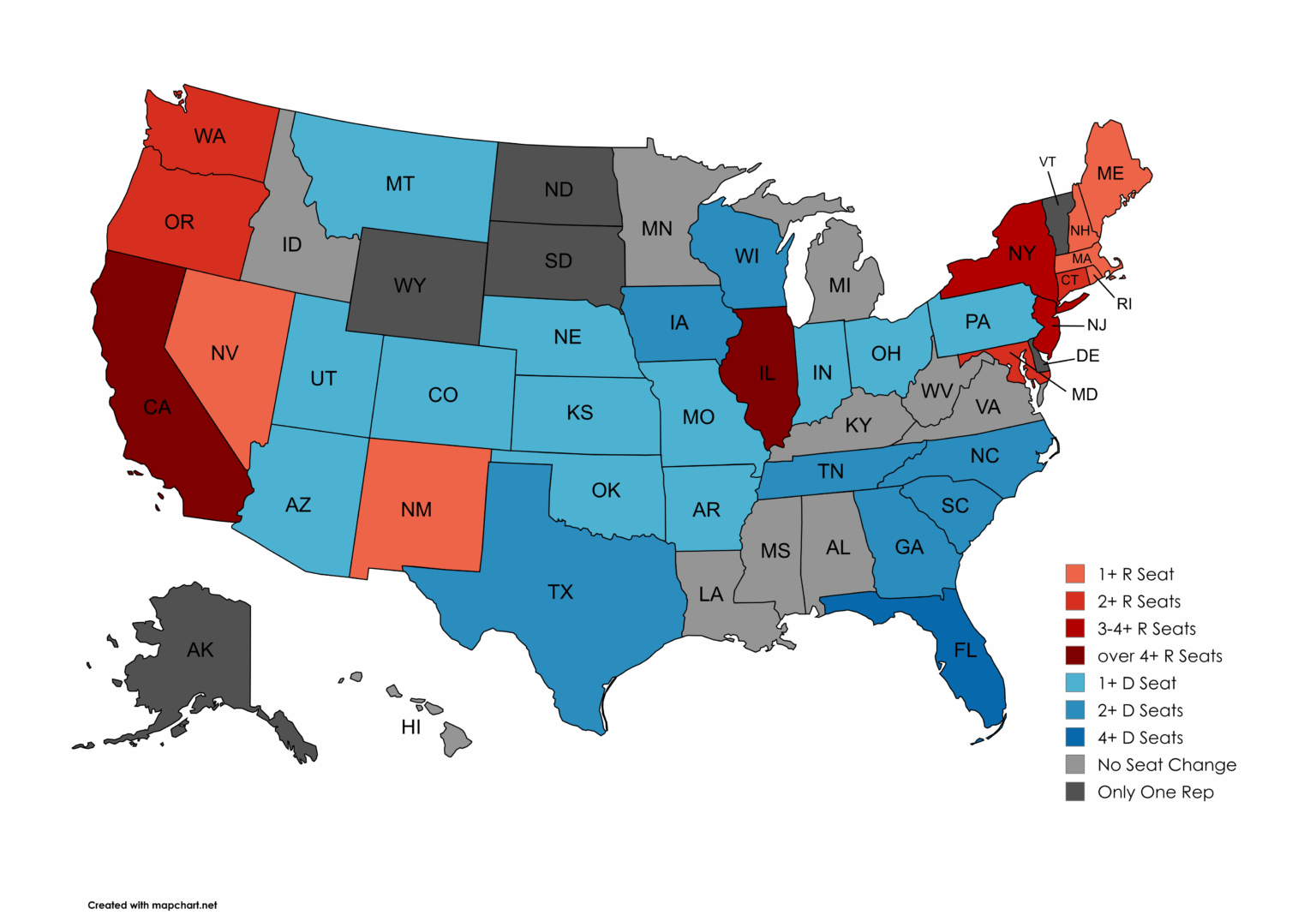
Partisan gerrymandering eliminated the one red district in my home state of New Mexico.
The oil-rich and solidly Republican communities in the south and southeast are divided into all three district, diluting the GOP voting power.
Doc_ET on
While everyone’s going to cry gerrymandering, that’s not the only thing going on here. It’s certainly a thing, but what matters at the end of the day is vote distribution.
Because of how single-winner constituencies work, a 50.1-49.9 district and a 99-1 district count the same towards the final numbers. That means that if your support is evenly spread across the state, say every county is 55-45, then 100% of representatives will be from the party that got 55% no matter how many districts there are or how they’re drawn. If too much of your support is coming from areas you aren’t winning, that’s going to boost your statewide numbers but won’t help you win any seats.
And while too-dispersed support is useless, too-concentrated support is also bad. Say there’s a state with four districts, and the largest city makes up about a quarter of the population. Party A gets 85% of the vote in that city, and 35% of the vote in the remainder of the state. That totals out to 47.5% of the vote, so proportionally it should be 2-2. But the only way to get that result with single-winner seats is to split the city in half and include a bunch of suburban and rural areas into both of those districts- which the slight-majority party would (rightly) decry as gerrymandering.
And at a certain point, a party that wins a state by a wide enough margin is just going to get majorities in more districts than they proportionally deserve, that’s just how it basically always works. Especially if there’s a low seat count.
[deleted] on
[deleted]
Norwester77 on
2024 results for what? President?
Or for House races?
If for House races, what do you do about unopposed races, or races where both candidates prefer the same party (as can happen in WA and CA at least)?
SloanTheNavigator on
Careful. All the GOP attack dogs who have justified Texas’ gerrymander by saying the Democrats have done it more are gonna cry foul at your receipt dropping
kjreil26 on
Uncap the house!!!!!
Sudden-Pea1413 on
California would need multi member districts in order to properly represent LA and Bay Area republicans. There are large swaths of the state where it is impossible to carve out a red district, but have millions of republican voters.
It isn’t like California democrats would implement them if they were legal, since it would hurt them, but multi member districts are banned by congress.
AdorableBar786 on
Democrats have champion in Vote suppression and cry when Republicans do the same thing

9 Comments
Based on what?
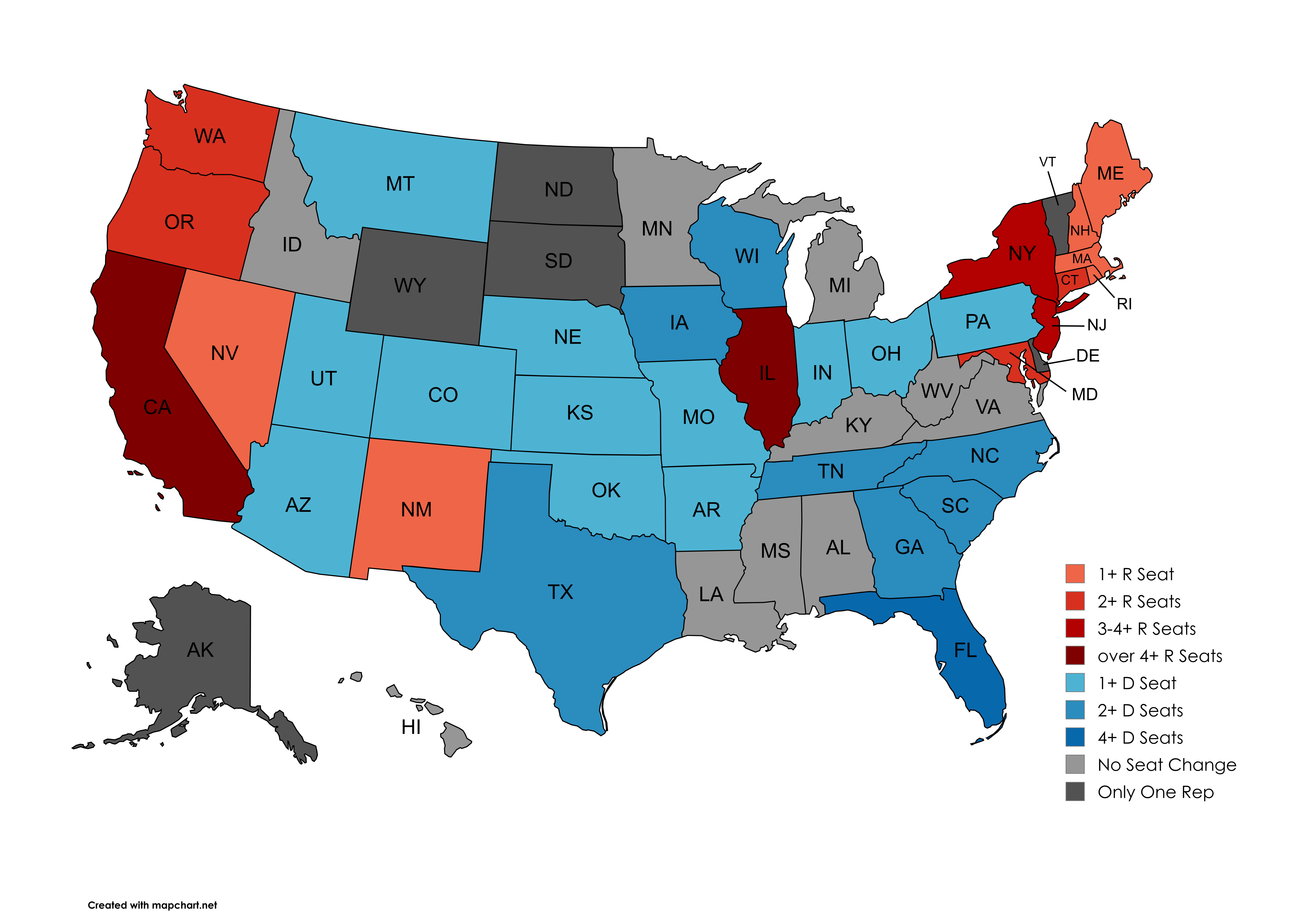
Partisan gerrymandering eliminated the one red district in my home state of New Mexico.
The oil-rich and solidly Republican communities in the south and southeast are divided into all three district, diluting the GOP voting power.
While everyone’s going to cry gerrymandering, that’s not the only thing going on here. It’s certainly a thing, but what matters at the end of the day is vote distribution.
Because of how single-winner constituencies work, a 50.1-49.9 district and a 99-1 district count the same towards the final numbers. That means that if your support is evenly spread across the state, say every county is 55-45, then 100% of representatives will be from the party that got 55% no matter how many districts there are or how they’re drawn. If too much of your support is coming from areas you aren’t winning, that’s going to boost your statewide numbers but won’t help you win any seats.
And while too-dispersed support is useless, too-concentrated support is also bad. Say there’s a state with four districts, and the largest city makes up about a quarter of the population. Party A gets 85% of the vote in that city, and 35% of the vote in the remainder of the state. That totals out to 47.5% of the vote, so proportionally it should be 2-2. But the only way to get that result with single-winner seats is to split the city in half and include a bunch of suburban and rural areas into both of those districts- which the slight-majority party would (rightly) decry as gerrymandering.
And at a certain point, a party that wins a state by a wide enough margin is just going to get majorities in more districts than they proportionally deserve, that’s just how it basically always works. Especially if there’s a low seat count.
[deleted]
2024 results for what? President?
Or for House races?
If for House races, what do you do about unopposed races, or races where both candidates prefer the same party (as can happen in WA and CA at least)?
Careful. All the GOP attack dogs who have justified Texas’ gerrymander by saying the Democrats have done it more are gonna cry foul at your receipt dropping
Uncap the house!!!!!
California would need multi member districts in order to properly represent LA and Bay Area republicans. There are large swaths of the state where it is impossible to carve out a red district, but have millions of republican voters.
It isn’t like California democrats would implement them if they were legal, since it would hurt them, but multi member districts are banned by congress.
Democrats have champion in Vote suppression and cry when Republicans do the same thing