
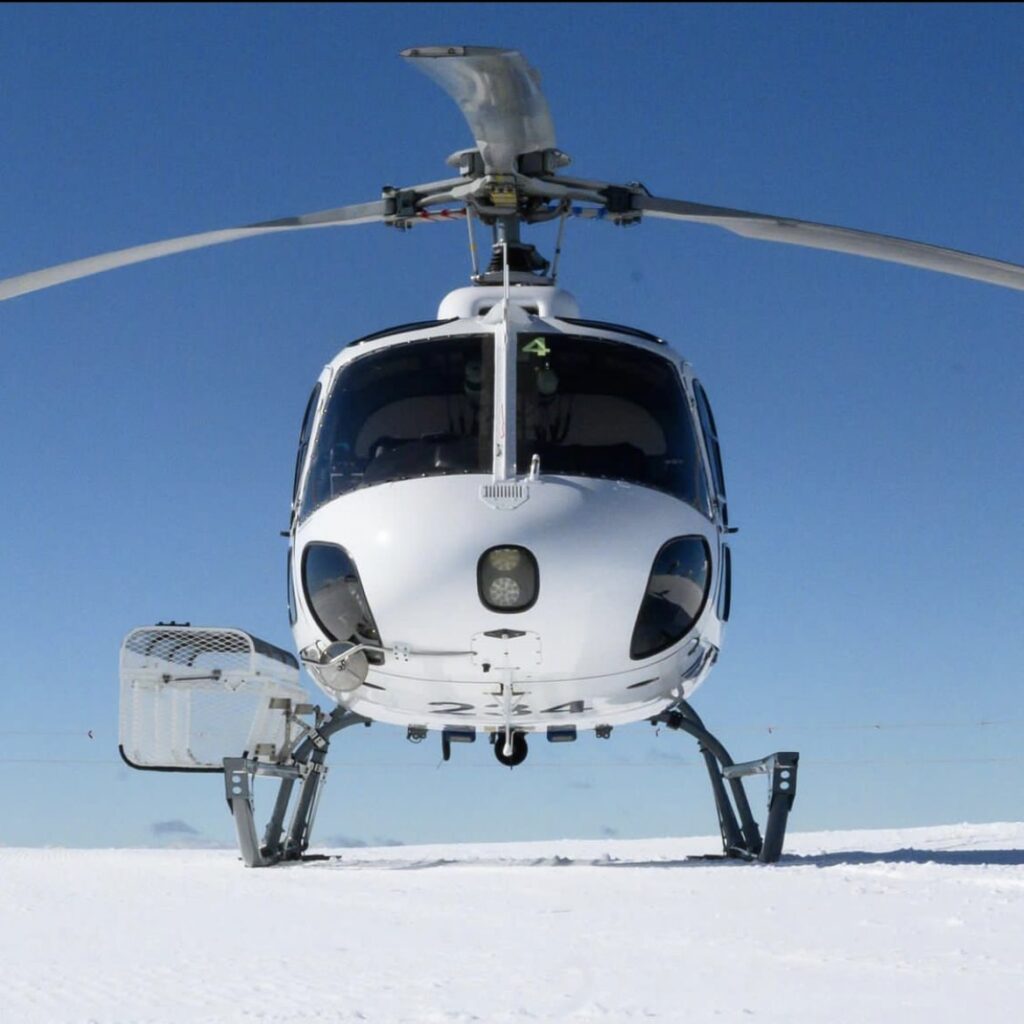
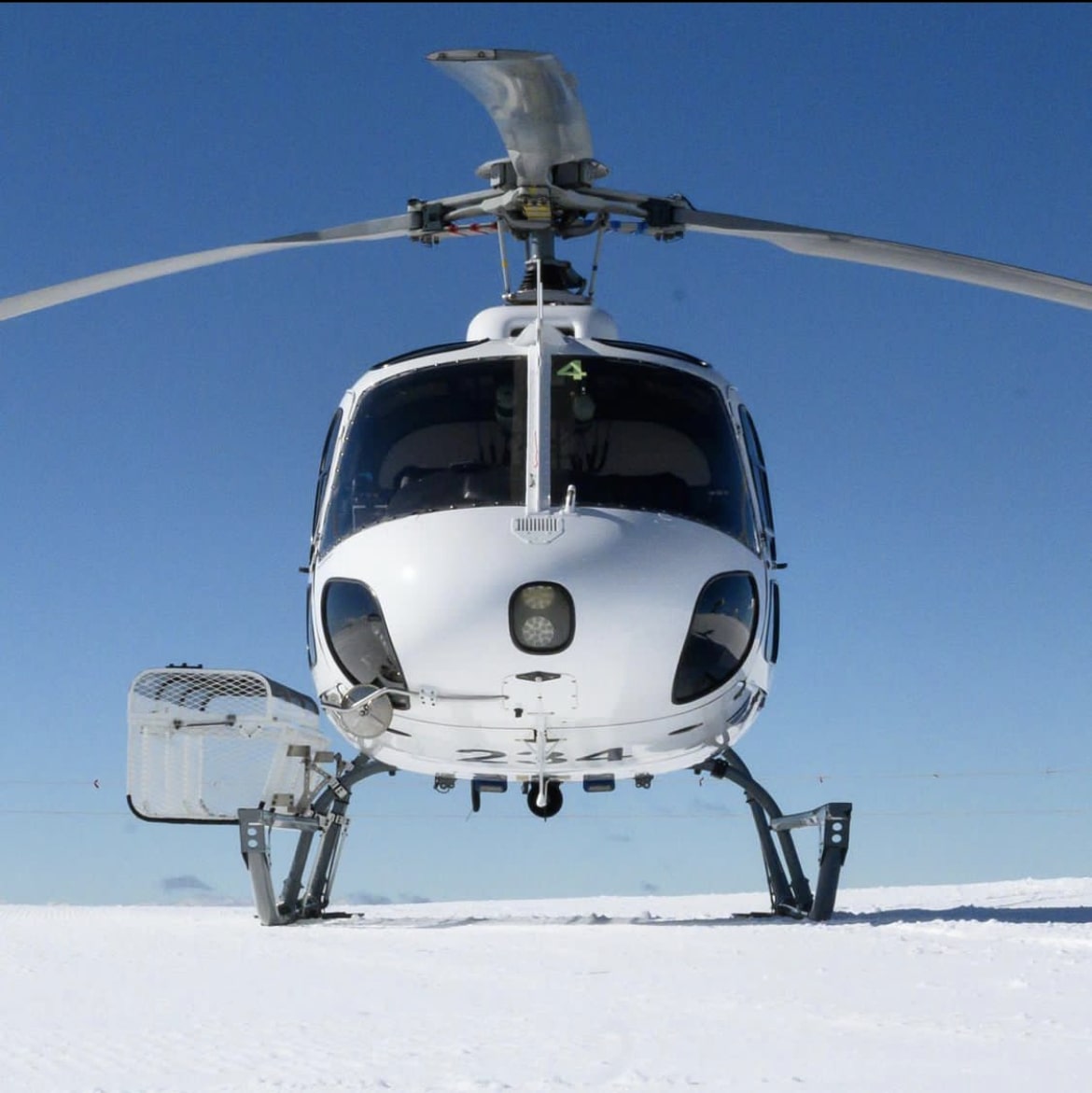
 An Airbus Helicopter H125 on the snow. | Image: Alpine Helicopters Instagram
An Italian entrepreneur has found himself in trouble with authorities after illegally landing a helicopter on an active ski slope and skiing away as if nothing had happened—an incident that has reignited scrutiny of his conduct and background. To make matters worse, the culprit committed the same offense just eight months ago in a different area of the Italian Dolomites.
The episode occurred in recent days on Saturday, December 13, on the slopes of the Maniva Ski Resort, in the province of Brescia, where Giorgio Oliva, 66, allegedly landed his helicopter directly within the skiable area without authorization. According to investigators, Oliva “parked” the aircraft at the edge of the piste, put on his ski boots and skis, and skied down the slope before being stopped and identified by Carabinieri officers who had been alerted to the prohibited landing.
Such maneuvers are strictly forbidden under Italian aviation and mountain safety regulations. The incident has prompted an administrative procedure by ENAC, Italy’s national civil aviation authority, and could result in financial penalties as well as the suspension of Oliva’s pilot license.
The scene closely echoed a previous case involving the same individual. In April 2025, Oliva was fined in Madonna di Campiglio, in the Trentino region, after landing his helicopter in an off-piste area of the Grostè sector at an altitude above 1,600 meters, where landings are explicitly banned. On that occasion, Carabinieri intercepted Oliva while he was skiing; he admitted to having no permit and was fined €2,000.
Oliva is an industrialist from Odolo, in the Valsabbia valley, and a member of the Oliva family, which founded Olifer S.p.A. in the early 1800s. Olifer is a long-established steel and energy company based in the Brescia region, and remains a prominent industrial name in northern Italy. Oliva is also a licensed pilot with extensive flight experience.
However, his aviation record is not only overshadowed by his illegal heli-skiing activities but also by a fatal accident. In October 2020, while returning from a heli-skiing excursion in Valle d’Aosta, Oliva’s helicopter crashed. He was critically injured and hospitalized in intensive care in Bern, Switzerland, but survived. His passenger, a 59-year-old manager from the Brescia area, died in the crash. A court-appointed expert report later determined that essential safety conditions were missing at the time of the accident, particularly adequate visibility. Following criminal proceedings in which Oliva was charged with manslaughter, he accepted an eight-month suspended sentence in February 2023.
Oliva’s latest unauthorized helicopter landing also reignites a long-running and politically charged debate in northern Italy: whether wealthy individuals are treating the Dolomites— a UNESCO World Heritage Site— as a private playground. Concerns over helicopter use in the Dolomites have intensified in recent years, particularly around heliskiing and helicopter-assisted wingsuit jumping. In September, Veneto regional councillor Renzo Masolo, of the Green-Left Alliance (Alleanza Verdi e Sinistra), called for sweeping restrictions on these practices, arguing that fines have proven ineffective against clients and operators willing to pay for exclusive access to remote terrain. Masolo urged authorities to adopt tougher sanctions, including pilot license suspensions and aircraft seizures, a position supported by the Italian Alpine Club.
Speaking before the regional council’s Second Commission during a review of the Dolomiti d’Ampezzo Natural Park, Masolo described heliskiing and helicopter-enabled extreme sports as “extremely dangerous,” environmentally damaging, and disconnected from mountain culture. He also warned that helicopter traffic can trigger avalanches, placing other backcountry users at risk.
Environmental concerns remain central to the debate. Although the Dolomiti d’Ampezzo Natural Park is a designated no-fly zone, enforcement has historically been inconsistent. “Noise, pollution, and disturbance of wildlife” are unavoidable consequences of helicopter traffic, Masolo argued, adding that for a small number of very wealthy clients, fines are often treated as a cost of doing business rather than a deterrent.
The controversy stretches back more than a decade. In 2011, environmental groups scored a major victory on Marmolada, where an agreement significantly limited helicopter landings after years of activism. Yet Italy has never adopted a comprehensive national ban on heliskiing. Instead, regulation has evolved into a patchwork of regional and provincial rules, with Trentino, South Tyrol, Aosta Valley, and Piedmont each applying different standards—allowing operators to exploit administrative borders.
The issue has gained renewed urgency as the Dolomites prepare to host the 2026 Winter Olympics, and as UNESCO’s “Dolomiti 2040” management process has explicitly identified “heli-tourism” as a threat to biodiversity within the World Heritage Site. While stakeholders have recommended a generalized ban across the Dolomites, implementing such measures would require coordination between regions, autonomous provinces, ENAC, and national lawmakers—a politically difficult task.
Against that backdrop, Oliva’s repeated violations have become emblematic for critics of what they see as a broader problem: the perception that wealth, influence, or status can place individuals above rules meant to protect fragile alpine environments. Whether the latest case will result in stricter enforcement or remain another incident where wealthy individuals walk away essentially scot-free, remains to be seen.
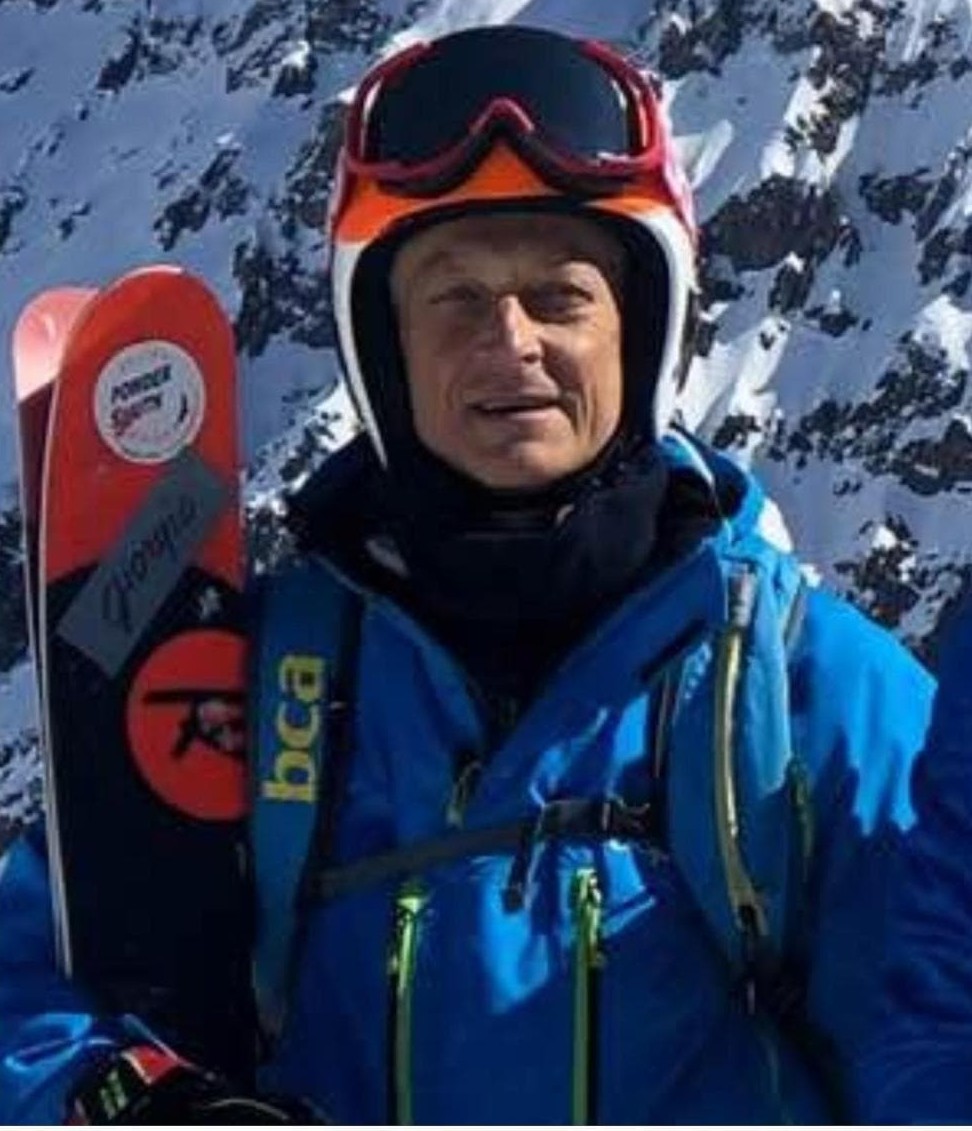 Giorgio Olivia landed his helicopter illegally on the ski slopes—for the second time this year. | Image: Twitter (X)