
The Swiss Alps didn’t have a “nice summer.” It had a record one, and the numbers are forcing a more practical conversation about sustainability than the usual recycled-linen rhetoric. In the summer season from May through October, Swiss hotels recorded 25.1 million overnight stays, the first time the country has crossed the 25-million mark for the period, according to the Swiss Federal Statistical Office.
That “record summer” is not just a tourism brag. A longer, busier warm season changes what alpine destinations must run, maintain, and fund: transport schedules, waste and water systems, staffing, and the energy required to keep hotels and chalets comfortable in shoulder months that used to feel like downtime.
Switzerland has been unusually candid about how overtourism shows up on the ground: concentrated, localized, and capable of souring residents quickly. In July 2024, Switzerland Tourism chief Martin Nydegger told AFP that while there is no problem of general over-tourism in Switzerland, there are “temporary and localised bottlenecks, well known to the industry.”
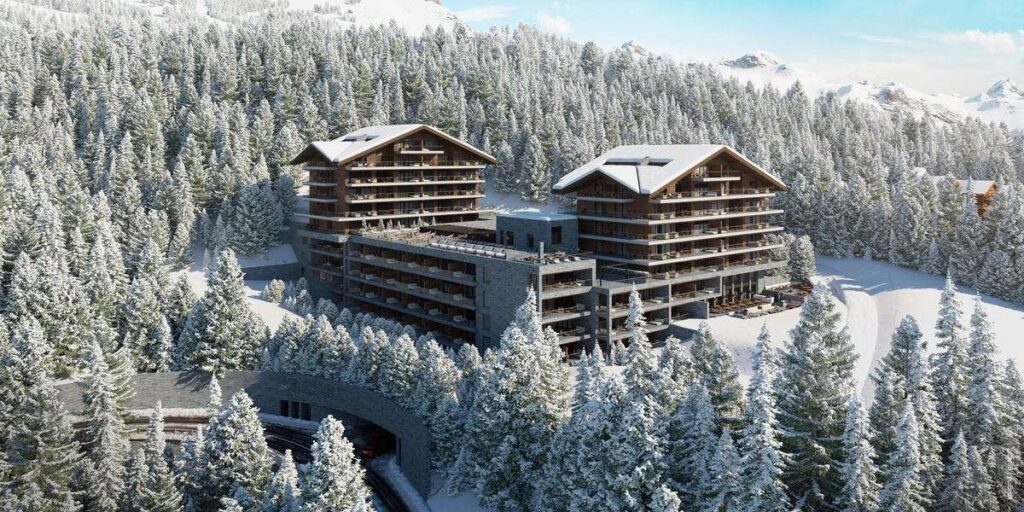 Six Senses
In that same report, Nydegger also put a macro number on what is at stake, describing tourism as a sector that generates 43 billion Swiss francs a year, or 4.5 percent of Switzerland’s GDP. “Residents in popular tourist destinations are increasingly critical of the growth in visitor flows,” he said. It also described why year-round tourism keeps coming up in Swiss planning discussions: the highly seasonal Alpine destinations are endeavouring to promote the low season and thus year-round tourism, which would allow resources to be used more efficiently and reduce the need for seasonal labor.
Those pressures make building performance a front-and-center topic, because the most visible impacts of travel are often the unglamorous ones: traffic, heating demand, and the strain on local services. Switzerland’s Minergie label is one example of how the country tries to make “sustainable building” legible and comparable, with standards aimed at reducing energy and water use and cutting greenhouse gas emissions while maintaining comfort over the long term.
Luxury travel media has also been tracking a climate-driven preference shift that benefits higher-altitude destinations in summer. “Coolcations,” the travel trend of seeking out cooler locations as heat intensifies elsewhere, has helped reframe the Alps as more than a winter-only proposition.
A chalet for the future
Gstaad, one of the Alps’ most rarefied addresses, has become a useful case study for what “sustainable luxury” is trying to look like when demand rises and scrutiny follows. Unica Capital has announced plans for Chalet Oberbort in Gstaad’s Oberbort area, describing a property that spans more than 7,000 square meters across three interconnected chalets, with 19 ensuite bedrooms and a 1,500-square-meter wellness sanctuary, plus extensive leisure spaces. Reporting has said the project is under construction and expected to be completed in 2028.
The sustainability claim is central to how the project is being positioned. In its materials, it points to natural and locally sourced materials and what it calls a commitment to sustainable architecture.
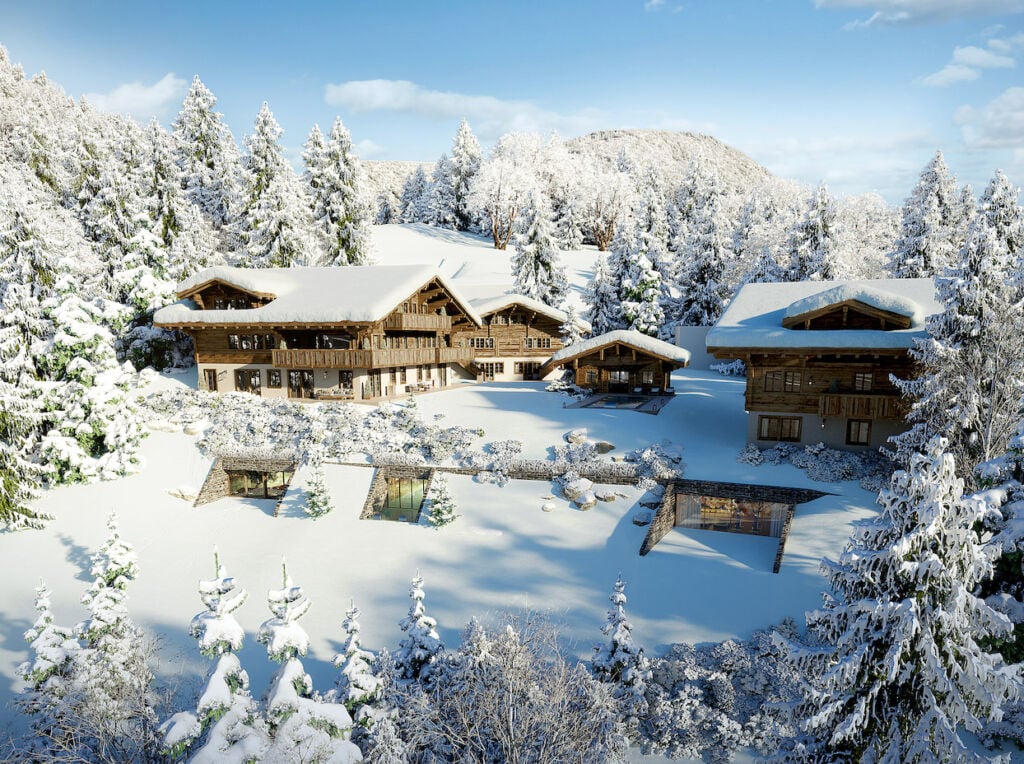 Chalet Oberbort
For anyone who has watched the Alps stretch into a true four-season destination, the subtext is easy to read: the new luxury flex is a home that feels self-sufficient, comfortable, and predictable across seasons. Byron Baciocchi, Chairman and CEO at Unica Capital, framed the intent in the release: “With Chalet Oberbort, we set out to create more than a residence – we wanted to evoke a sense of quiet majesty. It’s a space where architectural form, emotional atmosphere and material integrity come together,” he said. “It reflects our belief that true luxury is how a space makes you feel – not just what it contains.”
Swiss tourism data suggests the pressure will continue. The Federal Statistical Office reported that every month from May through October posted year-over-year growth, with particularly strong gains in June and September — months that historically sat outside peak alpine demand. U.S. visitors accounted for 3.1 million overnight stays during the summer season, a 3.4 percent increase from the previous year, while domestic travel reached 11.7 million overnight stays.
Related on Ethos: